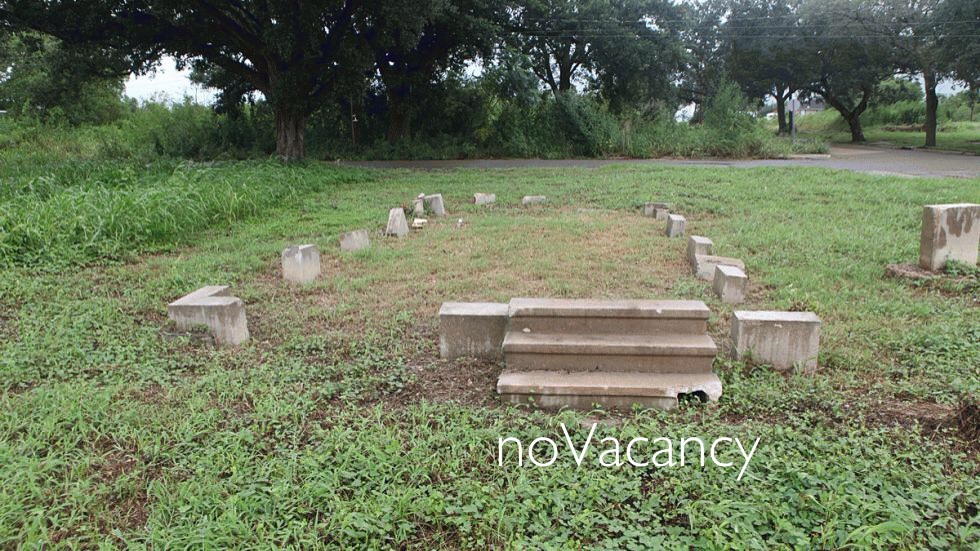
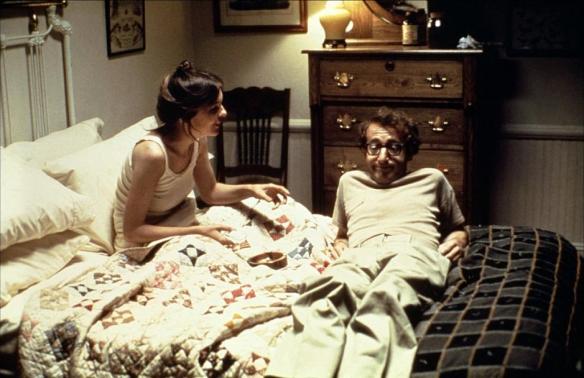
 “How can you lie there and think of England/when you don’t even know who’s in the team?” — Billy Bragg
i know i claimed not to believe so much in the supernatural, but i guess i left out that i have a soft spot for ghosts. If i cross certain paths or perform a set of actions in a specific way, i am guaranteed a visit. i realize it sounds like complete bullshit, but i can’t jaywalk without Roland Barthes’s ghost flashing up between me and the street. He just pops up. The most handsome traffic cop you’ve ever seen. “Are you sure about this?” his face, coated in comic disdain, vaguely warns me. One eyebrow slightly raised, his image from that ubiquitous author photo floating up right there on Houston or Delancey or whatever street is forcing me to stop for a second. Suddenly he is simply there in his tie and V-neck sweater. Sometimes he brings his cigarette. i wink a quick, “Thanks, Roland!” and step back on the curb as the cinematic unfold repeats itself: In 1980, in March, Roland Barthes stepped off a sidewalk and into a laundry van and died in the hospital a month later. He was known to have been frustrated by early, poor reviews of Camera Lucida and to have been severely shaken by his mother’s death: “I’m not in mourning. I’m suffering” (from his Journal of Mourning). The ultimately quite “writerly” death of one of the 20th century’s great literary theorists is, rather significantly, forever open to interpretation: accident/suicide? Maybe it’s my way of displacing the real horror of NYC traffic or something, but this is what jaywalking is locked into for me:
 Also relevant, the essay that outlined this distinction between readerly and writerly texts was actually called the “Death of the Author”: The goal of a literary work (of literature as work) is to make the reader no longer a consumer, but a producer of the text. Yes, i know, it sounds Marxist-Feminist-Brechtian–wasn’t that your chant? But that’s okay. i don’t mind when the boom stays in the picture or a puppet’s strings go glittering for a second–making the story glow all spidery and exposed and…possible. Making something out of a snippet or a song or even a kiss. Making up stories about the spooky, glamorous orphan photograph on the wall because they were curious enough to rescue the negative hiding in the couch. Weaving these pieces into my own tiny stories–little boutonnieres of memory. Choosing/not choosing as an organizing principle. Ghosts? Yeah, i’m a believer.
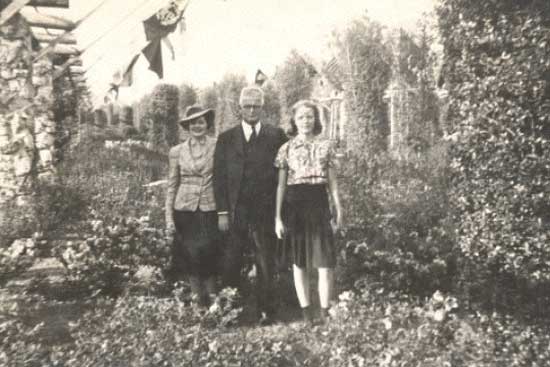 Is this what memories are, then? Ghosts that develop like photographs and stick firmly to a place: sliding up each and every time you crisscross back over their paths? At least some of them are also made of melancholia–a kind of emotional gatekeeping that is more dimensional than mere memories. Even knowing all of this, when i woke up and sat on the edge of the couch, a few days after you’d left, i hadn’t expected you to be right there again in the chair next to me. You slid over and put my head on your lap when i lifted up for you, and somehow took my hand under the table at the same second i reached for yours during lunch. Outside, the weather had finally turned bitter. The sensation of the extreme cold not feeling so different from the burn of summer in the tropics–galvanizing and clean. i walked to the end of the block, listening all the way to our nervous, elated rambling. You told me, again, that the world is the size we make it. With that proposal ringing in my ears, i smacked right into us kissing in the street. i didn’t have to turn around one last time before descending the subway stairs to see you looking back at the same moment i looked up for you. i saw it anyway. And the handsome young man in a blue striped button down was still playing his cello on the platform on the other side of the tracks.
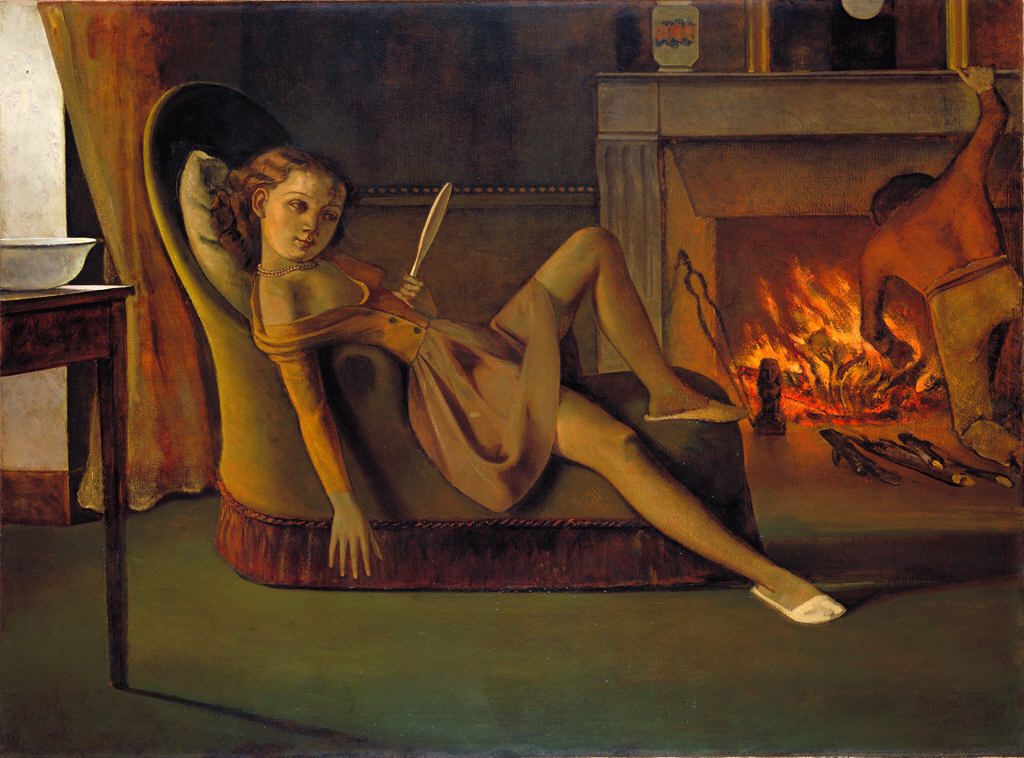
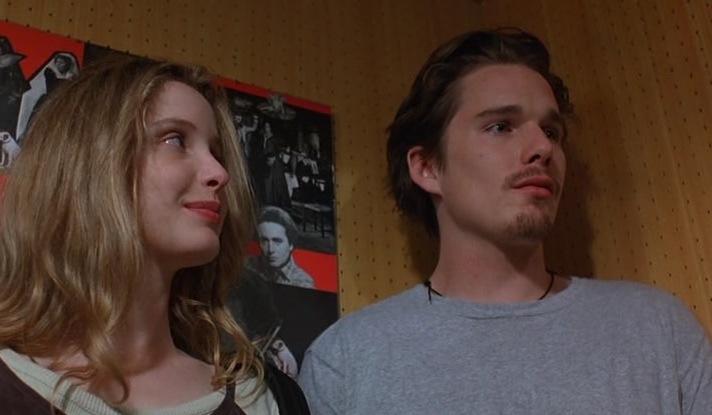 The math is simple–I can add 5 or 6 hours to the time on my watch–but it does nothing for me. What difference does it make if i know what time it is there? What i have are these ghosts looped to the ground outside of the pizza shop between 1st and Avenue A where we kissed goodbye, the doorframe you crossed and locked eyes with me for the first time. I step through it almost every day. Trying to distract myself, i went to the Met last week to stare at the Balthus paintings. i especially like the ones where you can see evidence of him having ‘squared the canvas’, little grids visible through the paint, for scale. One painting’s tag reads: “Squaring of the canvas is visible throughout, especially noticeable in the curtain at left and the nightstand at right.” (The Toilette, Balthus. 1957) i know the story, but i am grateful for the reminder that even realism is a calculated illusion, as his paintings–shameless testimonies to the erotic that sometimes render the cat pulling at the end of the string, and sometimes leave the frame empty–make visible. i also know there is no formula for veracity and that time can truly fuck with space. i know a hawk from a handsaw over here, and i know that the ghosts go away when the promise they’re meant to mark comes back to life.
 noVacancy
“If it – learning to live – remains to be done, it can happen only between
life and death. Neither in life nor in death alone. What happens between
two, and between all the “two’s” one likes, such as between life and death,
can only maintain itself with some ghost, can only talk with or about some
ghost [s’entretenir de quelque fantôme]. So it would be necessary to learn
spirits. Even and especially if this, the spectral, is not. Even and especially
if this, which is neither substance, nor essence, nor existence, is never present
as such. The time of the “learning to live,” a time without tutelary present,
would amount to this, to which the exordium is leading us: to learn to live
with ghosts, in the upkeep, the conversation, the company, or the
companionship, in the commerce without commerce of ghosts. To live
otherwise, and better. No, not better, but more justly. But with them.
No being-with the other, no socius without this with that makes being-with in
general more enigmatic than ever for us. And this being-with specters would
also be, not only but also, a politics of memory, of inheritance, and of
generations.” Derrida, from the Exordium of ‘Specters of Marx,’