
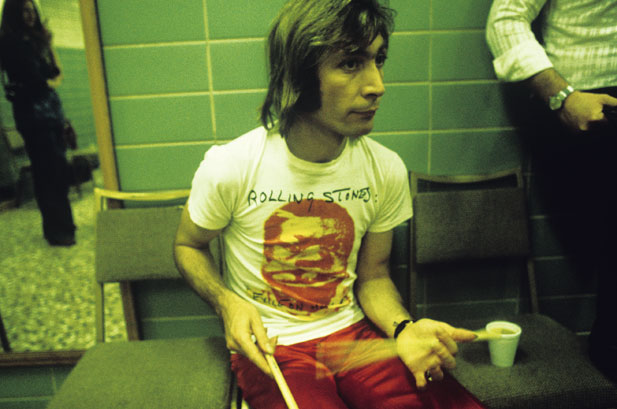
i finally had it. After all these years, i dreamt that i slept with Mick Jagger. And then you and i were at a party and i grabbed your arm and whispered, “Shhhhh…Over there, look. It’s Charlie.” And we both got quiet and set our beers down on the bar and you were trying to look cool but i saw your fingers tapping your thigh and i knew you were as close to nervous as you can get. He was tiny and silver with his head nodding and eyes bright. You were standing a little in front of me; so, i inched up out of my stool and set my chin right between your shoulder and your neck and your hair tickled my nose and you pushed back into me a little and i set my right hand on your hip and we sat there grinning and proud of ourselves. Like he was a sign. Like we had finally timed something right. Then we lost sight of him and sunk into a dirty velour couch too close to the ground and i laughed through the smoke and said,”God, how funny is it that i finally slept with Mick?” And your guard, quiet as a contact lens, settled in between us. This was no ex-girlfriend in a bathroom stall or a late night in my boss’s hot tub. For a second i understood that the drive to light fire to something, for pyromaniacs, is nothing other than irresistible. i looked you in the eye and took your hand and told myself that if i could count to ten before you got up and left me there on the couch it would be okay, but in a nervously adept jump of lucid dreaming i forced myself awake before you had the chance.
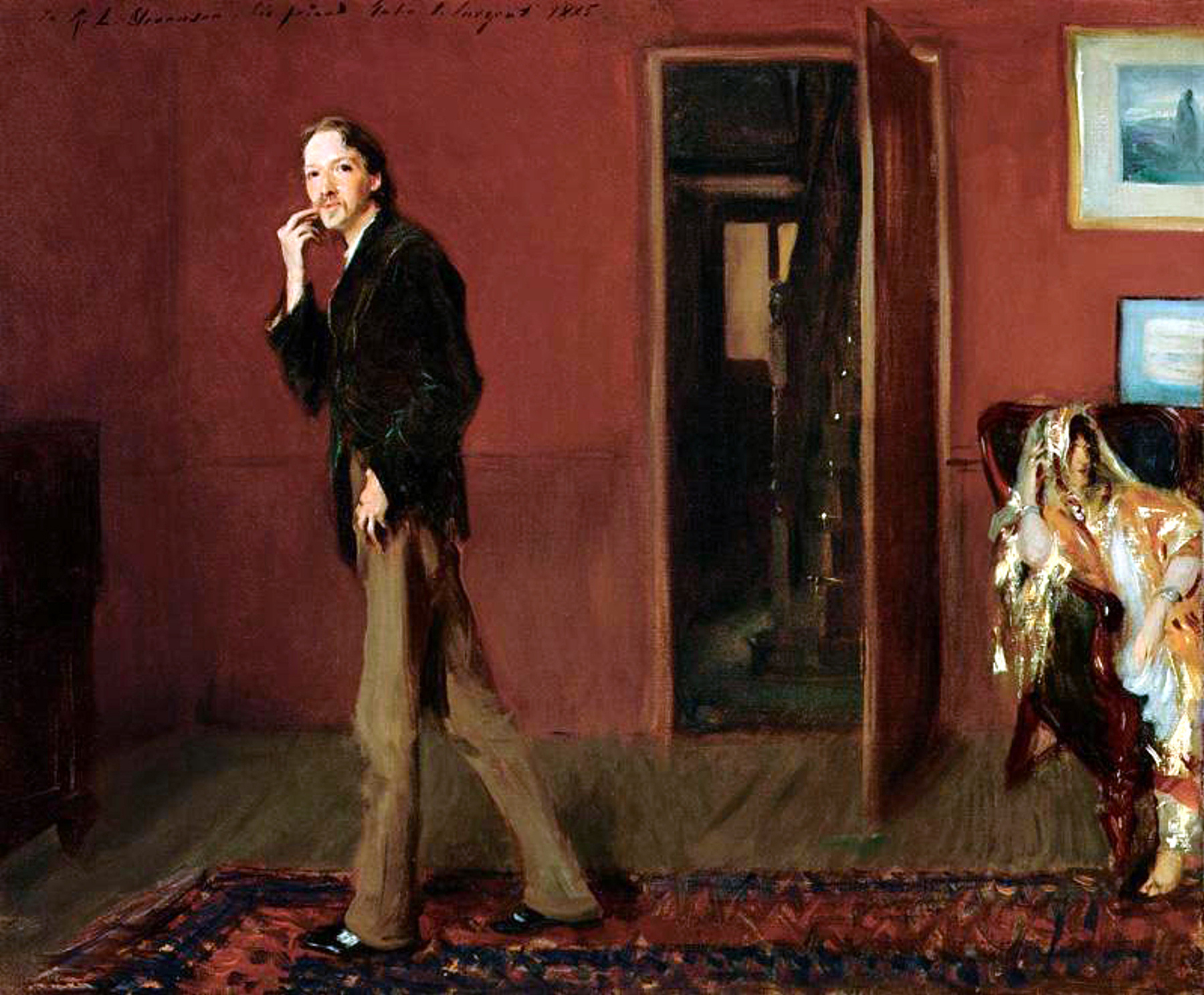 My son is 6 years old and, most days, he drags around a blue and white silk blanket he received as a gift when he was a baby. The blanket is named “B” and takes the male pronoun. He is carefully packed into the bottom of backpacks, regularly refunctioned as a cape or an umbrella, twisted around little fingers while thumbsucking. B is stitches, wallpaper, the hug of the absent parent. i like that B can soothe both the ouchies i am not around for and the injustices i inflict. i watch adults take it in and i furrow my brow and hear myself say, “I never had anything like that.” Then after i put him to bed i sit down and write about my own fixes for attachment and distance. i watch adult noses crinkle at the smell of B, “Ughh–get it away!” they shriek. “Let me wash it,” they plead. He remains undeterred by these complaints, but has begun hiding B from the other kids.
 Joan Didion made the catchy sentence, “We tell ourselves stories in order to live,” to describe this problem. She continues: “We live entirely…by the imposition of a narrative line upon disparate images, by the ‘ideas’ with which we have learned to freeze the shifting phantasmagoria — which is our actual experience.” i like her sentences and i accept them as a certain kind of description of cognitive self-care, but i need more. Phantasmagoria is a young word, only coined around the turn of the 19th century. It was invented to describe the images cast by a device called the magic lantern. Now it is also understood to describe “a shifting series or succession of phantasms or imaginary figures, as seen in a dream or fevered condition…or as created by literary description.” Storytelling as the organization of images and the translation of those images into words. Living as a kind of constant, immediate translation. All of it held together by magic, or, “ideas.” i hear this word and i think immediately of Walter Benjamin, who would also use phantasmagoria as a metaphor for the commodity language made legible by the magical incantations of reification. The stories we tell ourselves to live under capitalism, as he saw in endless repetition in his arcades, are their own complicated phantasmagoria of desire.
  Yesterday I paid the dollar and walked through the Met, weaving through my precious sarcophogi and other funereal ephemora from ancient civilizations to the exhibit “China: Through the Looking Glass” in the Anna Wintour Costume Center. The clothes are described as examples of how these designers made something out of the stories they had told themselves about China. In an interview in the exhibition catalogue, John Galliano describes this collection as an example of how his creative process is primarily “narratively” driven. The smart curatorial descriptions invoked something i couldn’t wrap my head around called “natural” postmodernism which has to do with narrative, global capitalism, and the representation of this happy clash in the form of magical, mesmerizing, impossible gowns. i mean, i first knew “Opium” as a bottle full of adult smells on my Mom’s dressing table and much later uncovered the euphemism.
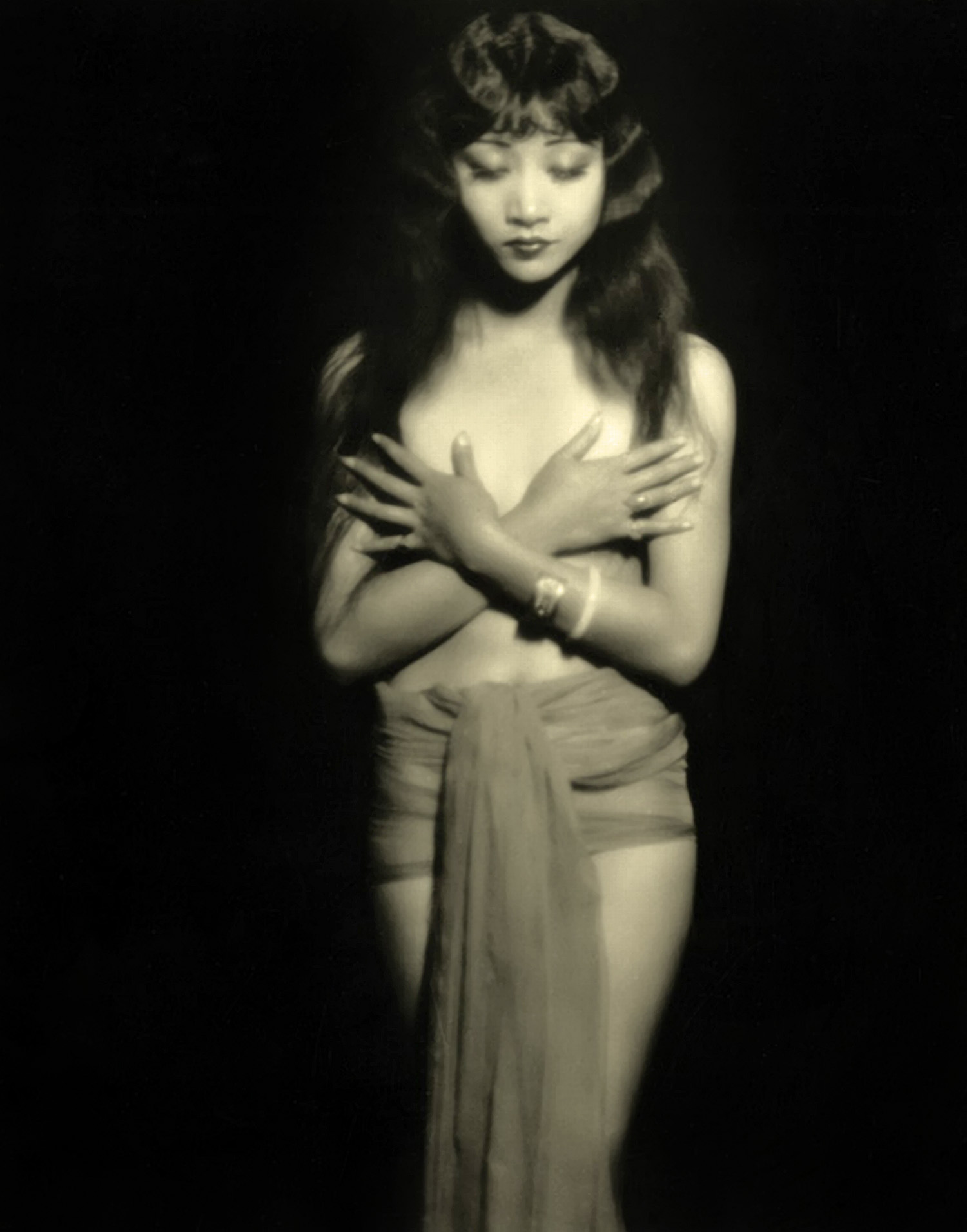
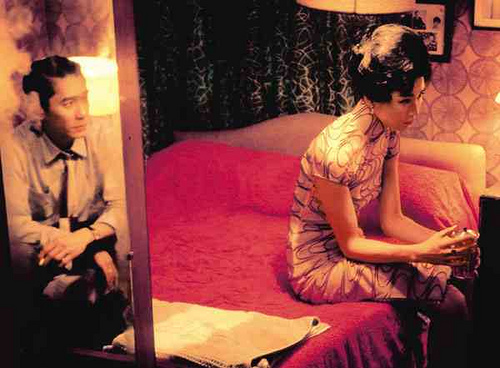
  In a long room bracketed with film clips of Anna May Wong and lined with gowns from and inspired by her films, i feel my face crack into a half-grin when i encounter a museum card referencing Benjamin’s complicated fascination with Wong, describing a phantasmagorical reckoning of the Didion kind. Benjamin once penned an article about Wong titled, “A Chinoiserie Out of the Old West.” Wong was born in Chinatown in LA. She is the Chinoiserie from the “Old” West. Sigh. i can’t tell if things are unpacking or collapsing, but if the sentence is repeated (“We tell ourselves stories in order to live”) in this context, it feels less like creative world-making/suturing and more like guileless consumption. We tell ourselves stories about dragon ladies and peony flowers because they are easier than the other ones about Opium Wars and sweat shops. But maybe this is just the low-hanging fruit. If i render the phantasmagoria of my dream images into a story about our private history that i’ve convinced myself i need in order to live, is this any less of a violation of actually existing daily life than the massively successful repackaging of a drug as a perfume? “Through the Looking Glass,” the subtitle for the exhibition, is not a reference to Alice. It translates, a description at the exhibit explains,”…into Chinese as ‘Moon in the water’…it suggests something that cannot be grasped…a quality of perfection that is either so elusive and mysterious that the item becomes transcendent or so illusory and deceptive that it becomes untrustworthy. The metaphor often expresses romantic longing, as the eleventh-century poet Huang Tingjian wrote: ‘Like picking a blossom in a mirror/Or grabbing at the moon in water/I stare at you but cannot get near you’. Later i read that early iterations of the magic lantern were called “Ombres Chinoises” (Chinese Shadows). Right. And the blue light was my baby. And the red light was my mind.
 noVacancy