
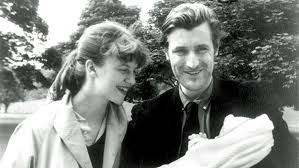
Sylvia Plath: famous (lady) poet; famous suicide (“Dying is an art. Like everything else, i do it exceptionally well. I do it so it feels like hell“); famous Daddy complex (“Every woman adores a fascist“); famous mother (“Love set you going like a fat gold watch“); famous committed to a psychiatric ward (“I didn’t want any flowers. I only wanted to lie with my hands turned up and be utterly empty“). But also “Lady Lazarus,” famous zombie–famous patient of electric shock therapy (“There ought, i thought, to be a ritual for being born twice–patched, retreaded, and approved for the road“). “Daddy,” the poem, has been in my head for days–“You do not do, you do not do“–it begins, and its turns are strange, angry, dedicated, alchemy.
You do not do, you do not do
Any more, black shoe
In which I have lived like a foot
For thirty years, poor and white,
Barely daring to breathe or Achoo.

Daddy, I have had to kill you.
You died before I had time--
Marble-heavy, a bag full of God,
Ghastly statue with one gray toe
Big as a Frisco seal...
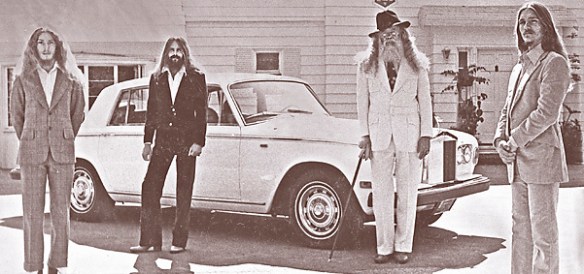
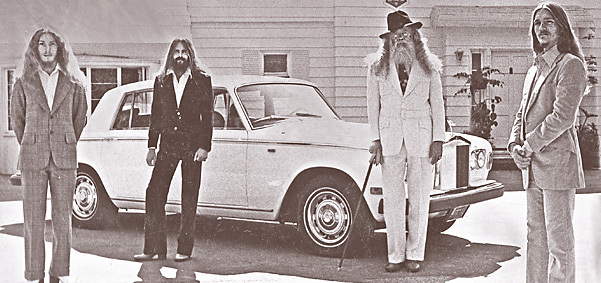
i tried to read her novel, the Bell Jar, a thinly-veiled memoir of stepping off the line one summer while she was in college, my freshman year of high school. i had to give up. Patterns in rugs and tiles began giving me the spins. i thought i was losing my mind. i read Jane Eyre instead, which, if i hadn’t already had one (unlikely), helped put my own daddy complex into play. i picked it back up in college, impossible to find what had so disturbed me on my first try. Shortly after i started working at my current job, my dear friend and former boss from the Feminist Bookstore emailed me: “You are working at a restaurant named “Father”? Yes, indeed. In the owner of the restaurant’s mother tongue, the name of the restaurant means father. The owner and the executive chef were both new fathers that year, and the name was meant to have marked that connection. That “Daddy”–(TWO Daddies, even)–might become a formidable organizing principal was not lost on me. That it actually became a seriously disorganizing principle was also no surprise. There were early promises of a utopian, almost communal work environment. Father Yod’s The Source was hoped to be a model, but it didn’t quite turn out that way.
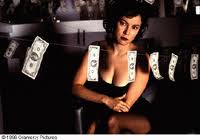
In my early bookselling days, one of my favorite jobs was to clean the shelves. i would pick a shelf. Remove all of its books, wipe the shelf down, and carefully replace each title. i would read the back of each one before doing so, and slowly, in this way, i familiarized myself with every title in the store. We had a small, ‘womyn’s only’ erotica section, and the titles here were often the best: The Ethical Slut, Off Our Backs, On Our Backs, and Doing it for Daddy. Doing it for Daddy, by Pat, later Patrick, Califia was less about actual fathers and more about leather daddies and master/slave fantasies. As i’d been reading Butler and little bits of Hegel for some time, lordship and bondage was already on the table. i often played back a quote from Hegel i’d found in Butler: “…a freedom still enmeshed in servitude,” as a way of thinking through my life in the food service industry. i started waiting tables when i was 16, and while i immediately took to the short-term high-stakes and the quick cash, there was always a Daddy in the kitchen. My first chef liked to throw things. At us. Plastic tumblers, fry pans, insulting chunks of soft, sticky food. Bent on making the girls cry, he would untie our aprons and tug on our bra straps. Nothing was ever good enough. He remains legendary amongst those of us who worked with him, but over the years i came to understand him as a type rather than a compelling, confusing exception. i know there is a degree of this in all lines of work, but it is expected, rewarded, and rarely disciplined in food service. i can only conclude that many of us who serve are hooked on the archaic dynamic, and many, but certainly not all, chefs are keen to assume their expected role. We become convinced that this is what caring looks like, but who is playing which role is not as obvious as it may seem. In Hegel’s story the master is the owner, and the slave creates the things from which the owner makes a living. In this dichotomy, servers are non-dialectical. We don’t actually make anything, right? Perhaps nothing tangible, but our job is to render the exchange between master and slave invisible to guests–to seamlessly represent the finished product, which requires delicate layers of mediation. We are good at learning how to take it from all directions; we are expected to make everyone happy. ‘No’ gradually disappears from our vocabularies. It is replaced by “Yes.” “Please.” “Harder.” ‘Your welcome’ is gone. There is only “thank you.”
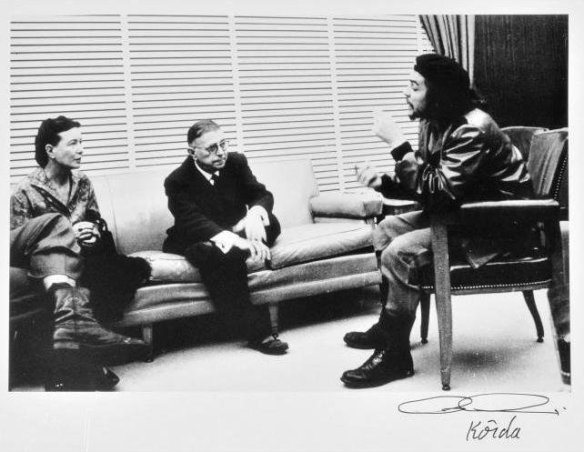
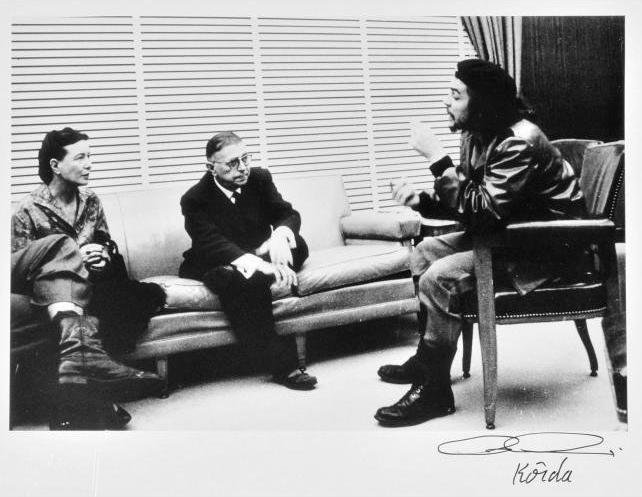
The master-slave dialectic is a lesson about work and oppression; it is also about the necessary experiences of recognition and alterity built into self-consciousness. The dialectic is between the person who makes a commodity and the person who sells/owns it. No matter how hard you work, if what you have made ultimately belongs to someone else, you are the slave. Concomitantly, the master cannot exist without slaves/workers, and neither has resources or identity without the other. The recognition of this lesson is a tough one to swallow: we are only ourselves when we are recognized by the other. This, parodoxically, is self-consciousness. Simone de Beauvoir argued that it is unacceptable to see male/female relations as inherently determined by this dichotomy, because gender is permeated by class and the master-slave dialectic is an argument about alienated labor. i am interested in, but don’t know much about, her arguments about gender being a non-dialectical relation; however, i am unwilling to make a resolute distinction between sex and gender, gender and sexuality, or between biological sex and cultural expressions of sex and gender, and understand all to be thoroughly permeated by class, but i think it is fascinating that these roles emerge as erotic possibilities. i doubt that every woman adores a fascist, but for those of us who have, we are happy to serve. We are so good at seeing what is missing, of rising to the challenge. The challenge never ends, because Daddy is never happy. This also means that Daddy never leaves. You do, because you get too tired. Butler: “If wretchedness, agony, and pain are sites or modes of stubbornness, ways of attaching to oneself, negatively articulated modes of reflexivity, then that is because they are given by regulatory regimes as the sites available for attachment, and a subject will attach to pain rather than not attach at all.”
This is a quote from Emerson: “I admire still more than the saw-mill the skill which, on the sea-shore, makes the tides drive the wheels and grind corn, and which thus embraces the assistance of the moon, like a hired band, to grind, and wind, and pump, and saw, and split stone, and roll iron. Now that is the wisdom of a man, in every instance of his labor, to hitch his wagon to a star, and see his chore done by the gods themselves. That is the way we are strong, by borrowing the might of the elements. The forces of steam, gravity, galvanism, light, magnets, wind, fire, serve us day by day, and cost us nothing.” This reads, to me, as a slightly different model. My last chef would often describe items on the menu as electric, and when diners–shocked by the effect of dishes that appeared to be incredibly simple–even insubstantial–struggled for adjectives to respond to their experience, i would tell them that chef calls it “electric,” and they always seemed delighted by this accuracy. i was always reminded of Whitman, his singing the body electric: “And if the body does not do as much as the Soul? And if the body were not the Soul, what is the Soul?” And Spivak again: “Lorded, and yet, as if not lorded.”
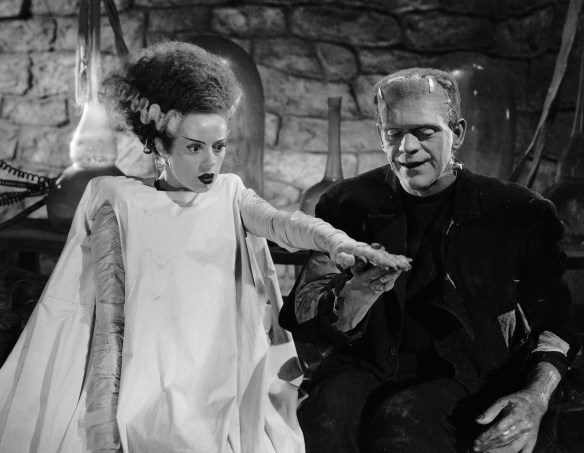
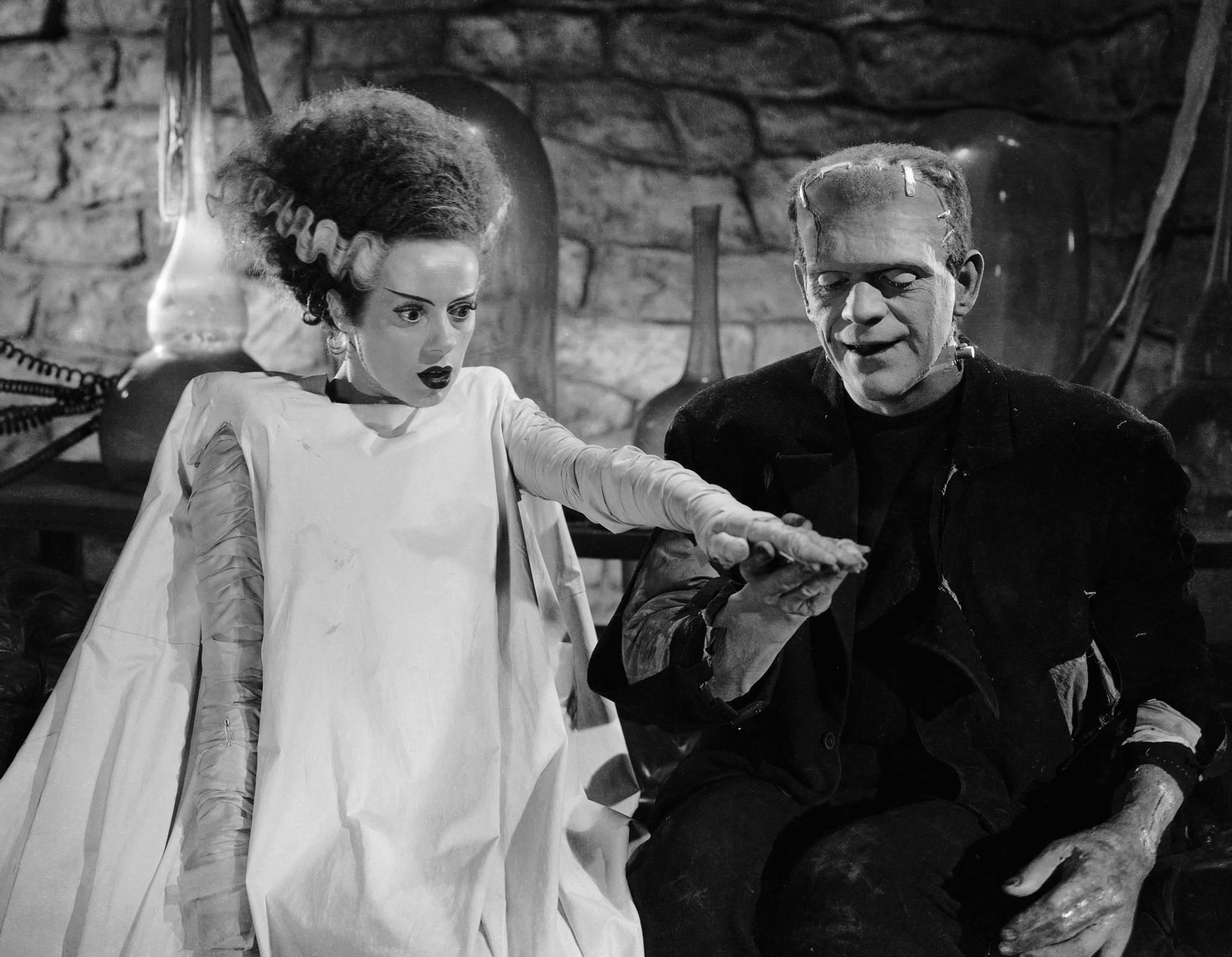
i once had an acupuncture treatment that was about 5 hours long. There were 6, maybe 7 people working on me. i hadn’t been diagnosed with narcolepsy yet, but i knew something had given out, and i was trying to fix it. One of the girls said that my pulses were so low when she first picked up my wrist, that i didn’t seem to be alive. Acupuncture stimulates your energy using needles and an understanding of the body’s blood meridians. Galvanism involves a very different therapeutic application of electricity to the body. It was discovered in the late 1700s when electric surges given to dissected frogs made their legs jump, seeming to bring them back to life. The experiments filled the popular imagination with ideas about the possibility of stirring the dead. Think Frankenstein. Think shock and its transformational qualities–traumatic and otherwise. Galvanize is now used to describe any stimulation that is the result of (positive) shock–as though it were electric. i think of the surge delivered to my own wrist through the simple surprise of a few sturdy fingers encircling it, or by long warm fingertips pressed against an open palm–although they might have had to press harder than usual to jump my response. i think of a gaze held for 2 or 3 seconds too long, the wakefulness this connection somehow produced in me, my own wagon hitched, for a second, to a star.
 noVacancy