
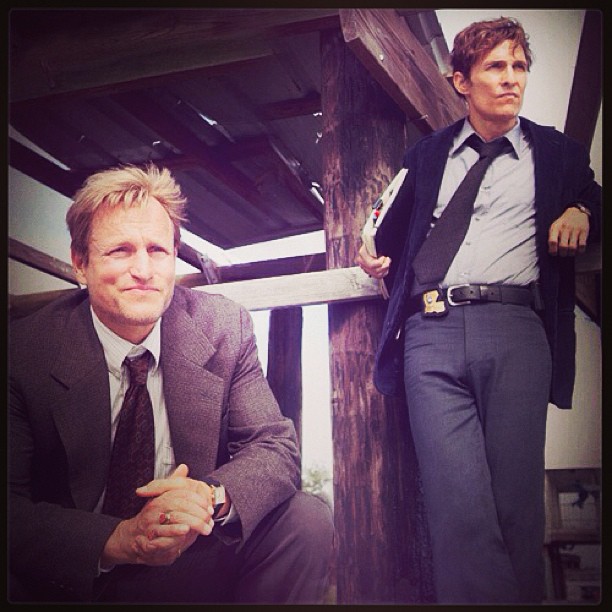
 “As if the self had no relation to the self, and one only looked in mirrors to have one’s arrogance confirmed; as if the act of self-regarding was not as subtle, fraught and ever-changing as any bond between twin souls.” The Luminaries
Twin souls. The flickering return of one’s own self that is so satisfying, lit by the inevitable risk that what you thought was contact is in fact reflection. When I imagine that I imagined it, I try to find the places where I was seeing instead of looking, and I can indeed piece the difference. You caught my eye from across the table and started to turn your head to look around the room, but you ran your fingers through your hair and kept your eyes on me instead. You raised your brows and i nodded a silent confirmation. That’s the difference. My heart beat a little faster and then i looked deeper into my salad and, knowing the variables were completely untenable thought, “Shit.” Large moment, but in the larger narrative a relatively small disappointment. 
After having carried it from house to house with me for at least 10 years, i recently began reading my used hardback copy of Joan Didion’s Salvador. To its previous owner, a person named Bob inscribed the book: “Always there is someone whose suffering is greater. The fatal thirty-third. Love, Bob.” Each time i open it, i stare at Bob’s handwriting and think about this gift of a text so thoroughly about suffering that it might have rendered its new owner’s own worries trivial. i’m guessing that he or she was turning thirty-three; ‘fatal’ because of the famous lives that ended at this age? Jesus, Van Gogh, Eva Peron, Eva Braun, Sam Cooke, John Belushi… i ask myself if i can imagine a world in which such a dedication might be romantic? i decide that i can, having learned in grad school that thinking critically about “love” transforms the term into something called desire and, furthermore, that the political is always a zone of desire. 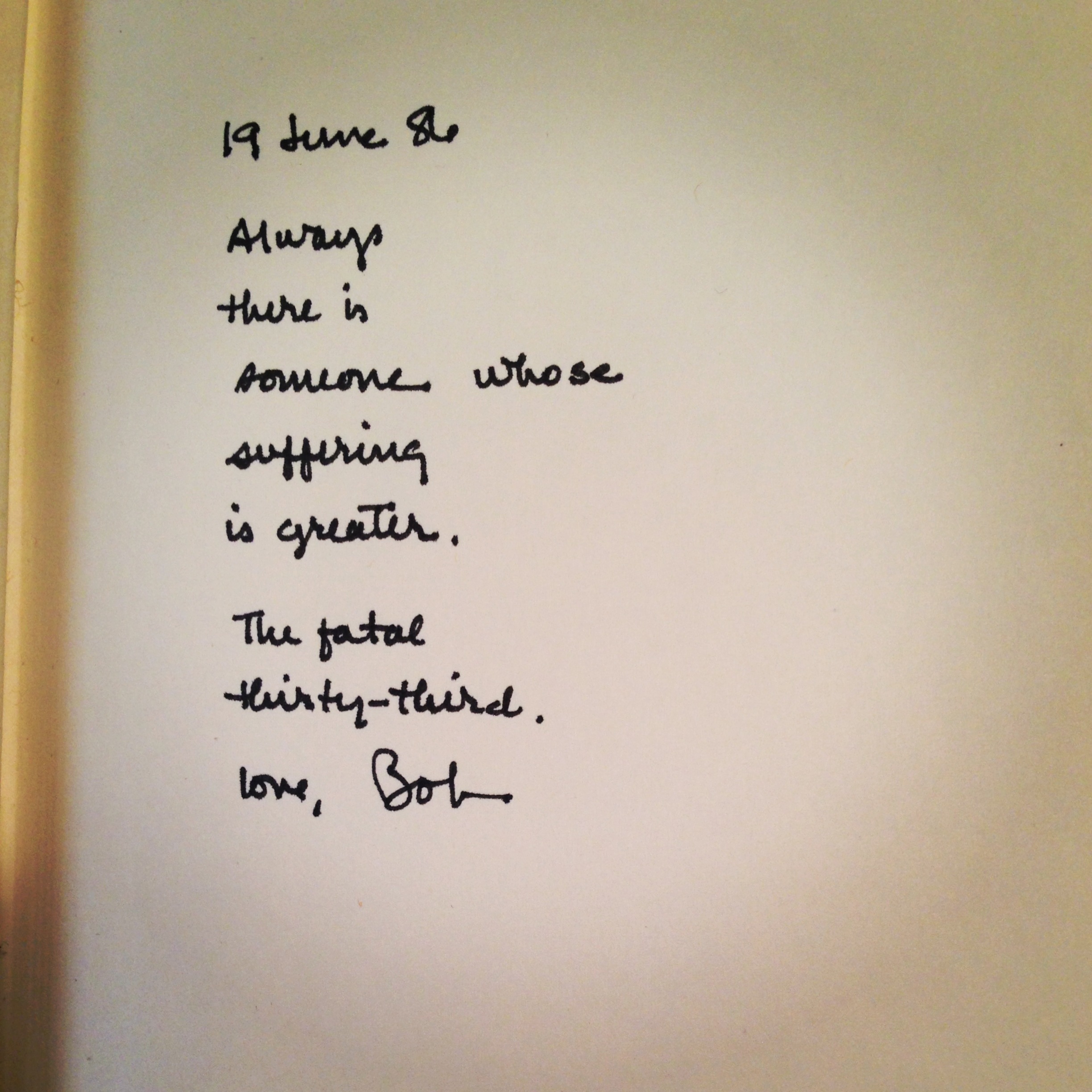
When the burn of disappointment numbs out, i try to grow new skin for the old ceremony. Flip directions and find a more reliable object of full-on attachment. i’m sure that’s how i found the flowers, and grad school, and theory. How i both found and lost Japan. Music and poetry and the longest novels and the god the movies. So many movies. In those moments give me an endless chase scene and a cup of coffee and i’m okay because the pushiness of desire is reworked and translated into something instead of someone. But then, the thing stops playing. Or I turn the last page, and it is Will Oldham time: “Once again in the world/of twelve hundred feelings/all in electric lights/we see what we can.” We know that everything dies, but some things are perhaps impossible to kill.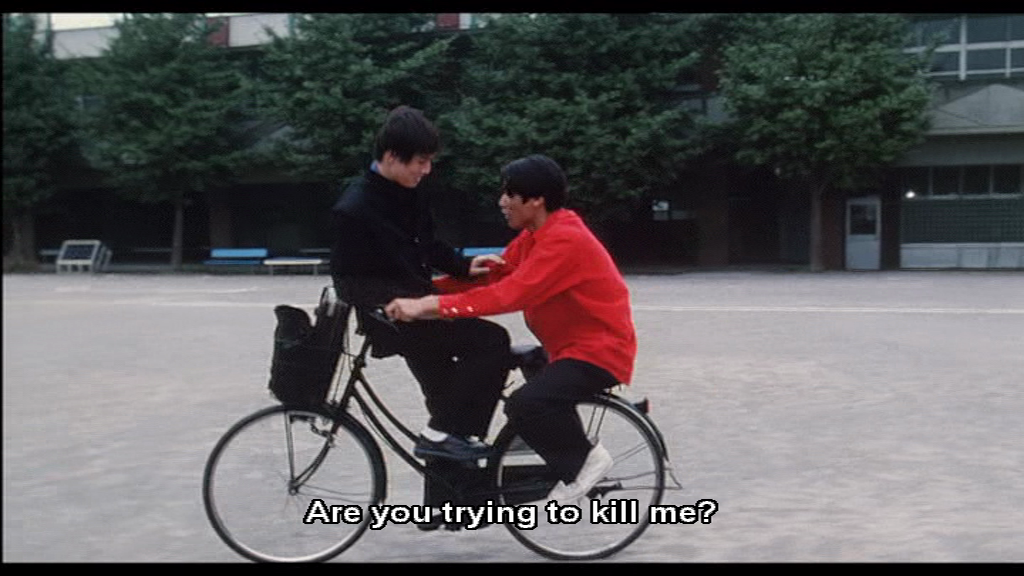 Right on top of each other, in what now seem like obvious gestures of sublimation, i recently watched two very different reflections on revolutionary politics: Apres Mai (English title is Something in the Air) by Olivier Assayas and Chris Marker’s Le fond de l’air est rouge. i walked into a room and the Assayas film was playing, so i sat down for it again. Marker, i sought out intentionally. The title of his film translates as, “the essence of the air is red,” but in English it is known as A Grin Without a Cat. The grin in the title invoking “the” revolution Cheshire Cat style. Through its density of materials and suggestive rather than provocative sequencing, the film juxtaposes images of revolt: Battleship Potemkin, the student uprisings in Paris in May of 1968, the Soviet Invasion of Czechoslovakia in the same year, the Vietnam War, Cuba, Castro, Che’s corpse, and Salvador Allende. Film scholar Nora Alter has written about the “deliberate instability” of the film’s argument/s. David Sterritt reports: “Recalling his last conversation with the Marxist philosopher Louis Althusser on the eve of Portugal’s leftist uprising in 1974, he writes that ‘revolution was in the air, and had to be, like the grin of the Cheshire Cat.’ Althusser ‘would always see that grin…. And he wouldn’t (nor would anyone) ever see the cat’.” From Alice in Wonderland: “The executioner’s argument was, that you couldn’t cut off a head unless there was a body to cut it off from: that he had never had to do such a thing before, and he wasn’t going to begin at HIS time of life. The king’s argument was, that anything that had a head could be beheaded, and that you weren’t to talk nonsense. The Queen’s argument was, that if something wasn’t done in less than no time she’d have everybody executed, all round.” And, one more, from Artaud: “When you will have made him a body without organs, then you will have delivered him from all his automatic reactions and restored him to his true freedom.”




 noVacancy