
i know what you’re trying to be.

Marianne-Faithfull-Morning-Shot-635

“As to those for whom to work hard, to begin and begin again, to attempt and be mistaken, to go back and rework everything from top to bottom, and still find reason to hesitate from one step to the next–as to those, in short, for whom to work in the midst of uncertainty and apprehension is tantamount to failure, all I can say is that clearly we are not from the same planet.”
— Michel Foucault

When i worked at the hair salon, there was what i would later learn to call a very ‘well-curated’ flower shop next door. Thinking about it now, i understand the store as having been quite remarkable, but Gainesville used to be that way. (Goerings, anyone?) i would stop in regularly and agonize over tiny bouquets of things that changed my understanding of what qualified as a flower. i don’t remember ever having been helped by anyone but the owner, who let it show that she was really too busy for my low-income excitement, but she was also accommodating and oddly chatty. That she did the flowers for my first wedding, which happened before i ever worked at the salon, might matter in a minute. She was short, pretty, businesslike, and very much in charge. She and her husband were regulars at the restaurant where i waited tables, and i watched their dynamic. His shyness was more endearing than painful, and i read her tolerance of him as some interesting tender side she did not betray in his absence. The details are hazy here, but my memory is that they took tango lessons together–a shared passion around which vacations were planned.

loengard-john-portrait-of-artist-georgia-o-keeffe-holding-a-book-by-leonard-baskinin-her-bedroom

i walked in one day for flowers, and everything in the store was on sale. i bought two ramshackle wooden chairs gorgeously spattered in peeling layers of paint for $10 each–one of which i still keep. By then i had become a regular, and she must have known that i had chosen not to stay the course of my own marriage. With no tint of discomfort, she told me that she was closing the store and leaving town. She had met someone and fallen in love. Another dancer, somewhere in the Southwest, and she was leaving.
trees4

When we were small, there were a few phrases and names that one of us only had to chant in a silly way and my brothers and i would lose it. For a while, i remember “Mr. Bojangles” being one of them. Maybe we’d caught the hook on some commercial for a Greatest Hits compilation available only through a special TV offer because i don’t remember anyone actually playing the song otherwise. Maybe we just thought it was a funny name for a chicken place. Because it is so hot, and even my cotton sheets seem electric, lately i can’t sleep. This is an absurd circumstance for a narcoleptic, but at least i have more time to read. Last week i re-read Marianne Faithfull’s autobiography, and for no direct reason i can locate, kept humming “Mr. Bojangles.” Finally i downloaded a few versions and goddamn, it is sad. When Nina Simone drags out “throughout the South,” you know he was fucked. None of the bad bitch charge you get from listening to Marianne narrate junkie time and glory days–just flat-out nameless bustedness. Maybe as kids we had some sense of the bottom line this name like jumping jacks was supposed to ward off, and like tiny elves we chanted it to banish the possibility of such a fate. We might have actually managed to ward off that particular spell, but botched it in that dangerous way children and amateurs can when they flirt with magic, because other enchantments do indeed linger.
summer-days

i understand that some of us are galvanized by leaving, but my stomach dropped when the florist, so enlivened and sure, told me her plans. i thought straightaway of her husband–what would happen to him? What would happen to her when that question occurred to her, much further down the line? An odd concern coming from me, but sometimes i feel responsible for strangers in ways i am not capable of in my own relations. The old, ‘other people’s lives seem more interesting/innocent’ pickle. Either way, all this messing around is not for everyone. Building nothing out of something is really, really not for the weak of heart. Someone recently told me about having read an article or an essay in which a number of octogenarians were asked what they wished they’d done differently, and the most common answer was that they would have taken more risks. i was too tired to listen on the multiple frequencies this confession wrapped in an anecdote required, but it worked just the same. Before i knew it we were taking a risk that i would have agreed to story or no, but just for a second i’d thought: there must be another word for what we keep digging for.
zzzzzzzzzz 016

Things you do, Don’t seem real.

Kashif Nadim Chaudry's "A Queers Diary"

Kashif Nadim Chaudry’s “A Queers Dowry”

“I learned an important thing in the orchard that night, which was that if you do not resist the cold, but simply relax and accept it, you no longer feel the cold as discomfort. I felt giddily free and eager, as you do in dreams, when you suddenly find that you can fly, very easily, and wonder why you have never tried it before. I might have discovered other things. For example, I was hungry enough to begin to learn that hunger has its pleasures, and I was happily at ease in the dark, and in general, I could feel that I was breaking the tethers of need, one by one. But then the sheriff came.” Housekeeping 204

Does the sheriff always come? Sometimes i read this passage, from Marilynne Robinson’s first novel, Housekeeping, and i can see my entire dissertation–everything i want to say and everything i want to ask and everything i hope to understand a little better–falling right into place. When i read this i hear J.L. Austin’s understanding of performative language, Althusser’s interpellative whistleblower, Freud, and queer theory. i am not a supertaster with food and wine, but i can’t not see the shapes of critical theory in literature and film anymore, and what guides me is the promise of subtext, of metaphor, of secrets, of change. i “misread” things, especially literature, all the time. Sometimes my slips are calculated and intentional, other times i just can’t help it because i don’t read for plot or pleasure. The fact that misreadings are even possible challenges the possibility of univocal, universal truth and authorial control, and reinforces the promise of underbellies and flip sides and constellations of meaning.

i am heartened by the resurgence of interest in Donna Haraway’s explorations of scientific discourse, western dualism, and domesticity. When i was vegan, i was amazed by how reactive people could get about what they called “fake” food, which necessarily brought to mind for me Butler’s arguments destabilizing heterosexuality as the “original,” “natural,” model for sexuality and queerness as a copy. Disturbed as i am by the parallels between sexual politics and food politics–and, because i was so deeply convinced by arguments dovetailing the two–learning to rebuild my understanding of food seemed fundamentally representative of other forms of the possible–an individual step i hoped would teach me about collective ones. In some ways, i think the playing field for the consumption of animal products is drastically different now than it was back then, especially where i live, in Brooklyn. Nonetheless, there is an uncomplicated “nature”-worship component to some strands of locavore politics that makes me uncomfortable, and i still think the vegetarian gesture can be creative and hopeful. i like the “vegetable forward” food of chefs like Ignacio Mattos (formerly of Isa), Jose Ramirez-Ruiz (Chez Jose), and Matthew Lightner (Atera)–chefs who like the challenge of not falling back on the easiness of meat as they work to redefine what a meal looks like. i think this is an act of careful reading, and if i were teaching right now i would use their work as object lessons when we read something like the Raw and the Cooked by Claude Levi Strauss or Mythologies by Roland Barthes, or even Subculture: the Meaning of Style, by Dick Hebdige.

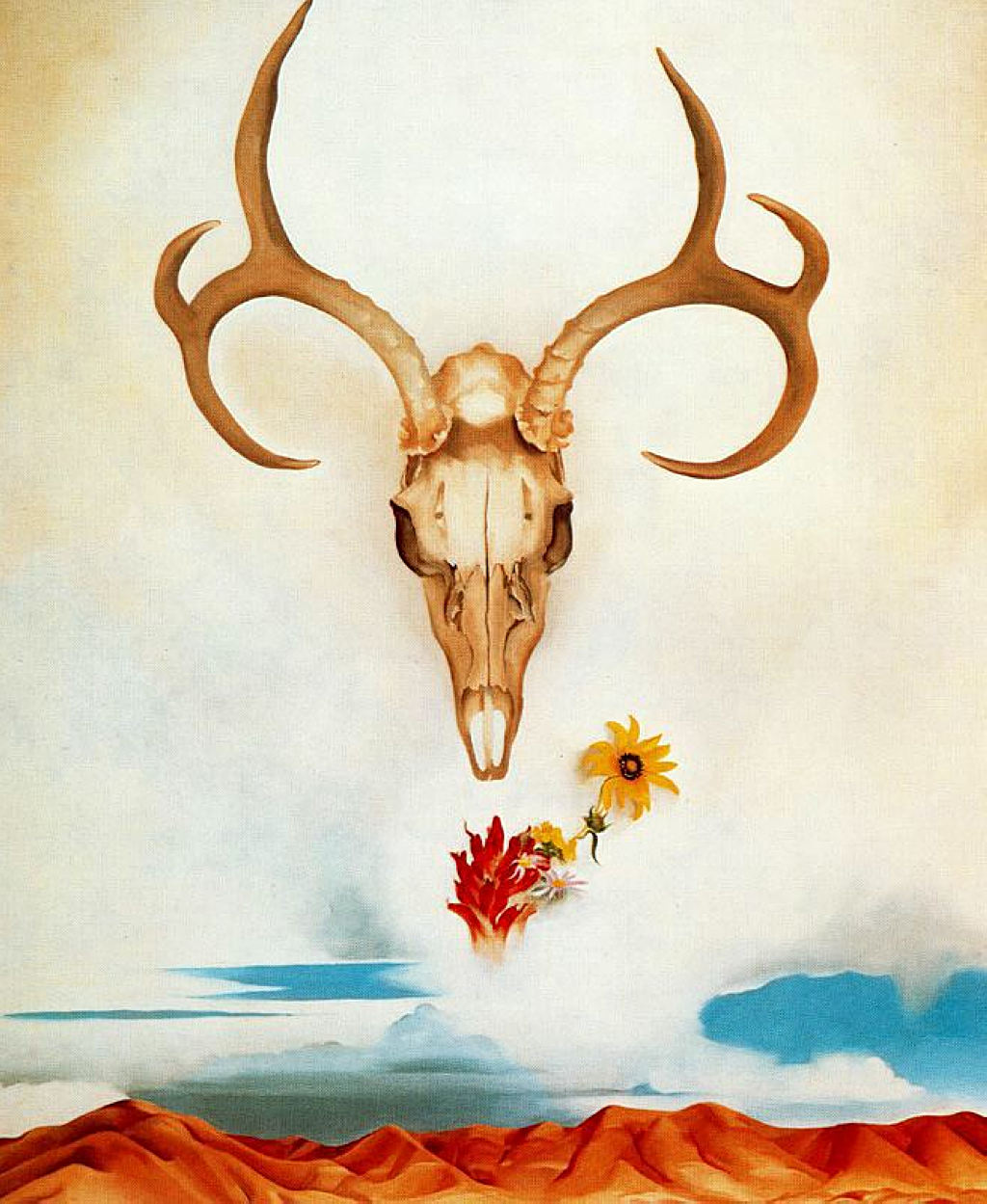
i lived in Japan a long time ago, and i feel as nervous as ever saying things about how “in Japan, etc.”; however, in Japan, if i understood things correctly, talking about the weather is a topic for genuine conversation. i enjoyed this so much, because i think even non-poets almost always reveal something about themselves when they react to the heat or the rain or the cold or simply change, and i like listening. Counterintuitively, being really hot makes me feel clean–probably because i grew up in the tropics; perhaps for the same reason, i like being out in the rain. When i lived in Florida, getting cold sent me into a mean rage. These days, i eagerly anticipate the giganticness of deep winter, and the respite from the extreme sociality necessitated by New York summers. Talking about the weather, or the seasons, is a very easy way to allow for the fact that metaphor (and desire) is always right there at the edge of language–of what we seem to be saying. The first line of the Bell Jar, “It was a queer, sultry summer, the summer they electrocuted the Rosenbergs, and I didn’t know what I was doing in New York,” makes the weather an actor, and the last sentence of Toni Morrison’s Beloved: “By and by all trace is gone, and what is forgotten is not only the footprints but the water too and what it is down there. The rest is weather. Not the breath of the disremembered and unaccounted for, but wind in the eaves, or spring ice thawing too quickly. Just weather. Certainly no clamor for a kiss,” gives us “just weather”–what we generally like to pretend almost everything around us is–just predictable, explicable, rational phenomena. Or, as Butler paraphrases Nietzsche, “Only through a kind of forgetfulness of the tropological status of language does something like customary language take hold.” Tropological refers to tropes or figures of speech–metaphor, metonymy, synechdoche. In other words, plain prose cheats. Plain–not purple or poetic or difficult–prose cheats. It cheats because it pretends that language isn’t necessarily indebted to subtext, because it’s boring, and because it seems to exalt “face-value.” There are so many kinds of cheating, and i will never understand why something like sexual infidelity trumps willful lack of engagement with the world, with humor, with desire. Try, because not trying is also a kind of cheating–it’s just too ubiquitous–and too necessary to normative life narratives–to prosecute.