
“At once part, cause, effect, example, what is happening there translates what takes place here, always here, wherever one is and wherever one looks, closest to home. Infinite responsibility, therefore, no rest allowed for any form of good conscience.”–Derrida, Specters of Marx
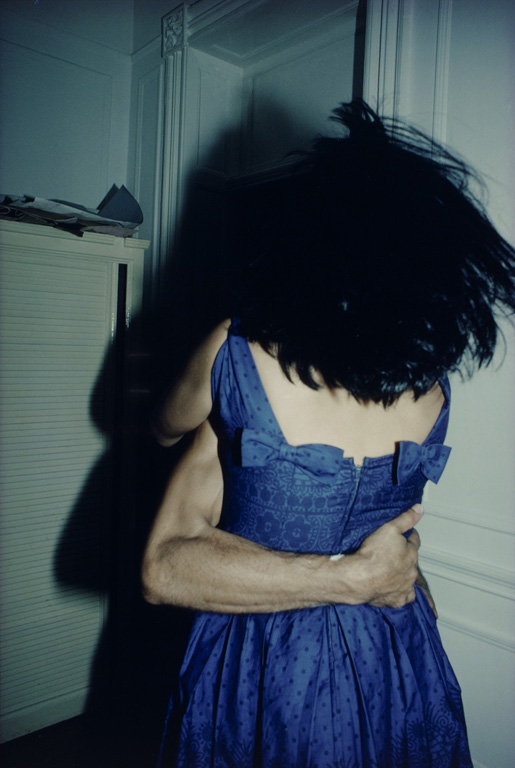
On one of your visits back to Gainesville, after i had finally moved out of our old place with all the spare rooms and the square-screened windows you’d nailed shut so no one could get me and into the spooky quad up the street, i had a party. You came in wearing that wool cabbie hat of your grandfather’s, and i wound up wearing it around until we lost it forever. After setting your little vinyl-shelled suitcase down, you sat on the blue and white striped loveseat and at some point got back up, tapping and strolling around the apartment. Kneeling down and flipping through my small stack of new records and, picking up Trout Mask Replica, you asked, “How did you know about this?” i smirked. i was learning how to anticipate you. The tricky thing was that i was no longer much aware of trying to keep up. Your likes had become mine. Or rather, i’d become such a good study that i could no longer tell the difference. We’d been broken up for a while, and there had come a serious boyfriend and a few very serious years of grad school in between, and then on one visit something was back and when i broke up with my ex his voice taunted me through my rickety land line: “At the end of it all you look more like him than me. With your jean jacket and your grown out hair, you don’t look like me at all.” At the time i just mumbled to my friends about what a crazy motherfucker he was; but when i think about it now, he was right. It was a spectacular alliance.
 I had indeed been trying on the style of a different subculture. I did miss this one and i had gone back to it and i did look, (and still do, actually), remarkably similar to this other dude. i was deeply attracted to him but i also identified with him, which is not the same thing. In fact, conventional sex/gender wisdom holds that the two aren’t really supposed to happen at the same time. This is interesting to me personally but it’s also interesting to consider how these kinds of identificatory practices are often most extreme when we are least aware of them. Now i can say, hey, i had a largely itinerant, lonely, childhood from which I saved very little and retained no friends. My lasting friendship with this person, the fact that in many ways we grew up together, represents both the reality and the fantasy of a better life and by identifying with him i hold onto that hope for something better. I let my son keep his security blanket for the same reason: it sutures something emotionally vital. Later on another boyfriend joked that we probably wouldn’t make it because of my preference for rocknroll over art rock and we both laughed but we knew it was true. Changing teams to art rock just wasn’t part of the plan.

i was a little sister of two big brothers before i had boyfriends and i learned young to understand love as a scholarly thing: mastery of the other’s interests created intimacy and trust and a space for common ground. Always hungry to be the closest intimate, i knew to do it first. For this reason, i have an encyclopedic understanding of late 1980s surf culture and early dirty rap from so many days spent stretched out in the back seat of my brother’s Honda Prelude, sun in my eyes as we sped to St. Augustine for another day of reading on the beach while the boys surfed, laughing nervously at 2 Live Crew lyrics and puzzling over the label on the bar of surf wax melting in the back window, trying to figure out if the promise that Mr. Zogs was “the best for your stick” was something sexual or not.
That i am either completely misremembering grad school or that my experience was drastically out of keeping with everyone else’s is entirely possible, but let’s pretend for a second that this assessment is valid. When i look now at the work i was doing, i see that it was immanently personal–meaning that all of my theoretical attachments were very obvious reflections of my background, desires, and biases. My anti-disciplinary discipline was Cultural Studies, and the work we were doing was overtly political. That the political was so thoroughly personal was both a given and a taboo. As teachers, we had to present as authorities on our subject matter and because, like oral history, personal accounts are not weighted the same as properly academic information (whatever that is), we promoted the experts. Some of us chose, say, the Marxist track–one in which personal accounts were allowed but hardly necessary. Others of us chose Feminism or Queer Theory or whatever but this was grad school, after all, not therapy, and the rub of Cultural Studies was that we were supposed to be figuring out a discipline.
 i had one professor who insisted on addressing the place of desire in the classroom. He also insisted on addressing race and class and gender, but none of these modalities were ever presumed to exist apart from desire. i’m not saying that my other professors weren’t just as radically committed, if not moreso, to theorizing desire, but his pedagogy was aligned with this necessity in a very different way. Whereas my classmates complained about the Oprah-fication of womens studies classes, where students used class time to process their desires, we spent class time learning how to understand desire as something that shaped economies and lives far beyond the comfort of our bedrooms or our new shoes. Midway through my first semester of grad school this professor got a job at a fancy school in the Northeast. He said the students in our department weren’t smart enough. i understood this as a statement of desire rather than fact. He loved us, but he wanted to have a career that mattered differently so he had to go. Some of us never really recovered. I’d gotten into grad school on the merit of some unconventional papers I’d written for him. I had no idea how to construct an appropriate scholarly essay. I still don’t.
 I went to see Black Panthers: Vanguard of the Revolution last weekend at Film Forum. As with pretty much any film I’ve ever seen about revolutionary politics in the United States in the 1960s-1970s, I was led on a ride that looked like this:

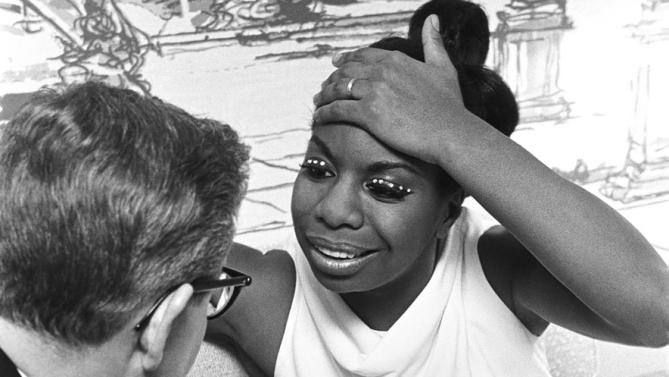
I can’t remember if you are supposed to talk about plot in documentaries, but these films are generally driven by the imminent failure of whatever movement has been chosen as its subject matter. These were the movement/revolutionary/radical ideas. This is why they were doomed to fail. Someone later asked me how the film was and I said it was fine. The footage was good, but the form was very conventional. As in the recent Netflix documentary, “What Happened, Miss Simone,” we are presented with the madness and egomania of the characters as the unfortunate foil in what began as a situation full of brilliant and exciting intensity. That the madness and disorder (necessarily? It feels necessary) might be overdetermined by so many structural problems is occasionally hinted at but not fully explored in either case. I find myself still wondering what that other narrative form could look like.





 noVacancy