Now write this down

The Stones notoriously preferred what they imagined as the soul-killing junkie destitution of the Blues over the little-ditty silliness of country. i guess the line seems much finer, or at least differently demarcated, if your familiarity with the players is more local, but i get the point.  Some Girls, their “country” disco album, was released in 1978. It was hugely popular–somehow inhabiting punk’s insouciance without having to sound punk. Jagger says it’s an album about New York. It is also deep melancholy, but this is how they stayed “relevant”–by getting, and cashing in on, the joke. The video is absolutely necessary.  They have made the leap from high modernist sincerity to the permanent smirking onslaught of the posts. My first memory of Mick Jagger as performer comes from the “Dancing in the Street” (1985) video with David Bowie, but this one also feels vaguely familiar.  i had to discover the tragic heartthrob Rolling Stones stuff on my own much, much later. In other words, flipping the classic maxim from the 18th Brumaire, i knew them as a joke first. This is how most things seem to have come–i’ve had to really shuffle time lines to make them matter.  My parents. Rock and roll. Gender roles. Cars. New York. Lovers. San Francisco. David Bowie. Poetry. Meat. Dylan. If i know you haven’t always been this lame, i can figure out how to love you.

“Miss You” is the first track. “Shattered” is the last. “Beast of Burden” is penultimate. Remember the Bette Midler cover? It was my favorite video for weeks back in 1984. The context was, of course, completely lost on me–the video starts with Mick coming into her dressing room and telling her they have to end their love affair because he can’t stand the publicity.  She convinces him to stay and watch her perform “his song,” which in her version substitutes the catchy “pretty pretty girl” stanza with the brazen and ominous: “My little sister is a pretty pretty girl. My little sister is a pretty pretty girl. She loves to ride and she loves to crawl. They love to take her out behind the garden wall. And when they’re done they just throw her away.  And she don’t have an awful lot to say.  It hurts her so bad to come to the end. I remember all the times she’s been so, easy.” The message is clear: her little sister may be a beast of burden, but not the Divine Miss M. Jagger seems like, well, a shadow of his younger self.  At the time, Bette’s hotness seemed objective to me, and his seemed like a great, puny joke. They end up on the stage together, but his little moves are lifeless and silly.  They are both performing young Mick, but she does it better.

For some time now, i have been puzzled by Elizabeth Freeman’s essay on Elisabeth Subrin’s film Shulie.  The essay exists in a couple of incarnations: first as “Packing History, Count(e)ring Generations” in New Literary History (Autumn 2000), and recently as the “Deep Lez” chapter in her new book, Time Binds.  What i am most confused by is her reading of Judith Butler in order to articulate her proposal for something i find very compelling called ‘temporal drag’.  Freeman argues that Butler’s theory of gender performativity creates a slippery valorization of gender performances that attempt to shake off the past, and necessarily makes those who choose to inhabit allegedly retrograde identity-subject positions umm, less cool? This is where i start to get confused. ‘Repetition with a difference’–what has become Butler’s ‘always historicize’–in my reading, is precisely an attempt to inhabit the citations we are bound to with both an understanding of how we represent and a hope that repetition is not a fatalism.  No annunciation is possible without citing past conversations and conventions.  Here is the line in Freeman that always stumps me: “Moreover, to reduce all embodied performances to the status of copies without originals may be to ignore the interesting threat that the genuine past-ness of the past–its opacity and illegibility, its stonewalling in the face of our most cherished theoretical paradigms–sometimes makes to the political present” (63). The beauty of Butler’s work is the way she troubles the line between copy and original. Each copy is a singularity. Originality is not necessarily the question.

What i can’t quite understand is, what is the genuine past-ness of the past?  When someone we love is really gone–when he or she becomes a physical impossibility, maybe that is the genuine past-ness of the past? This is why mourning is the healthy response to loss. It indicates an understanding of the natural flow of things.  But why accept nature for some things and reject it for others?  If we are really trying to undo teleological time, why reify something as alive as the past?
Broken English

Dad: “What is it, Ben?”

Ben: “I’m just.” Dad: “Worried?”

Ben: “Well.”  Dad: “About what?” Ben: “I guess about my future.” Dad: “What about it?”

Ben: “I don’t know.  I want it to be….”  Dad: “To be what?”

Ben: “Different.”

Like many, many other people, i am a huge fan of the Graduate (1967).  Perhaps unlike the  average viewer, i find Elaine (Katharine Ross) tiresome. Nonetheless, Benjamin’s post-collegiate adult extended-adolescence, his awkwardness with Mrs. Robinson, the plasticity of his days, the way that almost every shot is prescient and overdetermined, and mostly, what the beautiful, jangly version of Simon and Garfunkel’s “Sound of Silence” alerts viewers to in the first minute of the film–its keen ability to listen.  The volume of mundane daily life is how we understand his discord with his surroundings. We hear the loudspeaker at the airport when Benjamin first returns to L.A. obnoxiously “interrupting” the soundtrack, bubbles in a fishtank, his flippers smacking the linoleum floor, his ill-timed whimpers and groans of discomfort, and, of course, his Darth Vader-y breathing inside the scuba suit that mutes all other sound.

At night, after my son goes to sleep, i put my headphones on while i work, but i always pull one ear to the side so that i can hear him if he coughs or rolls out of bed or has a bad dream. i can hear the traffic on McGuinness, too, which seems to get louder at night. My neighbors screaming at each other in Polish. My cat begging for a second dinner. And in my covered ear, songs, splitting my thoughts. A soundtrack that i choose to hear as a hope for something different. The sounds marking a silence more present in its absence than any (other) real company could offer.

Give Out

My middle name is Sunshine. That’s what my parents decided, and it’s funny after a few drinks. It doesn’t quite match my temperament; that is part of the joke. i can’t say that it hasn’t always, but once i started learning that i could say no to things, my insistence on that word (that word that no one thinks she wants to hear) shortened my candidacy for beacon of light-hood.

In a further flattening of affect, a couple of years ago i was diagnosed with narcolepsy, a central nervous system disorder that produces the sudden, uncontrollable onset of sleep. There is no explanation for why people “get” it, although it seems to have something to do with heredity and something to do with a shortage of a brain protein called hypocretin that may regulate when and how we sleep. Other symptoms include, “features of dreaming that occur while awake,” and cataplexy–attacks of muscle paralysis triggered by strong emotions. i exhibit both. This means that i have to constantly consider my behavior before and while doing almost everything. Getting in an argument while walking down the street is basically impossible–my knees buckle and my legs just give out. Telling a joke is hard. Giving someone a basic complement, if i really mean it, makes me tremble. Allowing myself to get frustrated when doing things like, say, waiting tables is also problematic. My hands start to shake, plates begin to clang, and i have to take a deep breath and stabilize myself on the edge of a table or the bar to keep from falling on diners.  i get sleepiest after i eat, which means that eating alone at a restaurant, sitting at the bar–one of my favorite things to do, can also be tricky. The subway is a crapshoot. In general, i have had to become less of a hothead, because when i try to lose my cool, my body doesn’t cooperate. For someone who had never been very interested in controlling herself, this has forced extensive modifications of my nature.

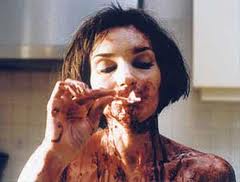
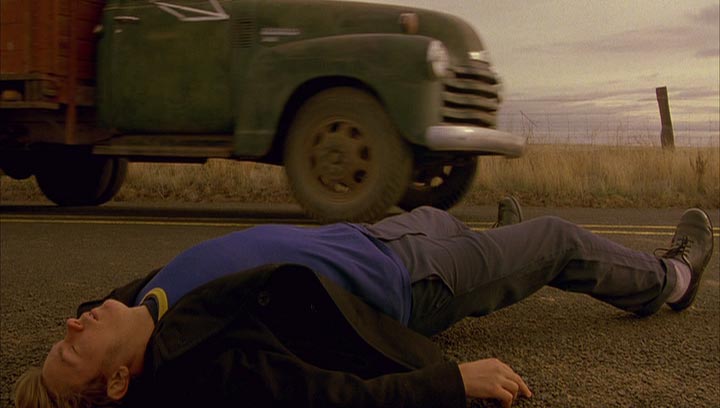
Claire Denis, Trouble Every Day, 2001

Research that produces articles with titles like, “Brain Protein Tied to Sleep and Feeding also Involved in Bodily Sensations,” suggests that hypocretin also sways how we eat and how we respond to pain. This study reports: “Perl and his colleagues were intrigued by the observation that hypocretin nerve fibers terminate in a spinal cord region involved in sensations about pain-causing events…It may be that a decrease of the protein ‘helps people sleep and minimizes attention to minor inputs. Conversely, an increase helps a person to continue to do an essential function like eating even when there are minor inputs from the peripheral nervous system, such as occurs when one sits on a rough edge,’ the neurophysiologist explained.”

A decrease could presumably result in someone who easily loses her appetite when she sits on rough edges? Someone who doesn’t mind rough edges? Someone who snuggles up to rough edges and prefers the floor to pillows? Or, as the Pavement song has it, “Nothing gets me off so completely, than when you put it down ten feet in the ground.  Call it response (to a) negative home.” i am interested in these sorts of explanations, but i am less interested in the “why?” of narcolepsy than i am in thinking about how it works for me. What is my body trying to get me out of, or back to?  In his essay “Queerness as Horizon,” Jose Esteban Munoz pulls a phrase from Ernst Bloch–“the no-longer-conscious,”–which he explains as, “…a term that attempts to enact a more precise understanding of the work that the past does, what can be understood as the performative force of the past.”  Lately, i’ve begun to wonder if these ‘features of dreaming that occur while awake’, coupled with muted responses to pain have something to do with my insistence on being stuck. There are things that i just enjoy not getting over. An over-played mixed-tape, mountains of books i have no proper place for, folders full of old writing assignments i received in college, a wine bottle i shared with someone to whom i am attached, rocks my son picks up for me on the street, daffodils, matchboxes, promises.

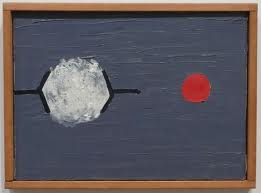
Forrest Bess, Untitled, 1967

i don’t completely mind the narrative for “stuck.” Somehow, it feels more honest. If we understand ‘performative force’ as the life-altering effect that can result from citations of the past–of stories and memories that actually do something to the present and breathe a modified life into our presumably dead histories, then the unconscious is much more than a tomb. What i like about my narcolepsy is that somehow it feels productive. Is the no-longer-conscious accesible through sleep? Is my nostalgia and desire for people and things that seem to be gone keeping me from waking life?  Am i a ruiner or a sociopath because i am lacking the brain protein that tells me when to quit, or when to stop dreaming? Do you see where i am going with this?

It Can’t Be All That Pretty…

i first heard the Magnetic Fields in 2004. My boyfriend at the time was a (music) writer, and would gift me with unstoppable mixed-tapes full of jams and heartbreakers–most of which were new to me. Part of the gap in my musical knowledge had to do with a ban on indie rock that was in its homestretch when i met him, so there was basically a genre of really good music at which i had theretofore merely rolled my eyes.

The person i had designated as my untoppleable true love was a purist, and i had followed in his footsteps. Bowie, the Stones, Roxy Music, the Clash, Scott Walker, Neil Young, Morrissey, the Smiths, some reggae, a lot of Soul. This was the late 90s, so Suede, Pulp, the Make-up, and the Verve were allowed, too.  We were academic about our listening. We would find a band, get into them, and then listen all around them.  Who had their influences been? Who were they friends with? What other bands happened because of them?–etc. We bonded over Morrissey and Roxy Music, he placed Bowie and Scott Walker in my lap, we found the Clash, Neil Young, T. Rex, Spiritualized, and Fleetwood Mac together, lived through Suede and Pulp and the Make-up, disagreed about the Red House Painters and Pavement and New Order, and, over the many, many break-up years got into Dylan and Led Zeppelin.  i would put my head on his lap and stretch out on the couch and we would just listen, silenced by how good it all was. i would crawl into his tiny twin bed and he would tap his fingers along the cds, humming, looking, even though he’d already decided on Scott Walker. He would start the cd and climb into bed with me, both of us long and absurdly lean, and press our foreheads against each other and fall asleep. The White Stripes and the Strokes happened. The Flaming Lips, more Spiritualized.  i found the Boss and Thin Lizzy on my own, but somehow everything else that mattered had crossed my path directly because of,  with, or under the real or imagined spell of him. This means that our dislikes were also passionately shared: no Bowie after Scary Monsters (and Super Creeps), we covered our ears at Belle and Sebastian. Yo La Tengo, Wilco, and Modest Mouse were pure snores. Sleater-Kinney were unlistenable. Many, many other bands had good lyrics but just looked stupid or sounded…old. Not old like the Seventies; old like middle-aged. Of course, i would come to change my mind about almost all of this.

Shortly after i started dating my fancy writer, he moved into an attic apartment. June in Florida is hot with the sun. He would leave early to teach and i would lay in bed all day in front of the AC unit, reading his books. There i found Padgett Powell and Joy Williams and Leonard Michaels and Denis Johnson. The Believer had just started, and i found it first on his floor. When he came home, we would rush to the pool and stay there until i had to leave for work. When i got home, i would crawl into bed and read some more. He would start a cd without saying anything while i was running on about some table i’d waited on or some friend of mine, and then suddenly i would shut up and say, what is this? i was sat underneath the quilt his Mom made with squares his Grandma brought home from her factory job–a blanket that became the closest thing i ever had to a transitional object–when i first heard Bonnie “Prince” Billy. i wanted “Hard Life” over and over. He and i, i don’t know how the fuck we didn’t kill each other. Maybe we did, but we also lived for a few years. No one could have kept it up, but that song keeps all of the early desires and empathies and, well, prescience, intact. Interpol: “NYC”–sitting right there. Same spot. “Maps” in the car. “Hey Ya” in the living room while he was cranking out a review. We got so drunk. And played it over and over. And danced our stupid asses off. We’re lucky Jason Molina didn’t turn us into junkies. Joanna Newsom’s first album. The Walkmen. My Morning Jacket.  Finally, on a mixed-tape, the Magnetic Fields.  We were in the car. He was skipping through the songs to make sure i knew what they all were and “I Don’t Believe You” was in the queue. “Stop. Start that one again. Let it play.” How could i not have, but now i knew we were doomed. If Stephin Merritt could write those songs, then there might be others out there. Other people even more terrible and even more perfect and we both knew it,  and we both took the hit and kept demanding newer, more perfect love. The songs had convinced us it was out there. When i lost the first one, i put everything into a bowl and ate it. He became a part of me that will keep me from ever being only me again–thank god. When i lost the second one i thought, how can i ever make my days matter this much again?

Even if your cheap career depended on it.

i prefer, to a calculated fault, the thing that is supposedly not the better thing. i feel sorry for assholes, Christmas trees, and panhandlers. Commercials make me cry. i enjoy other people’s smoke, can’t let go of taped-up shoes, rig my sunglasses with paper clips, and cherish articles of clothing that have earned their holes.  i prefer Manhattan Ave to Bedford, school to home, eating at the bar to a table, humor to comfort. i encourage unfinished business and jeans. Uncorrected proofs.  Marx. Laundromats. Trannies. Grey hair. Snacks. Jittery diesels. Dirty stories. Rain. Skipping breakfast. Old people. Adolescents. Houseplants. i buy boiled eggs. i think Stockholm syndrome is kind of romantic. i know this is a list of cliches. Sometimes i don’t care.

One of my Florida apartments was in a carriage house in the backyard of one of the Medievalists at my University. Once, just after an actually devastating hurricane, i had to go into the big house for something.  For some reason i was without a chaperone. Maybe the back door was open and i’d wandered in, desperate to find someone? Regardless, i found myself alone, walking through a beautiful but quite lived-in house. It was the sort of place i might usually go for, but then i hit the scary room. The walls were lined with ningyo, Japanese dolls, and they were unkempt, almost rotten, and in such a large quantity that the space disturbed me. i imagine myself walking backwards out of the room and scampering back into my own private attic. This is not the kind of preservation i collect.

In Be Here to Love Me (2004), there is an interview with Townes Van Zandt’s son that has haunted me for years. Looking clueless and sweet, the son mentions that they only ever bought groceries at convenience stores.  When i saw the film, i was fresh out of leaving someone i really, really hadn’t wanted to leave. My ex only ever shopped at the convenience store up the street. Beer and crackers, mostly.  Watching the kid mention this detail casually but bringing it up because he knew it was a big deal kind of…scared me.  A tiny thing that hints at walls of disturbance. i thought about him walking up the sidewalk to the store, a gesture that seemed gigantically immediate, driven, and short term, and i couldn’t stop crying for a while.

“Mostly Middle,” Michael Hofmann’s review of a new collection of Elizabeth Bishop’s poetry  in the London Review of Books, 8 September 2011, locates her skill as a poet who only hints at the crazy: “It is in rare, late poems that Bishop permits herself not a long look so much as a brief glance at the worst: ‘A yesterday I find almost impossible to lift’ (‘Five Flights Up’) or in ‘One Art’ (a poem so stifled in its compressed clamour I’ve never cared for it): ‘It’s evident/the art of losing’s not too hard to master/though it may look like (Write it!) like disaster.’ ” Compressed clamour. The art of losing. Yesss.  i’m not arguing for indiscriminate abandonment here. i’m looking for places where people found a way to do it constructively and carefully because it had to be done.

Cheesy, great Voices and Visions (1988) clip:

http://www.youtube.com/watch?v=0gMVffgkpfQ

That’s How Much Fuck Fish.

Adaptation: something that is modified to suit new conditions or needs.

Are there superadapters? Something like supertasters? If there is genetic variation in taste, and sweetness is not objective–sour, neither–what can be made of variations in capacities for attachment–and detachment? One person’s sociopath is another’s twin? Last night at work someone told me that supertasting was a) very 90’s and b) actually a disorder rather than a skill.  The same thing could surely be said for superadapters, but that’s so easy.

Walking With a Ghost

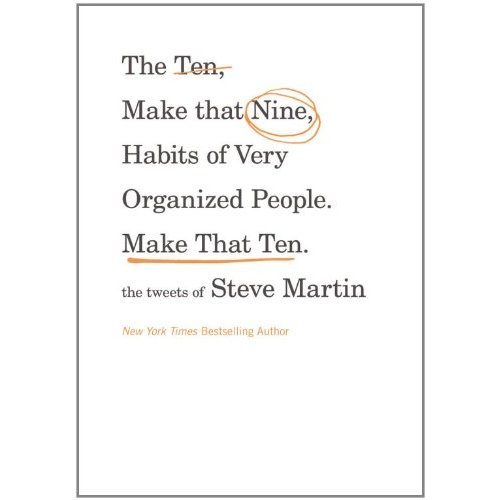
A rare solo visit to the Greenpoint library a few days ago gave me a second to thumb through the new arrivals in the adult section.  i immediately had a stack of about 10 books, including Barton Seaver’s For Cod and Country: Simple, Delicious, Sustainable Cooking; The Ten, Make that Nine, Habits of Very Organized People.  Make That Ten.  The Tweets of Steve Martin [yep–that’s all one title]; Olivia Harrison’s George Harrison: Living in the Material; The 2012 Pushcart winners; Arundhati Roy’s Walking With Comrades; and Roberto Bolano’s The Last Interview.

i narrowed the pile down to the last two, justifying them as subway reading–a crucial category, because if i do not have something really compelling to read on the train i will sleep through my stop every time,. i tore through the Bolano; about to begin the Roy.

A few highlights from Bolano:

“In one way or another, we’re all anchored to the book.  A library is a metaphor for human beings or what’s best about human beings, the same way a concentration camp can be a metaphor for what is worst about them.  A library is total generosity” (48).

“For me, the word ‘writing’ is the exact opposite of the word ‘waiting’.  Instead of waiting, there is writing.  Well, I’m probably wrong–it’s possible that writing is another form of waiting, of delaying things. I’d like to think otherwise” (62).

“That’s more important than writing it [poetry], don’t you think?  The truth is, reading is always more important than writing” (67).

Ritual Unions

Got me in trouble again? Hard to say that i don’t like trouble at this point. That i like to trouble is clear–both in the critical sense, that’s how i wound up in grad school, but in my personal life as well. The two year itch. The permanent open door. The insistent, umm, curiosity about boundaries. i collect it nouns and verbs.

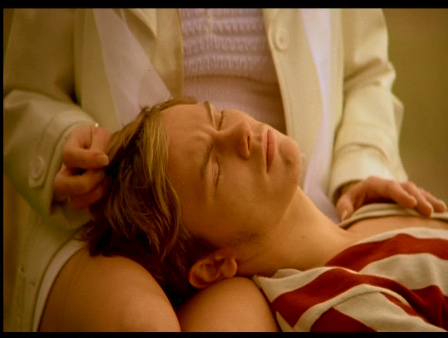
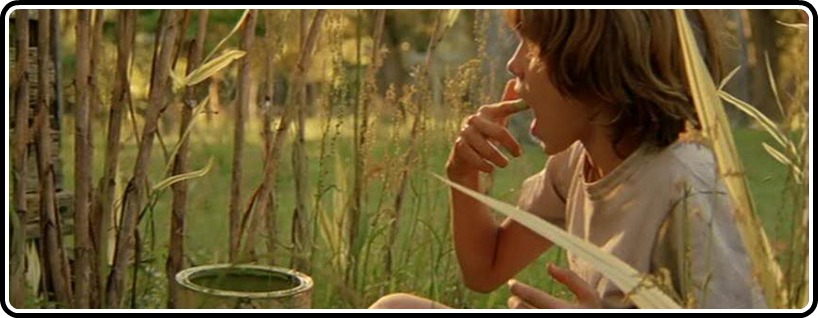
To collect pretty trouble. Like Elizabeth Peyton’s painting of John Lydon. Most people see ugly. She sees gorgeous. Now i can see, too. Like glitter and drag queens and hot, sticky loud shows in a tiny room toilet paper jammed in your ears and everyone’s pretty, too. Like the way David Gordon Green used to be able to make a junkyard or a broken building, or even a kid with pica beautiful–see above photo. And see this one:

Then sometimes the metamorphosis births the cockroach instead of the butterfly, and the trouble i get into just hurts. Think Lindsey Buckingham’s “Trouble.” If you know the song, it is soft, sweet despair–that moment when you realize, shit. i care. And it hurts. And you try to text that feeling and it looks like: crapcrapcrapshitfuck. And you listen to the song, and it’s a soft descent that makes you think, should i worry now?

http://www.youtube.com/watch?v=RbpuflLgmgM

But then you watch the video. Ha. Hahahahaha. It’s absurd. Six dudes playing guitar, singing with mouths open wide. Six more dudes standing up playing drums–totally feeling it.  Mick Fleetwood is even there, looking kind of like Animal from the Muppets. Supposedly he was meant to record a drum track for the whole song, but he and Lindsey had a tiff in the studio, and there are only 4 seconds recorded, and that is actually the drum track for the song. Those 4 seconds, over and over. On the double. “I think I’m in trouble. On the double.” Form follows function, on purpose or not. Trouble doesn’t have to stop at bad. It moves.

So here i am. There are piles of clothes on the floor. Most days i wake up, go straight to the coffee shop and work for a few hours, come home and change, walk to Isa and work for 9 hours. Repeat. Sometimes i have breakfast with Joni and then race him to school. i stay up late the night before and pack his little lunchbox and set his clothes out. Make sure his penguin humidifier is full for the night, that i roll him over when i see that little leg hanging over the side of his munchkin bed, that i kiss his forehead while he’s asleep, and giggle when he comes and jumps on me at 6:45 the next morning.  Yes, ritual unions got me in trouble. Again. i’ll take it. On the double.