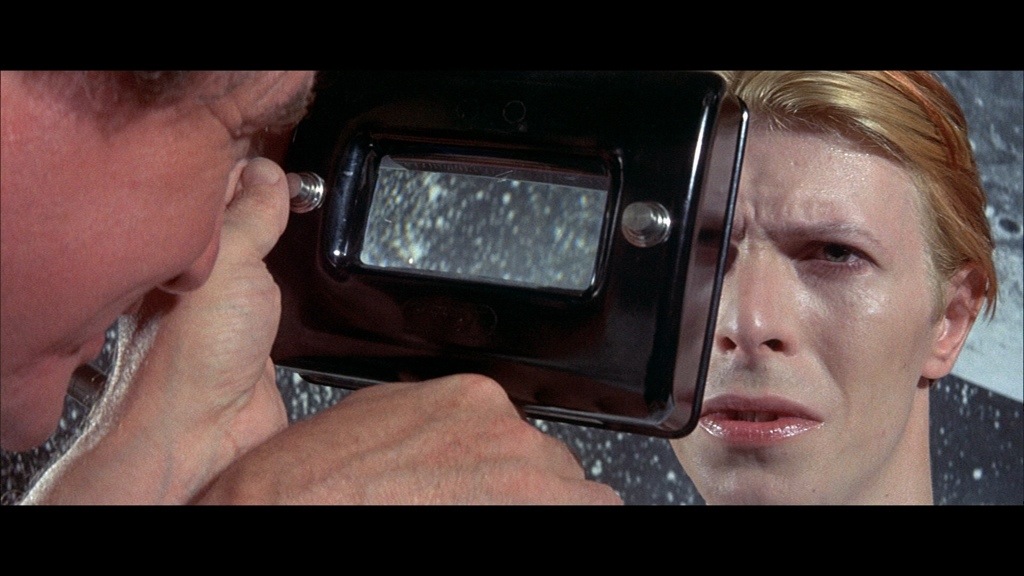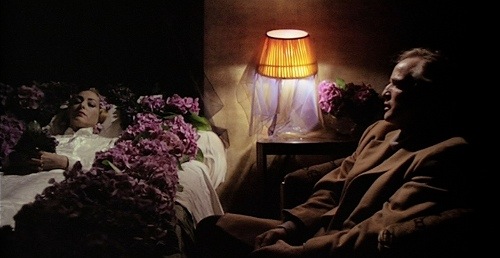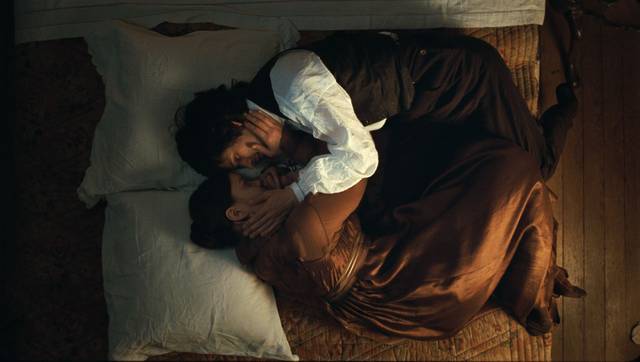
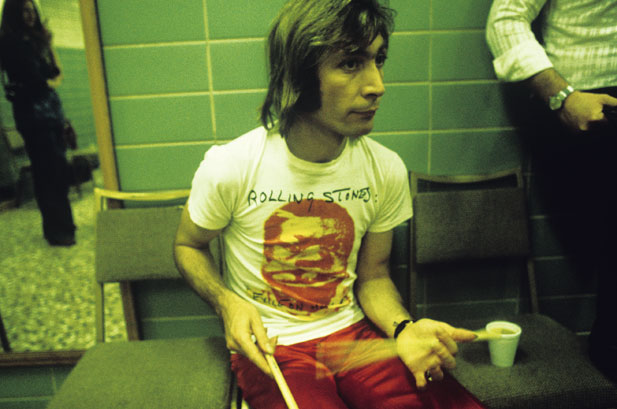
i finally had it. After all these years, i dreamt that i slept with Mick Jagger. And then you and i were at a party and i grabbed your arm and whispered, “Shhhhh…Over there, look. It’s Charlie.” And we both got quiet and set our beers down on the bar and you were trying to look cool but i saw your fingers tapping your thigh and i knew you were as close to nervous as you can get. He was tiny and silver with his head nodding and eyes bright. You were standing a little in front of me; so, i inched up out of my stool and set my chin right between your shoulder and your neck and your hair tickled my nose and you pushed back into me a little and i set my right hand on your hip and we sat there grinning and proud of ourselves. Like he was a sign. Like we had finally timed something right. Then we lost sight of him and sunk into a dirty velour couch too close to the ground and i laughed through the smoke and said,”God, how funny is it that i finally slept with Mick?” And your guard, quiet as a contact lens, settled in between us. This was no ex-girlfriend in a bathroom stall or a late night in my boss’s hot tub. For a second i understood that the drive to light fire to something, for pyromaniacs, is nothing other than irresistible. i looked you in the eye and took your hand and told myself that if i could count to ten before you got up and left me there on the couch it would be okay, but in a nervously adept jump of lucid dreaming i forced myself awake before you had the chance.
My son is 6 years old and, most days, he drags around a blue and white silk blanket he received as a gift when he was a baby. The blanket is named “B” and takes the male pronoun. He is carefully packed into the bottom of backpacks, regularly refunctioned as a cape or an umbrella, twisted around little fingers while thumbsucking. B is stitches, wallpaper, the hug of the absent parent. i like that B can soothe both the ouchies i am not around for and the injustices i inflict. i watch adults take it in and i furrow my brow and hear myself say, “I never had anything like that.” Then after i put him to bed i sit down and write about my own fixes for attachment and distance. i watch adult noses crinkle at the smell of B, “Ughh–get it away!” they shriek. “Let me wash it,” they plead. He remains undeterred by these complaints, but has begun hiding B from the other kids.
Joan Didion made the catchy sentence, “We tell ourselves stories in order to live,” to describe this problem. She continues: “We live entirely…by the imposition of a narrative line upon disparate images, by the ‘ideas’ with which we have learned to freeze the shifting phantasmagoria — which is our actual experience.” i like her sentences and i accept them as a certain kind of description of cognitive self-care, but i need more. Phantasmagoria is a young word, only coined around the turn of the 19th century. It was invented to describe the images cast by a device called the magic lantern. Now it is also understood to describe “a shifting series or succession of phantasms or imaginary figures, as seen in a dream or fevered condition…or as created by literary description.” Storytelling as the organization of images and the translation of those images into words. Living as a kind of constant, immediate translation. All of it held together by magic, or, “ideas.” i hear this word and i think immediately of Walter Benjamin, who would also use phantasmagoria as a metaphor for the commodity language made legible by the magical incantations of reification. The stories we tell ourselves to live under capitalism, as he saw in endless repetition in his arcades, are their own complicated phantasmagoria of desire.
Yesterday I paid the dollar and walked through the Met, weaving through my precious sarcophogi and other funereal ephemora from ancient civilizations to the exhibit “China: Through the Looking Glass” in the Anna Wintour Costume Center. The clothes are described as examples of how these designers made something out of the stories they had told themselves about China. In an interview in the exhibition catalogue, John Galliano describes this collection as an example of how his creative process is primarily “narratively” driven. The smart curatorial descriptions invoked something i couldn’t wrap my head around called “natural” postmodernism which has to do with narrative, global capitalism, and the representation of this happy clash in the form of magical, mesmerizing, impossible gowns. i mean, i first knew “Opium” as a bottle full of adult smells on my Mom’s dressing table and much later uncovered the euphemism.

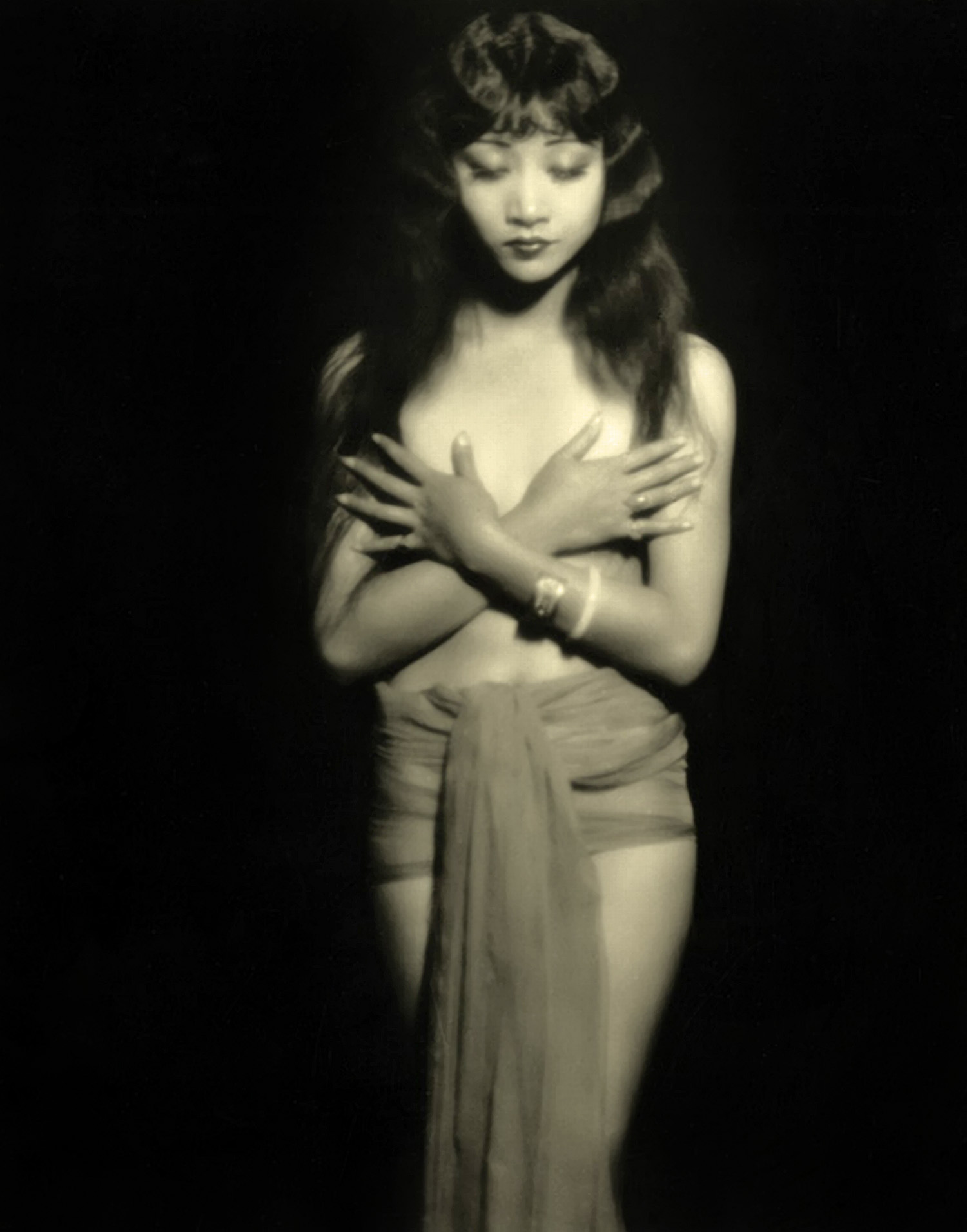
In a long room bracketed with film clips of Anna May Wong and lined with gowns from and inspired by her films, i feel my face crack into a half-grin when i encounter a museum card referencing Benjamin’s complicated fascination with Wong, describing a phantasmagorical reckoning of the Didion kind. Benjamin once penned an article about Wong titled, “A Chinoiserie Out of the Old West.” Wong was born in Chinatown in LA. She is the Chinoiserie from the “Old” West. Sigh. i can’t tell if things are unpacking or collapsing, but if the sentence is repeated (“We tell ourselves stories in order to live”) in this context, it feels less like creative world-making/suturing and more like guileless consumption. We tell ourselves stories about dragon ladies and peony flowers because they are easier than the other ones about Opium Wars and sweat shops. But maybe this is just the low-hanging fruit. If i render the phantasmagoria of my dream images into a story about our private history that i’ve convinced myself i need in order to live, is this any less of a violation of actually existing daily life than the massively successful repackaging of a drug as a perfume? “Through the Looking Glass,” the subtitle for the exhibition, is not a reference to Alice. It translates, a description at the exhibit explains,”…into Chinese as ‘Moon in the water’…it suggests something that cannot be grasped…a quality of perfection that is either so elusive and mysterious that the item becomes transcendent or so illusory and deceptive that it becomes untrustworthy. The metaphor often expresses romantic longing, as the eleventh-century poet Huang Tingjian wrote: ‘Like picking a blossom in a mirror/Or grabbing at the moon in water/I stare at you but cannot get near you’. Later i read that early iterations of the magic lantern were called “Ombres Chinoises” (Chinese Shadows). Right. And the blue light was my baby. And the red light was my mind.
Category Archives: Uncategorized
Like a rubber-neck giraffe/ you look into my past.
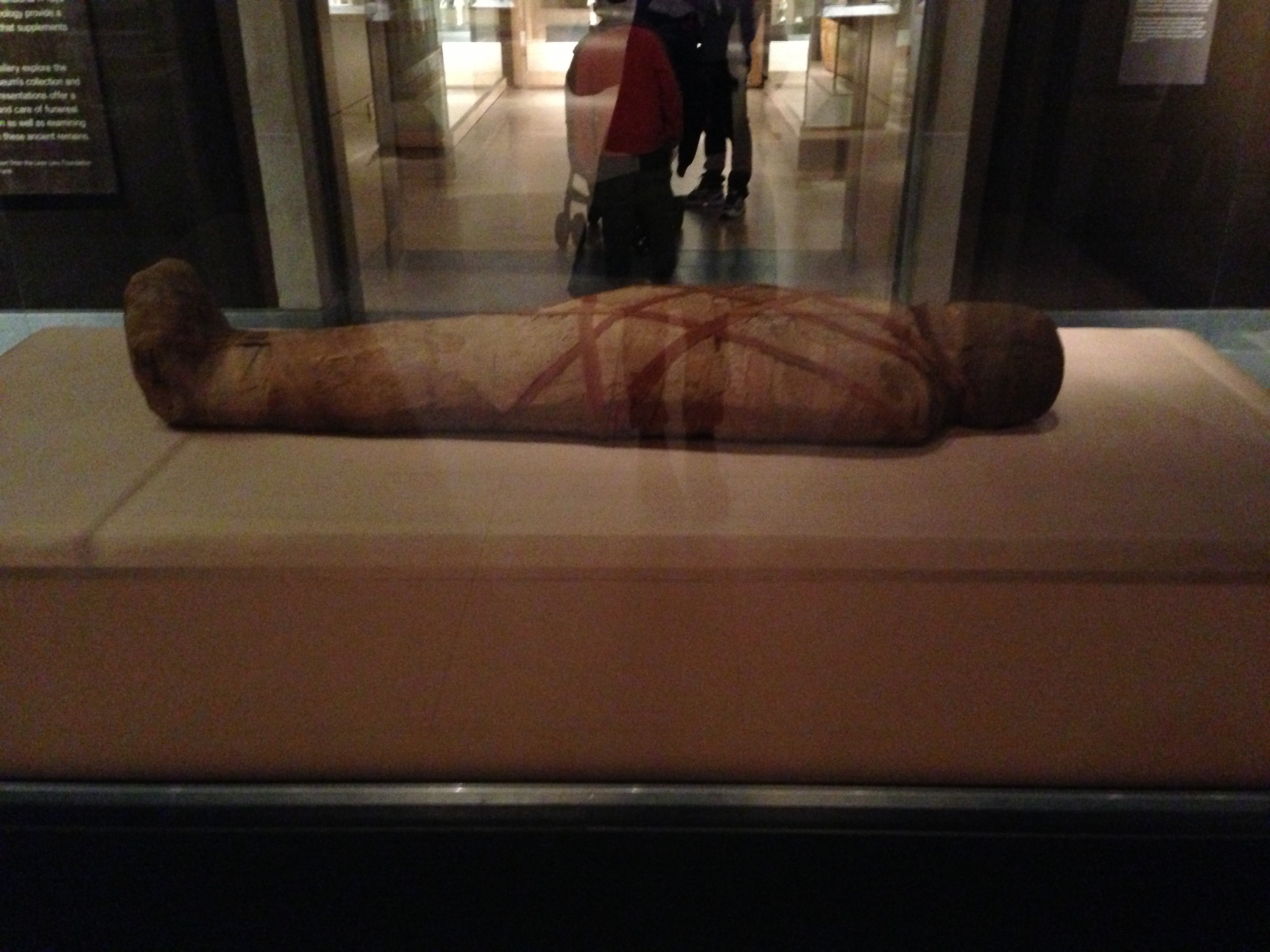
“Amulets depicting a particular demon were practical means of protection against the creature itself and were also used to protect against and cure illness and other misfortunes.” –note scribbled somewhere in the Met
For a few months a few years ago i spent most of my weekends catering reception dinners for large-ish weddings at a hotel in Williamsburg. Always a bride, never a bridesmaid, i had never really observed standard marriage rituals. Most of my friends are unmarried, and both of my brothers married very young with complete success. i thought marriage was a kind of spontaneous response to meeting someone you simply could not be without–with the caveat that this feeling turns into much more breakable emotions under extreme duress and major life changes. Marriage was a game of chance, and i side here with Joan Didion’s explanation of gambling in the White Album: “Gambling is not a vice, it is an expression of our humanness.” In extreme contrast to this approach, catering put me in relation to these people whose lives seemed to have been geared, carefully, toward this moment that would no doubt be a filmic pause on forever. Everyone ate and drank and told tales about how it had always been so. Many of the couples had met in middle or high school. At the end of each shift, i’d head straight up to the rooftop bar and, as i drank with my coworkers, ask myself again: “Who are these people? Who taught them how to do this?”

My second marriage had not so much come apart as it had, like a superhero’s plainclothes costume–shredded and pedestrian in the wake of demonic, mutant transformations–exploded its seams. When i’d g-chatted my first ex-husband for legal details about that divorce, he’d typed without pausing: “Oh God, you’re not getting married again are you?” i’d spent the previous decade immersing myself in queer, Feminist, and Marxist theory trying to unthink heteronormative patterns of desire and consumption. Six months after moving to Brooklyn i was pregnant, about to be married to a man, and it was looking as if my positive pregnancy result had spontaneously aborted my academic career. i’d spent so many years working against this sort of either/or dualistic black and white good and bad bullshit, but in the wake of my move i just somehow–i’d lost so much of the emotional scaffolding one earns from spending her whole life in the same small town–let everything go out of focus.

Many teachers and professors had altered the course of my life with training, tools, and even advice. i was never baptized and my grandparents’ attempts to counter that lost enchantment never stuck. School was my favorite Althusserian ISA, and when i was younger my teachers would describe to my mother, much to her genuine confusion, a child she found unrecognizable at home. Until i actually started sleeping with my professors, this was a divide to which most of my lovers also probably bore witness. So perhaps, for instance, you can imagine the power i relinquished to the person who introduced me to theory and cultural studies. Neither of us ever stood a chance. One afternoon, in the middle of a fairly standard discussion of some work of 20th century Japanese literature or other, he stalked up to the chalkboard and drew a triangle, and then proceeded to give a very basic description of Rene Girard’s Deceit, Desire, and the Novel. i put up no defense as the idea of mimetic desire overtook my analytical toolbox. The amount of academic work this tiny alteration alone produced should have been the kind of armor i needed to avoid these kinds of sensitivities to grand narratives and normative desires.

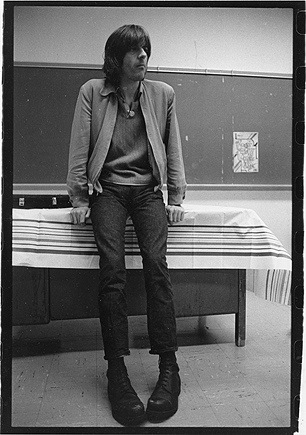
i’d lost more than academia when i drove away from the South. When i was an undergrad, i fell for someone who spent most of his time thinking about and making music. i was already fairly academic about my own rock n roll obsessions and spent most of my time listening to music and reading books, so we worked it out. He was taking piano lessons at the time, and in the music department at school there were random pianos available for students. Some afternoons we’d walk across campus and climb up the concrete steps to the practice rooms. He’d gently nudge the doors with a booted foot until finding an empty room. i’d sit lightly next to him on the bench and either read or just put my book down and rest my head on his lap. He hadn’t really figured out how to play well yet, but i’d attached to the idea of this kid who had started out as a drummer in Panhandle punk bands needing to understand how all of the parts worked. Long and slim but with drummer arms and a beat in his head that would drown out whatever conversation he was supposed to be responding to, people thought he was slow, but i knew better. i was having trouble getting used to how he always had so many people around, so I gladly tagged along on these plunky breaks, listening to him tip and tap count while i pretended to read. Afterwards we’d wander over to the music library, the only place he could get his hands on NME, which was still in weekly newsprint form. One day, he tugged me over to the stacks and said, “Hey, check this out. Can you believe someone wrote a book about this?” He was holding Dick Hebdige’s Subculture and the Meaning of Style. i finally had a bible.

Over the years, Subculture and the Meaning of Style indeed became the cornerstone of my academic work. Eventually i found queer theory and its production of sustained, complicated, relevant analyses and archivals of subcultures. Queer theory promised a land where people were smart, brave, and shameless. I’d found a “discipline” committed to elongating the utopian possibilities its subjects provoke, and it was there or nowhere, i guess. Or at least, it was there and then nowhere. The problem was, i hadn’t yet figured out how impossibly queer my own desires and interests and hopes and dreams were. i just thought i was a colossal fuck-up, so i quit all of it. “Grow up!” everyone kept yelling at me, but i’d spent the last five years working on a dissertation arguing for the right not to grow up. i was at a standstill.

These days i wake up and wonder why, when there are new hands graceful and thin and other hands boxy and callused that reach for me, faces close with real live smells and textures and the actual sensuality of presence–of my child and of my lover–why when there are new things happening every second does this velvety nostalgia turn, the second i let it in, into such a bright star? Why is the art of losing so impossibly difficult to master? Here is Audre Lorde, from “Poetry is Not a Luxury”: “Sometimes we drug ourselves with dreams of new ideas. The head will save us. The brain alone will set us free. But there are no new ideas waiting in the wings to save us as women, as human. There are only old and forgotten ones, new combinations, extrapolations and recognitions from within ourselves–along with the renewed courage to try them out.” Okay Audre, i take that to mean that i can shelve that Marie Kondo book all of New York seems to be obsessed with for a while and hold onto my past for a little bit longer. It might yet come back to life.

Jump in the river holding hands.

“Things have changed very much, several times, since I grew up, and, like everyone in New York except the intellectuals, I have led several lives and I still lead some of them.”
–Renata Adler, Speedboat
I sat on your couch on Wednesday and it came up that i am bad with lists and unable to name favorites. It’s true: I never decided on how the lists should go and i equivocate about favorites. I was not rising to the occasion. Other people have a favorite flower. Favorite color. Favorite food. i felt boring. At once too easy and pretentious. Like maybe i hadn’t actually read much or engaged music seriously enough to have those High Fidelity lists ready to go. Maybe i just didn’t want to alienate you. Then i came home and realized that maybe there were too many choices. Too many piles of books, too many albums played over and over, me on the floor next to the record player trying to conjure the person the songs were standing in for–the song matched the desire exactly, but no matter how many times i flipped the record and listened again, the music never took human shape…When you rock and roll with me…Maybe i loved that album really hard and trusted it and it let me down, so the lists never took shape. Maybe the lists were someone else’s all along…No one else I’d rather be…This is the best Led Zeppelin album. This is the last good Bowie album. The Buzzcocks. Gary Stewart. Neil Young. Millie Jackson. Roxy Music. Bob Dylan. Patti Smith. 426 albums in the room. More in storage. EmmyLou Harris. The Byrds. The Avengers. Everything seems obvious. The Ramones. James Gang. Scott Walker…Nobody down here/can do it for me…
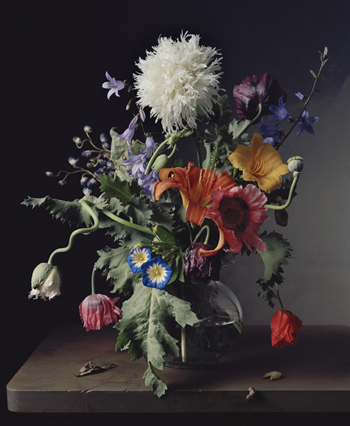
i go to the flower market with its international bounty and there’s snow everywhere and there’s nothing and everything…In the year of the scavenger/the season of the bitch…What’s in season as both a valid and an absurd question. i receive a letter and it asks why flowers? i miss your writing and your obsession with time. i chew on a word i re-read a few days ago in one of my old journals–who knows what i’d actually been looking for: intempestive. i wish it was prettier but i love its specificity: “untimely; inopportune; out of season.” What are these lists supposed to explain, anyway? Who are you? What do you like? How carefully do you love it and do we do it differently or in a similar way? i’m convinced the methods but not necessarily the ingredients have to match; otherwise, there will always be misunderstandings about our capacities for intensity...One thing kind of touched me today/I looked at you and counted all the times we had laid…i would choose engagement over collection any day, but i’m also not very good at planning for the future.

i just re-read the Raymond Carver short story “What we talk about when we talk about love.” i guess a lot of people have been doing that lately because of the movie. Whenever i read Carver i think of my Dad. The men who think they’re mild-mannered who are both that and quick-tempered. A certain expectation of gender resolve and gendered manners. A misunderstanding of and desperate need for armor and ego. We, you and i, we talk a lot about sex but not too much about love…We’ll build a glass asylum/With just a hint of mayhem…My roommate told me a sweet story about her childhood best friend who judges paintings by whether or not she likes the colors and whether or not it seems like the person was having fun when he or she made it. i try to say something about art and politics but my heart isn’t in it.

After you left i flipped through your ipod and settled on Diamond Dogs, which i hadn’t listened to in years. i surprised myself by knowing every word to every song. Heart muscle memories that still hurt. Every song so excitingly strange and long and sexy and romantic. My attachment to this album is already claimed and undoable. When i read Raymond Carver i’m back in my parents bedroom on their waterbed with the grey and peach calla lily bedspread under the ceiling fan with the seagull mobile dangling from the tiny pull chain at the top and there is a breeze and it’s early evening and there’s weed in the air and divorce on everyone’s mind. When i hear Diamond Dogs i’m standing in front of a hollowed out piano stuffed full of records and this one is spinning and there’s a fat black cat on top and i’m petting his belly…I know you think you’re awful square…and my pulse burns because i am lit through with this record…But you made everyone and you’ve been everywhere…and the person who showed it to me. Every line is packed with the gigantic life we stumbled into and bumbled out of. I stretched out on your floor and liked the confusion of that absent presence pushing its way into the wrong place and time…Just another future song/Knowin’ it’ll never kitsch….
You can never give/ the finger to the blind.
“The unpampered ear does more. Once when I was in Michigan for a term, and didn’t have a record player, someone in Shaman Drum put on Lloyd Cole and the Commotions, and I had to stay there browsing unobtrusively for the next forty minutes, feeling like a pervert. That’s music starved, that’s not bad repro.”
–Michael Hofmann, Paris Review
Last Tuesday, mid-day, I was walking down and around 5th Avenue and 12th Street with a cardboard box full of LED Christmas lights and golden, glittery, spray-painted pine cones. I was mid-job. We were decorating a semi-famous actress’s apartment for her holiday party. On my way back from retrieving a few extra things from the parking garage, rain began to fall. My arms were full and I couldn’t reach for my umbrella, so I sidled up between a few strangers with more coverage than they really needed and fell into step with a couple of them as the light changed.

Two men directly behind me, one vaguely professorial and the other eager and overly agreeable in that grad student sort of way, both probably attached to the New School which was right up the street, were talking shop. My ears perked up at a few derisive comments about multiple dissertations “on” Alvin Toffler’s Future Shock. I moved closer as the professorial one cited Ben Lerner’s new novel, 10:04, as a positive example of something the dissertations were missing. He referred to the review of 10:04 in Bookforum that he’d just read?written? (I wasn’t close enough to hear) in order to make an argument about the argument Lerner was making about the future. I had the novel in my tote bag. I’d been dragging out the last few pages, not wanting to finish, for the last week. I opened my mouth to argue with him about his characterization of the novel, and then I looked into my box and remembered where I was and who I seemed to be: some sort of local crafter, wet in the rain, somehow implicated by this box of decorative objects. I realized I didn’t know these people and would probably seem a little nuts if I did interject and, as for the immediate future, I had completely forgotten to buy suction cups with little hooks on them to attach the actress’s wreath to a large mirror in a subtle but sturdy way.

When I was an undergrad, my favorite professor’s most controversial pedagogical strategy was to keep the false binary between public and private under erasure at all times in his dealings with us. In a class called “Black Britain” there were 2 people who were Black in the American way. One of them was always late. My professor, who was Black in the British way, unsuccessfully tried to provoke this student into punctuality by reminding him that “Hey motherfucker,” classes at the University of Florida did not run on “colored time.” One night at a bar he met my handsome blue-eyed boyfriend, and the next time I saw him he said,”I guess that makes your life easier when you go home for Thanksgiving.” The classes were terrifying and electric. For better or worse, he incited more future academics than anyone I’ve ever studied with. I think he might be responsible for that Gainesville flow that probably still pops up at academic conferences: aggressive, funny, and, most of all, in that late-90’s critical theory way, provocative. The aforementioned binary was under erasure in order to disabuse us of our understandings of desire as something that occurs, “in a vacuum.” I can’t speak for everyone, but I am certain that he permanently transformed my understanding of and relationship to want. I began to understand desire as always already embroiled in relations of economy. 
I don’t know about other cities, but there is something that happens every once in a while on the subway in New York when one train passes another. Their coming together feels magnetic as the cars swoosh into a brief clickety-clack rhythm like the sound of a “real” camera. Every time for me it is diamond dust. It is a reel of actual film spooled out me-sized in some sort of Purple Rose of Cairo meets Andy Warhol New York minute. I spy on the passengers in this doppelgänging car and feel the lines between window and mirror blur–momentarily happy again for this city’s enchantments. Always cinematic. Always already a repetition of what I saw or read of this place before I moved here. A future shock where the fact that everything is always already translation does not dilute experience.

When I was in grad school, because utopia–that elusive bastard–was still nowhere, and because we wanted to join the ranks of those who are clever enough to get paid to at least try to save the world, we made critical theory the action of trying to find the places where the ideas we most valued in theoretical texts were made possible in fiction. In 10:04, almost every time Ben Lerner launches into a new anecdote, I feel myself rolling my eyes back into my head just as I would have in grad school when some insufferable classmate felt the need to go on at length about his or her misunderstanding of that week’s text. Instead, I catch myself riveted, eyes wide, as he rips into an example that illustrates his complete comprehension–not only of a concept but also of how to illustrate the concept. Not in reference to so and so’s novel or short story, but through his own writing. I’m not convinced that that is actually a difference that matters, but I am quite sure that the novel “matters” very much. This is darstellung of the sort I had always tried to find. In it, reification, once a death trap, becomes a beautiful, funny source of endless potential.
i mean our room/i went back to our room and cried.

“…sometimes even speckled with these sensitive points; precisely, these marks, these wounds are so many points.”
Roland Barthes, La Chambre Claire
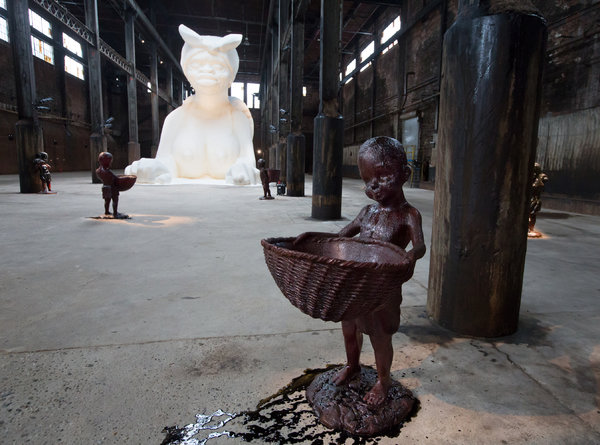
A few days a week, i walk up Grand Street from the flower shop to the falafel restaurant. I order a sandwich or a date and avocado smoothie and take it back to the store and eat while i’m working. This strip of Grand is one of my favorite streets in Williamsburg, and it looks almost the same as it did 7 years ago when I moved to Brooklyn. Walking back today, i noted again that one of the boutiques has retained a “Save Domino” poster in its front window–a once ubiquitous symbol of one neighborhood’s anti-gentrification polemic that has quickly become an emotional relic. As this blog regularly demonstrates, I am probably over-invested in a few formative nostalgic attachments i evidently cannot undo, so i might seem to have been an obvious participant in the fight to save the old waterfront structure, but every time i see that poster i can’t help thinking: fuck Domino. Why this long, drawn-out fight to save an icon of a product that–as Kara Walker’s installation (full title: At the behest of Creative Time Kara E. Walker has confected: A Subtlety, or the Marvelous Sugar Baby an Homage to the unpaid and overworked Artisans who have refined our Sweet tastes from the cane fields to the Kitchens of the New World on the Occasion of the demolition of the Domino Sugar Refining Plant) made uncomfortably clear–is such a conspicuous emblem of structural violence? In other words, the transatlantic trade in sugar that triangulated slaves, sugar, and capital and drove the slave trade is a weird thing to, you know, get behind. And yeah, I did want to save it. I wanted to leave it there to rot. You know why? Because otherwise we’re allowed to forget.
Here’s a slight variation on the argument. One night i was driving home, listening to WFMU, and they were playing a live set. In between songs someone yelled “this song is about gentrification in Bushwick!” The band then played a pretty standard 2 or 3 minute punk song about someone whose baby left him for another guy. I live in Bushwick, so this made me chuckle at the nod to the trendiness, not only of moving to Bushwick but also of white people complaining about white people moving to Bushwick. Since I’m also boring and serious, let’s take the joke further. What can we make of this inadvertent, transitional link between displaced nostalgia and desire?

Because Kara Walker’s installation was so smart and so haunting, it’s now a permanent referent for “Domino” for me. Maybe it’s the leftover posters around the neighborhood and maybe it’s because I see the structure whenever I take the JMZ over the bridge, but it has preoccupied me. I honestly have no idea what the pro-Domino side was asking for, but I think it simply should have been left alone. Not neatly refunctioned into a clean new space that will bear polite traces of its sordid history, but taken out of the circuit of capital it so poignantly symbolizes. Better to be able to remember how capital, like the tar baby, like the rat trap, is almost impossible to resist. Why not a memorial to what happens when we don’t resist, rather than a quiet acquiescence to what Nikki Giovanni would curse, under her breath, as “progress”?

As for nostalgia and abandonment, isn’t this also what happens, at a certain point, to desire? I know the push is always to make a clean break; to move on. But why do to your heart what you wouldn’t do to your city? Maybe you like new things for their own sake and that’s cool, but that aligns you with a whole other set of ideologies–whether you’re interested in that information or not. I dream hard of the past because I can’t live there anymore. I don’t even want to be there, but I refuse to remove its scaffolding.
But that don’t get you back again.
“There’s one thing I learned from Jim: it’s that everything’s important.”
–Mary Lindsay Dickinson
My son and I are rushing to get out of the house. I am holding us up. I can’t find a pen. I need a pen. I need a pen because it is past time to make out the rent check. I could justify this scramble with the fact that we just moved in, and things are mostly still wrapped in boxes; but, for someone who writes, this is not a valid excuse. In the survey where you have to list six things you could never do without, “pen” is always my first answer, and here I am without one. So, who am I now? This is the new crisis as I rifle through drawers and purses. Circling this strange room, filled as it is with everything and nothing, who the hell am I anymore? I remember a time when once a month I would return hundreds of clickable ball points boldly stamped DINER on their cuff to their place of origin. Has it finally happened? Is it possible that there is not a single shitty DINER or Marlow pen in this house? Not even an even shittier estela pen? This epiphany tempers my frenzy, and the shame that was becoming a low boil in my cheeks cools out. My writing didn’t stop. My life in one kind of service, and the perks and pitfalls that are attached to waiting tables, is at least on very extended hold. And for that, I have absolutely no shame with which to burden my son. I start to relax, and then my fingers grasp something familiar: a pen. In the bottom of the last dirty tote bag is one lone plain clicky black pen from estela. Never say never: that was my Dad’s cautious advice last week. And even though every bit of adolescent mouthiness I have left immediately went on guard when he said it, i kept it to myself.
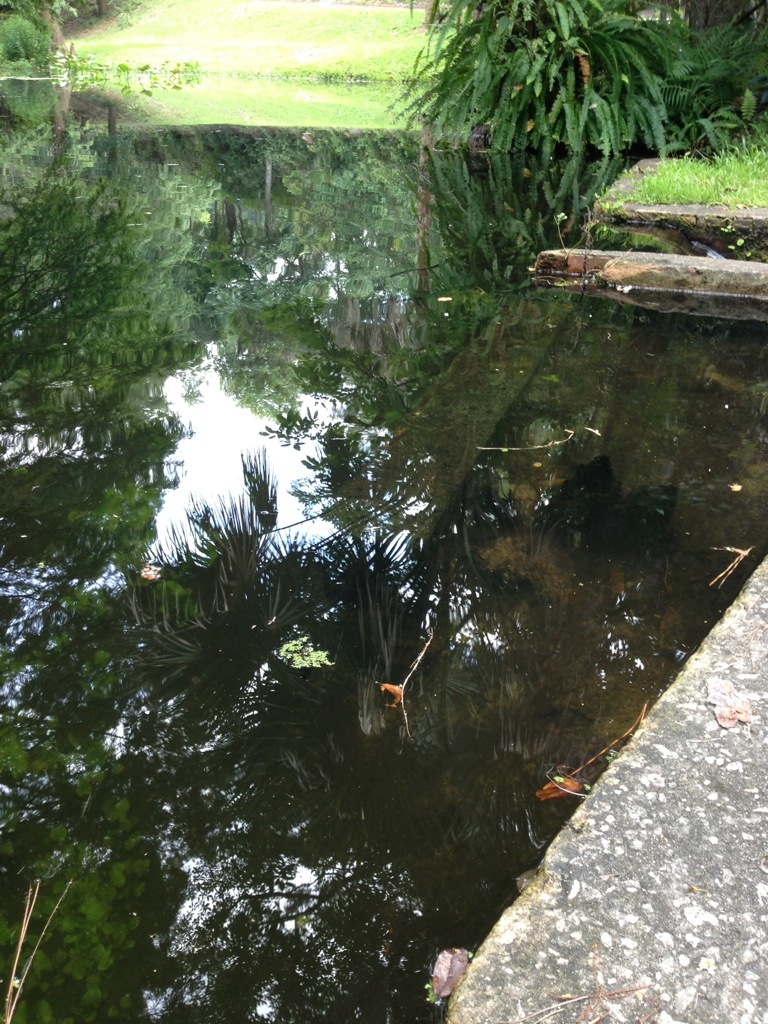
I was born in hardiness zone 10a, where my parents are from, but I was raised in Zone 9a. My son was born in Zone 6b and that’s where he will grow up. 6b has distinct seasons: warm summers, a real autumn, and long, cold winters. Bulbs grow in 6b; citrus grows where I’m from. On a recent vacation, I took him to one of my ghosts: a state park in 9a with grounds that sprawl down and around a ravine that was constructed as a Works Administration project in the mid-1930s. Tiny springs bubble up through white sand between cypress knees and banana trees. When we were little, my brothers and I would scramble through the as yet uncleared bramble and vines, sinking to our ankles in the cold, clear water, pretending we’d been caught in that impossible danger that was still part of our childhood worst case scenario lexicon: quicksand. On this recent visit, running up side trails to take a peek at tiny vistas I’d memorized over long summer afternoons, I kept getting left behind. I couldn’t take the length and tingle of it in fast enough. I had slammed into a wall of memories of having crunched slowly over every inch of this place while my brothers were off conquering things and my parents were working on their jogging.

Walking through Bushwick tonight, I made plans with myself to go jogging when I finally got home. What actually happened: I’ve been sitting here on the couch for about an hour listening to “Doolin-Daltin.” And then “Little Wing.” And then, uh, “Shadow Dancing.” Whatever, it’s basically a perfect song. Sometimes that’s just what happens. Start listening to a song and, instead of wearing it out, you just can’t start over fast enough. Push play–okay this is the last time, you promise yourself–but you don’t stop. Why? Because it comes back. Intact and unchanged every single time. Still there. My cat sits on my hair because he’s convinced I’m passed out, but I’m wide awake. I pull myself free and press play again with toes pressed hard into the far end of the couch. Eyes closed tightly. Practically holding my breath. Whatever it is that I hear in this stuff, goddamn. I wish it would manifest.
Yeah I left with nothing/but I thought you’d be there, too.
765: “And if I could go back in time I’d clip the chain in a heartbeat and never care a minute that the picture was never painted.” The Goldfinch
I was walking down the street the other day, thinking about a dream I’d had the night before, and I had enough of its parts to be able to just kind of press into it and let it leak into my day. The narrative was long and epic. There was a real rock star and an alien flower–something like a hybrid blend of a bonsai plum and a red begonia–on an ex-lover’s nightstand in a difficult room, and quiet, tactile emotions. One sequence had preoccupied me, and when I got home I tried to write it down. I still had the scene, but the description came out rambling and absurd.

In one of the first film classes I took in grad school, I wrote a term paper on a film that used narrative devices i didn’t have the vocabulary to fluently describe yet. Embarrassed by what i’d come up with, I dreaded getting the paper back; however, my professor was excited to read about this film he hadn’t seen, and encouraged me to struggle with my descriptions, assuring me this was an exciting and necessary step in learning how to read and discuss film. I was shocked by his response, coming from someone who had not only watched and written about countless films but also made and taught them. This person who I had initially typecast as a classic egghead wound up being a kind and strikingly committed teacher.

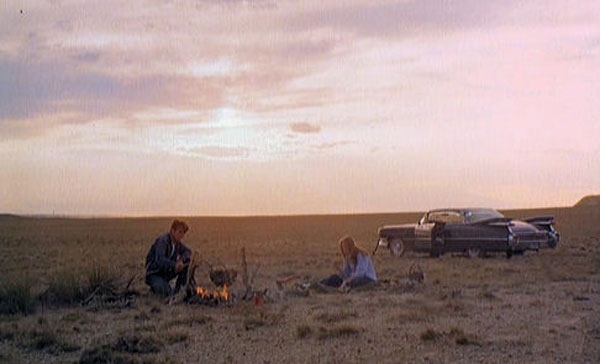
The question, again, is representation. How do i turn that picture in my head into something i can share with someone else? How does anyone go about performing these tiny translations from idea to object? Even now, with the flowers, the question is the same but the window of transposition is so much smaller, and the people i work with give me similar advice: it’s good to work with other people and learn technique, but the only way you’ll discover your own style is just to mess around on your own. The flowers. In order to try and start figuring this out, I made the classic American move: i took a road trip.
I wound up in Philly, a place I’d only been once before, wandering around my best friend’s basement. She and her Mom picked me up from the bus station and we drank coffee all day and made piles of her old things and took pictures. We bought a few flowers, cut a few more out of rambling yards. We went to a museum for mourning art in the middle of a cemetery. The drives across town were long and the lawns were green and the glass in the windows in the houses we passed was thick and wavy and cracked. Most of the neighborhoods we moved through were poor, and i kept imagining i had drifted into another city much farther south. i sorted through each one of her velvet-lined jewelry boxes and the old refrigerator filled with glassware and tchotchkes. i went through piles of tattered fur and hole-stretched mousseline and perfectly preserved chiffon and every color of opera length gloves and stared at the black felt we’d tacked to the wall and tried to think about what i was thinking about but i didn’t need to because i knew i was trying to give shape to a loss i can’t ever seem to part with. So I went out back and snipped a few tiny wild strawberries growing somehow through the cracks of the cemented floor of her back yard and came back in and added them to the still life we’d been compiling. i found that my “arrangement” required many ingredients not made of flowers at all. As a larger indication of what I think my work is made up of, it was perfect. A suggestion of possibility rather than discreet proof or replicable samples.
Maybe it’s the color of the sun cut flat.

The feeling. Let’s say i had a hot cauldron and some sense of how to reproduce it with a few very specific images, memories, and shapes that might somehow be condensed into tangible ingredients in a form possible to sprinkle. These things would be added with equal measure: an old pair of snakeskin shoes–tips and heels worn bare; Scott Walker’s cover of “Lady Came from Baltimore”; an emerald green room with long shadows, wood floors, and a tiny bed; soft cats on laps; cold hands on hot foreheads; marshy ponds at the end of docks lined with the skinny old knees of cyprus roots; the time you were sat alone reading at the table in the piano room and the redheaded girl next door was playing the Rachel’s and those eerie sounds blowing from across the way into our rooms whipped around the chilly early evening so strangely that, wired by the sound, you wandered through the yard and knocked on her door just to find out what was playing; long drives lit by a shoebox spilling over with cassette tapes; “2HB”; rooms and halls and stores and aisles of old things to be sorted through, slowly; and the way it feels to know and need a body more than food or sleep or sense. If i could dry these sensations out in the sun and grind them into dangerously potent powders, i would siphon them into tiny dark glass jars and, like the distraction of clipping stems and fixing handfuls of flowers carefully into a single bouquet, that movement: sorting, grinding, filling–just might bide the time, but i doubt it.
Early Sunday morning we unloaded buckets of flowers into the freight elevator of a quiet old warehouse in Long Island City. Alone with the flowers and one of the men who’d helped us bring them in, he told me in Spanish how to drive the elevator, and, like a mechanical music box, up we cranked slowly to the cavernous third floor. As you might imagine, the air was full of dust and there was a porcelain claw foot tub in the bathroom and then there were rooms upon ramshackle rooms. One was full of nothing but upturned velvety old chairs, another had mirrors and tables pressed in rows against each other. i thought about Waldo. People use the space for weddings and films and, in our case, floral design classes. Just the day before, we had spread out the Buckminster Fuller poster for Jonas and explained how the Dymaxion map made it possible to render the globe accurately, with all of the continents at their proper size, and i took this as a model as i shaped and molded the chicken wire over the floral frog in the bottom of the vase making not-quite-a-circle, preparing it for the gooey, thick hyacinth and tulip stems stems and the thin dry spirea and the fat, firm roses. All the time i am finding better distractions, but there is always the feeling. Like how i imagine that, impossibly, it was you i was talking to while i sat perched on the edge of a black rubber swing at dusk in the playground, twisting my toes around the deep circle i’d drawn in the lavender October dirt wanting with all my bones to be able to stay outside past dark. i close my eyes and the blank glows all amethyst with the pull of you that, like every night before and since, keeps me out.

“What did you want?” Everything.
“As if the self had no relation to the self, and one only looked in mirrors to have one’s arrogance confirmed; as if the act of self-regarding was not as subtle, fraught and ever-changing as any bond between twin souls.” The Luminaries
Twin souls. The flickering return of one’s own self that is so satisfying, lit by the inevitable risk that what you thought was contact is in fact reflection. When I imagine that I imagined it, I try to find the places where I was seeing instead of looking, and I can indeed piece the difference. You caught my eye from across the table and started to turn your head to look around the room, but you ran your fingers through your hair and kept your eyes on me instead. You raised your brows and i nodded a silent confirmation. That’s the difference. My heart beat a little faster and then i looked deeper into my salad and, knowing the variables were completely untenable thought, “Shit.” Large moment, but in the larger narrative a relatively small disappointment. ![]()
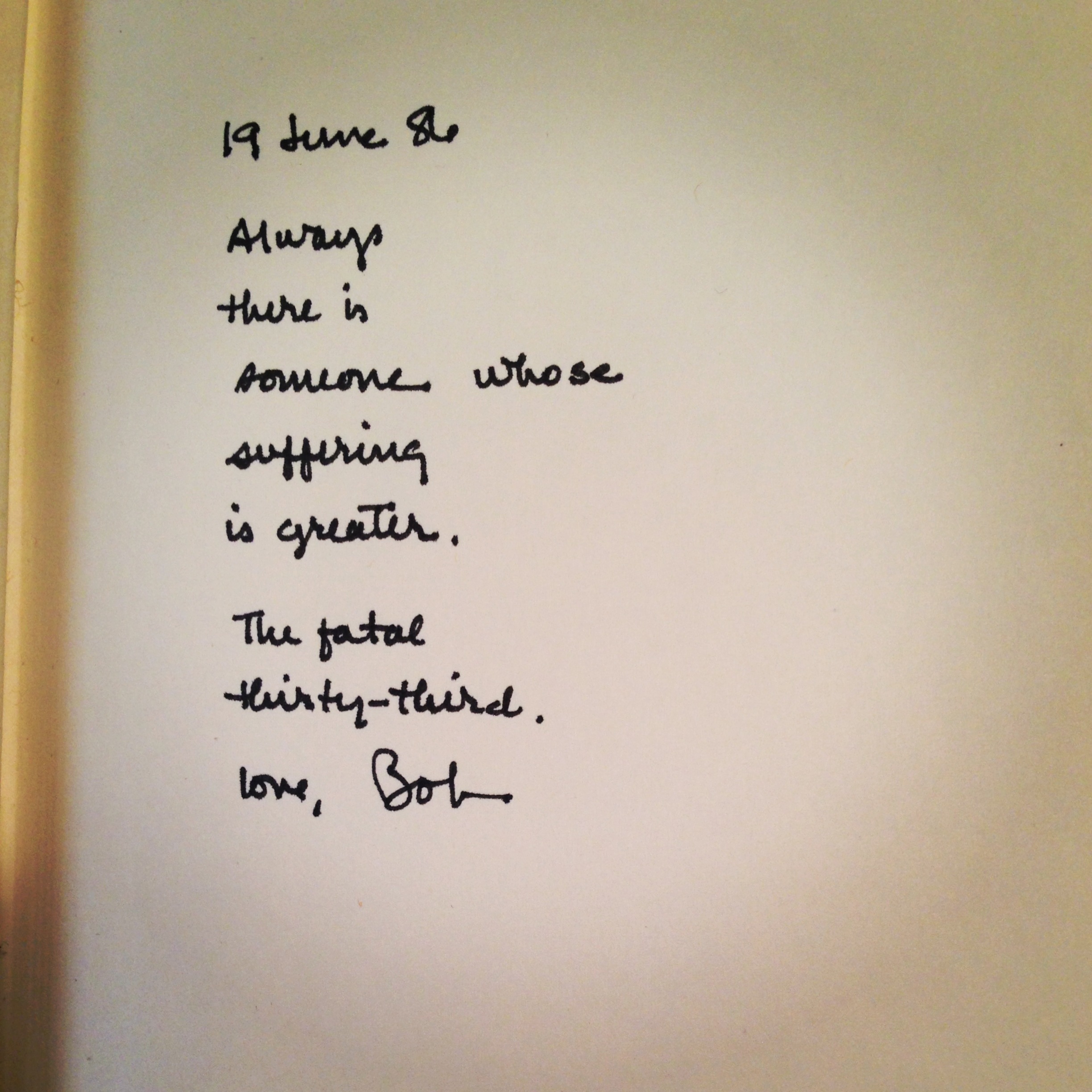
After having carried it from house to house with me for at least 10 years, i recently began reading my used hardback copy of Joan Didion’s Salvador. To its previous owner, a person named Bob inscribed the book: “Always there is someone whose suffering is greater. The fatal thirty-third. Love, Bob.” Each time i open it, i stare at Bob’s handwriting and think about this gift of a text so thoroughly about suffering that it might have rendered its new owner’s own worries trivial. i’m guessing that he or she was turning thirty-three; ‘fatal’ because of the famous lives that ended at this age? Jesus, Van Gogh, Eva Peron, Eva Braun, Sam Cooke, John Belushi… i ask myself if i can imagine a world in which such a dedication might be romantic? i decide that i can, having learned in grad school that thinking critically about “love” transforms the term into something called desire and, furthermore, that the political is always a zone of desire. 
When the burn of disappointment numbs out, i try to grow new skin for the old ceremony. Flip directions and find a more reliable object of full-on attachment. i’m sure that’s how i found the flowers, and grad school, and theory. How i both found and lost Japan. Music and poetry and the longest novels and the god the movies. So many movies. In those moments give me an endless chase scene and a cup of coffee and i’m okay because the pushiness of desire is reworked and translated into something instead of someone. But then, the thing stops playing. Or I turn the last page, and it is Will Oldham time: “Once again in the world/of twelve hundred feelings/all in electric lights/we see what we can.” We know that everything dies, but some things are perhaps impossible to kill.
Right on top of each other, in what now seem like obvious gestures of sublimation, i recently watched two very different reflections on revolutionary politics: Apres Mai (English title is Something in the Air) by Olivier Assayas and Chris Marker’s Le fond de l’air est rouge. i walked into a room and the Assayas film was playing, so i sat down for it again. Marker, i sought out intentionally. The title of his film translates as, “the essence of the air is red,” but in English it is known as A Grin Without a Cat. The grin in the title invoking “the” revolution Cheshire Cat style. Through its density of materials and suggestive rather than provocative sequencing, the film juxtaposes images of revolt: Battleship Potemkin, the student uprisings in Paris in May of 1968, the Soviet Invasion of Czechoslovakia in the same year, the Vietnam War, Cuba, Castro, Che’s corpse, and Salvador Allende. Film scholar Nora Alter has written about the “deliberate instability” of the film’s argument/s. David Sterritt reports: “Recalling his last conversation with the Marxist philosopher Louis Althusser on the eve of Portugal’s leftist uprising in 1974, he writes that ‘revolution was in the air, and had to be, like the grin of the Cheshire Cat.’ Althusser ‘would always see that grin…. And he wouldn’t (nor would anyone) ever see the cat’.” From Alice in Wonderland: “The executioner’s argument was, that you couldn’t cut off a head unless there was a body to cut it off from: that he had never had to do such a thing before, and he wasn’t going to begin at HIS time of life. The king’s argument was, that anything that had a head could be beheaded, and that you weren’t to talk nonsense. The Queen’s argument was, that if something wasn’t done in less than no time she’d have everybody executed, all round.” And, one more, from Artaud: “When you will have made him a body without organs, then you will have delivered him from all his automatic reactions and restored him to his true freedom.”
i want a brighter word than bright.
“A thing is mighty big when time and distance cannot shrink it.” — Zora Neale Hurston
And so i start thinking about packing our bags because we are, after almost exactly two impossibly long years, going home. The presents will go in, and toys for the plane. i will take too many books and a camera with real film. This week i’ll try to eat more so you’ll all have one less thing to worry about. We will spend much of our time driving, which is how i like to see my state. Flat, subtle, winter Florida. Crisp with tiny frosts more suitable to early October than deep, high December. After a couple of days its wet cold will creep into my fingers and toes and no number of hot showers will set me right. i’m sure no one will indulge me, but for months i’ve been wanting to visit this bend in the road we used to pass when we were heading south over through Crescent City to the coast. Dad, you would point to it and tell me again that you and Mom thought about buying it before you settled on the house in Palatka. i imagine a shadowy wooden farmhouse on the plot, wrapped into tall pines and blackberry bramble and palmetto groves. A place for a flower farm, if i ever make it back home. Those ‘this-almost-happened-instead’ stories were always my favorite. Like how you would tell me about your high school sweetheart and how i would have had bigger boobs if you’d married her and maybe red hair. I wish you still had the old blue Chevy truck instead of your fancy Cadillac SUV, but i guess they’re related. i also want to go see the town Zora Neale Hurston grew up in, but that’s linked to a different desire and a longer anecdote. What i will insist on is a trip to the ravine. The state park we drove to almost daily to go jogging or swimming or just to get lost in its New Deal bridges and fountains. The first poem i ever committed to memory written on a bronze plate in a birdbath. The columns lining the entrance. One for each American state, each with a tiny plaque listing the state flower and bird and song and i would try to remember them all, but now i can only manage orange blossoms for us.
Even this morning, when i woke, i was scheming a plan to make it possible for Jonas and me to take over the house in Palatka. We could rebuild all the gardens and finish the barn and fix the chicken coop and the treehouses and the wooden swing seats roped to fat oak branches. There would be grassy gutters full of tadpoles when it rains and a gardenia bush heads taller than me in the front yard. Clarence and Maureen across the street would teach Jonas how to ride horses and play piano, and i could rely on the neighborhood boys to push him into football and out of trees and pass along the rituals of small animal torture. And then i know i’m awake because suddenly Williamsburg and Palatka are not a few stops apart on the BQE. There’s no way i could get him to school on time from there, and that’s all that really matters. Walking home this afternoon, he was mesmerized by the gasoline glossing the shallow creeks pouring over the snow alongside the curb. “Look Mama, rainbows!” And i wondered what happens to children who don’t grow up with the forgiving padding of green that i was allowed. Will the trash someday be a part of his own deafening nostalgia?
That’s my South and my own historical drawl. An accent that never stuck because of the bleached-out Miami parental tongue. South meaning something much closer than the distances you will travel. When you called, i was walking home but i kept wandering as i listened–coughing, long johns under my jeans. You told me to go inside, but i was terrified that i might get narcoleptic if i sat down, and you know i would have stayed out there all night until you could sleep. Passing out was an absurd concern, because when i finally came in i wrote down every word of it i could remember and still couldn’t sleep for hours. Wide awake in the sound of you–coppery but with vowels more like a native New Yorker than the kind of southern twang i know. i will admit to sometimes losing words because i’m trying to tuck into the ticklish, broad dipthongs, but i was paying close attention when you said that the Latin root of ‘relationship’ built some kind of foundational phenomenological necessity of physical proximity into its definition. What you said was much prettier. Of course i looked it up, and maybe it doesn’t really matter, but that’s not exactly how it was described. What i found was “carrying back” (-lat). “Again” (-re). Which is really quite different. And later, when you wrote, ‘i can’t imagine where these stories come from,’ and i gave you an out, i liked how you didn’t take it.