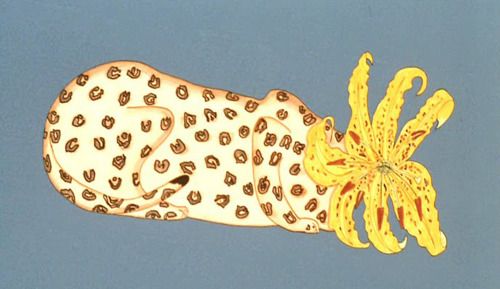
Things that go bump in the night.

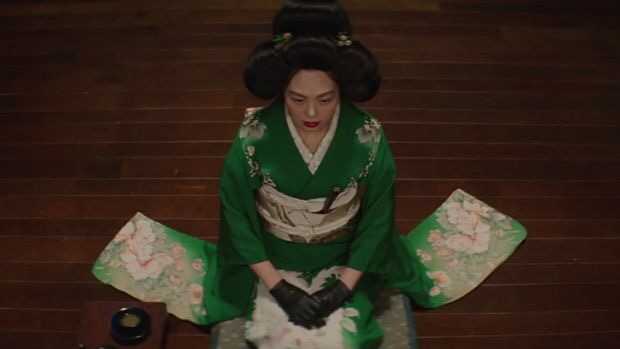
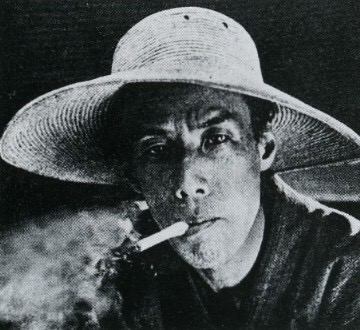
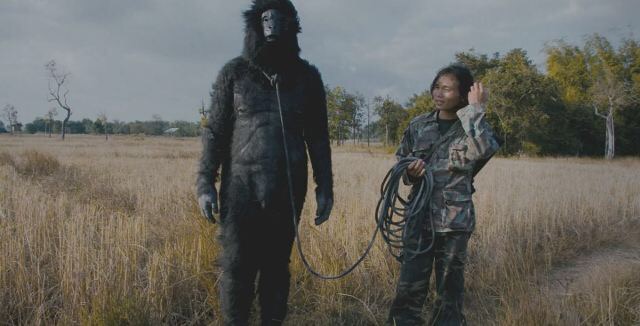
Beat Takeshi Hana-Bi (1997)

Instead of the corny doo-wop dudes in media res, the song begins with a steadily moving bass line and zaps of feedback. One could be forgiven for expecting Little Peggy March’s strident, stalkery anthem to kick in and for imagining that she’s transmitting the massive, fuzzy, cranking transmission from Atlantis or some massive rusty frigate on which she assumed the eternal position of an arsenic green sea witch figurehead, with glowing red eyes lighting the way, forever roaming the subtropical gyres in search of her love, just as she once swore she would: There isn’t an ocean too deep, a mountain so high it can keep–keep me away–away from my love! I LOVE HIM! I LOVE HIM! I LOVE HIM AND WHERE HE GOES I’LL FOLLOW! I’LL FOLLOWI’LLFOLLOW….

back-to-from

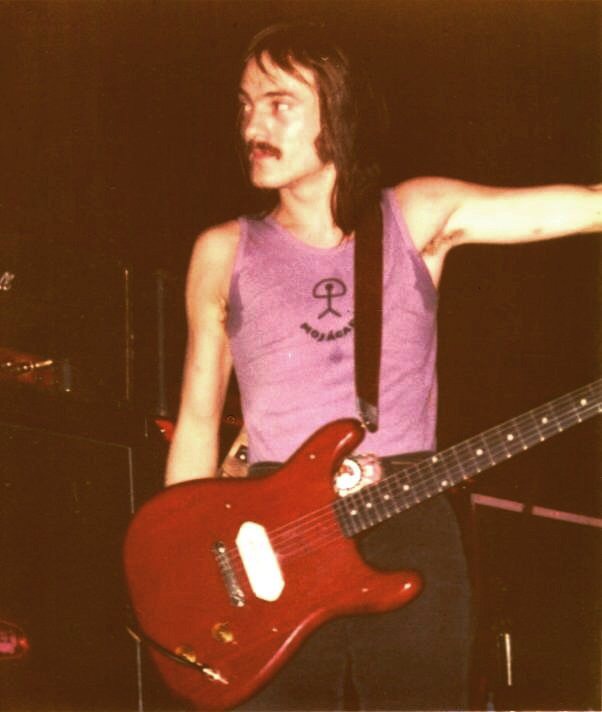
The drums kick in. The guitar screeches in fits and stops, wiping itself on everything that moves. Muffled lyrics sigh, grumble, accuse, and disabuse the listener’s expectations of transmission. Maybe the true soundtrack of the famous Enchantment Under the Sea dance is mutating back-to-from a future that never emerged, or from an atomic past that never stops going off. This is certainly not, in any case, Peggy March. This song, led not by proclamations of love but by the rubbery persistence of an unstoppable bass line growing faster and hungrier, its insistance maybe churning the guitar into an actual chainsaw slicing its way out of the hull of this situation they’re in, which the lyrics describe as another kind of love, one that can’t be satisfied, one that feels like murder, one that lives in deep night, heavy night, on and in a night that is heavier than a death in the family. Fathoms under this sea, instead of the spectacle of a dorkwad time-traveller pretending to have invented something, a very different sound, one that at once outlines and shreds Frank Porcel’s instrumental “original” song “Chariot” (1961). In the murk of this night, what is infinitely more “original” is this ghastly, blinding doppleganger, and it begins to seem that Frank and Peggy were the copies all along, trying to dredge this sunken version out into their sanitized renditions via some crazy funhouse mirror, and between the echos maybe the point is that there is no beginning, just an electrified mirror. The song, then, as it turns out, is not called “I Will Follow Him.” This is “The Night, Assassin’s Night,” and it was performed on earth by a Kyoto noise band named Les Rallizes Dénudés, whose lineup changed many times but was always organized by Mizutani Takashi, beginning in or around 1967. What came first? Which is the original? We think we’ve moved beyond these questions, but they have also been resuscitated and mobilized to distract us now more than ever.

Ann Magnuson Cabin Boy (1994)

In contrast to opinions confidently asserting the platitude that nothing is more boring than other people’s dreams, I get excited when people try to recall their dreams to me. This could be because I have a sleep disorder that gives me relentless access to my own dreaming, and I am usually too overwhelmed by the closeness of my own dreams to record them. Occasionally, I write one down and try to recombine it into something like a poem, but it seems impossible to capture the weirdness of the original in my translation, so I just save the notes. Sometimes when I’m jogging, I set what I can remember of the dream to whatever I’m listening to, and insert a jump cut here and loop a scene there to match the song until I’m left with some jittery glitching Brakhage-kernal. Perhaps images and music, rather than words, are the better route for dream-mining. But the real question is, what is meant to be mined? Are my real thoughts (not exactly the correct word here) in the dreams, or when I’m trying to recall them?

Brakhage The Garden of Earthly Delights (1981)

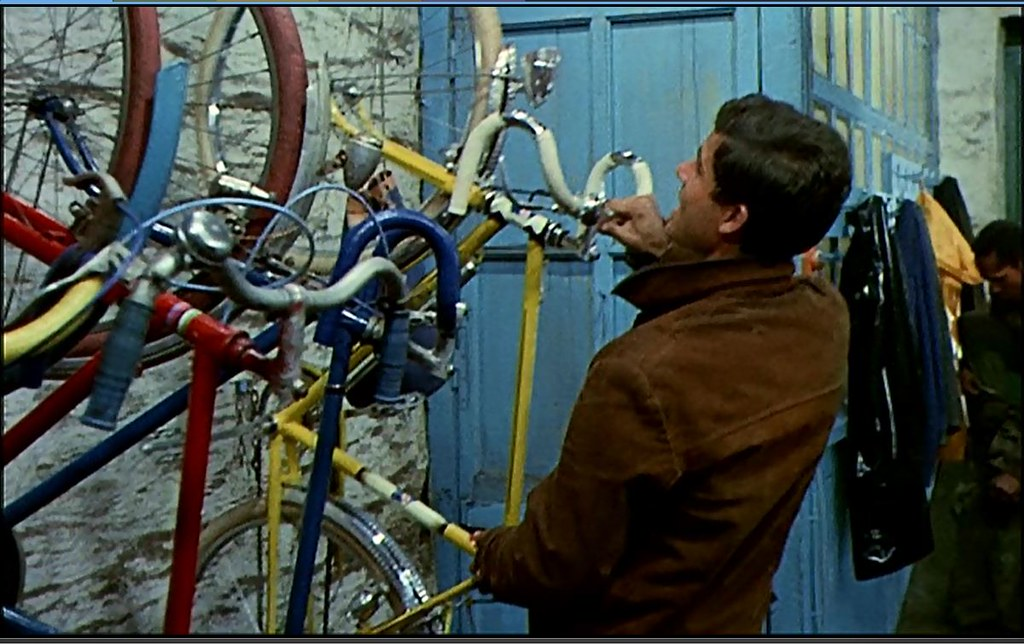
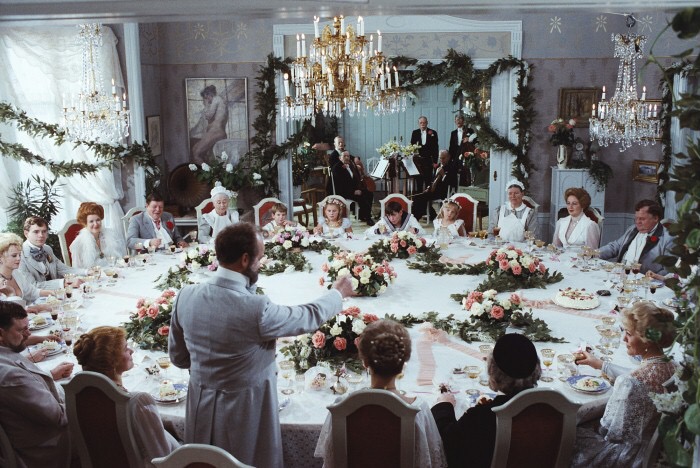
Equidistantly, a line of people slowly passes through a scorched yard. Each one moves along a path that rubs against a suburban chain link fence tangled in those electric blue morning glories that show up everywhere from vacant lots in Bushwick to trailer park trellises in the Panhandle. The walkers idle past a brazier smoking mandarin peels over matching neon embers as, like knots on a cord, they proceed. Their jeans are held together by patches in obvious joinery, and their thin shirts are denim with mother-of-pearl snaps. Uneven squares draped around their necks could be scarves or worn-out safety jackets. As they get closer, the little chains look like mink stoles made out of seaweed–expertly bustled with thread, in a mildewy shade of greeny-black. The first person has kumquat hair and carnation-bud lips. The next has a shawl dotted with blotches of red and yellow calico and flashes of sun-bleached lifevest tangerine. Here and there, his clothes are sullied like they’d been used to polish shoes, or as if he had just pulled out from under a car. The person following him wears a jumpsuit like Guy Foucher’s in The Umbrellas of Cherbourg

Foucher The Umbrellas of Cherbourg (1964)

Around the time I saw this film for the first time, all of the guys I knew had these prewar bicycles that were painted in sparkly colors like guitars, and I loved to watch them gracefully glide onto the little seats, like they were mounting metal horses, as they disappeared up the block. Back then, I absurdly imagined that they had learned how to do this by studying old French or Italian films, mimicking the way Foucher, the mechanic, soon-to-be-drafted and sent to Algeria, rolled out of the garage at the end of a shift, off to see Carmen with Genevieve. The wanderers in the dream look like the boys from the old bike gangs, but now they are just walking, and they need a soundtrack. I hum the bassline from the LRD song described above. The reverb becomes jump cuts, and the echoes do their marrionettey dance. Nothing about that song is meant to soothe the listener. Maybe this is the estrangerie my dream wanderers have shown up to remind me: desire shouldn’t walk through the yard like a zombie, it should feel/sound/look both like diving into the wreck and like riding it back to the surface. Preferably, all at the same time. How can we keep from repeating the final scene of Umbrellas?

garmonbozia!

The dream dude with the black stole walks toward me over the crunchy, frost-bitten grass. His hair is thick with fat, etoliated curls, and his eyes are a few shades lighter than the sky. Against the fence, we crouch to the ground, pressing into each other. Without warning, the interlude moves to a loft. A band is playing, then pianos fall from the top floor. Everyone is running, and the sound is like whole fists banging on the lower keys – a Looney Tunes soundtrack with the telltale sudden, jaunty violence. 

Mizoguchi Kenji Ugetsu (1953)

As we fade out, Lou Louie Louie Reed reminds me, 

And Romeo had Juliet.

And Juliet had her Romeo.

“A Witch’s Tangled Hare” (1959)

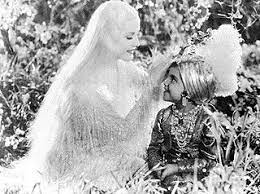
But it’s A Midsummer Night’s Dream, and the way it seeps into so many cultural objects that reached me before I’d even read or attended the play, that I love. The stories within the play’s stories and Shakespeare’s flaunting of the fact that Romeo and Juliet are modifications of Ovid’s Babylonian lovers from the Metamorphoses: Pyramus and Thisbe. The character who intrigues and confuses my classes is the “Indian child,” who the king and queen of the fairies are fighting over, and whose tantalizing presence drives the conflict of the play. This was the role Kenneth Anger (according to some, the inventor of the music video — albeit through a détourned, black magickal lens) claimed to have acted in Max Reinhardt’s 1935 classic Hollywood adaptation. Anger also used the name of another character from the play, the shrewd and knavish sprite, the hobgoblin or fairy Puck, that merry wanderer of the night, for his production company: 

In the first and bottom photos, from Reinhardt’s film, see the child. How old is this “child?” students ask knowingly, more disturbed initially by his age than his birthright. What might the child stand in for? Colonialism, global trade, the puppeteer of ideology in its many guises? Shakespeare knew how much trouble a child could be used to cause. They ask, “Why does Oberon even want him?”
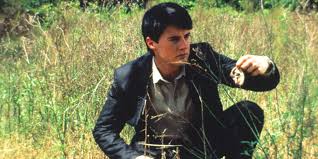
Does the ear bring the desires, or set them in motion?

As long as the fairies continue to bicker over the child, the natural world remains out of sorts. Famines are driven by rotted crops, and blooms emerge out of season. These tiny creatures who could nap in an acorn shell are crucial to the maintenance of planetary equilibrium. The reader’s thoughts wander off; maybe, these things don’t just run on their own. Maybe certain things, things I can’t see, must be in place for them to function…? Is something there where I thought there was nothing?

I wish Anger had made his own short, experimental film version of the play to work out his desire to have played the child. No dialogue, just a few key scenes synced to a soundtrack perfectly enunciating the drama. His Oberon as a leather daddy and his Titania looking like a Manson priestess. 
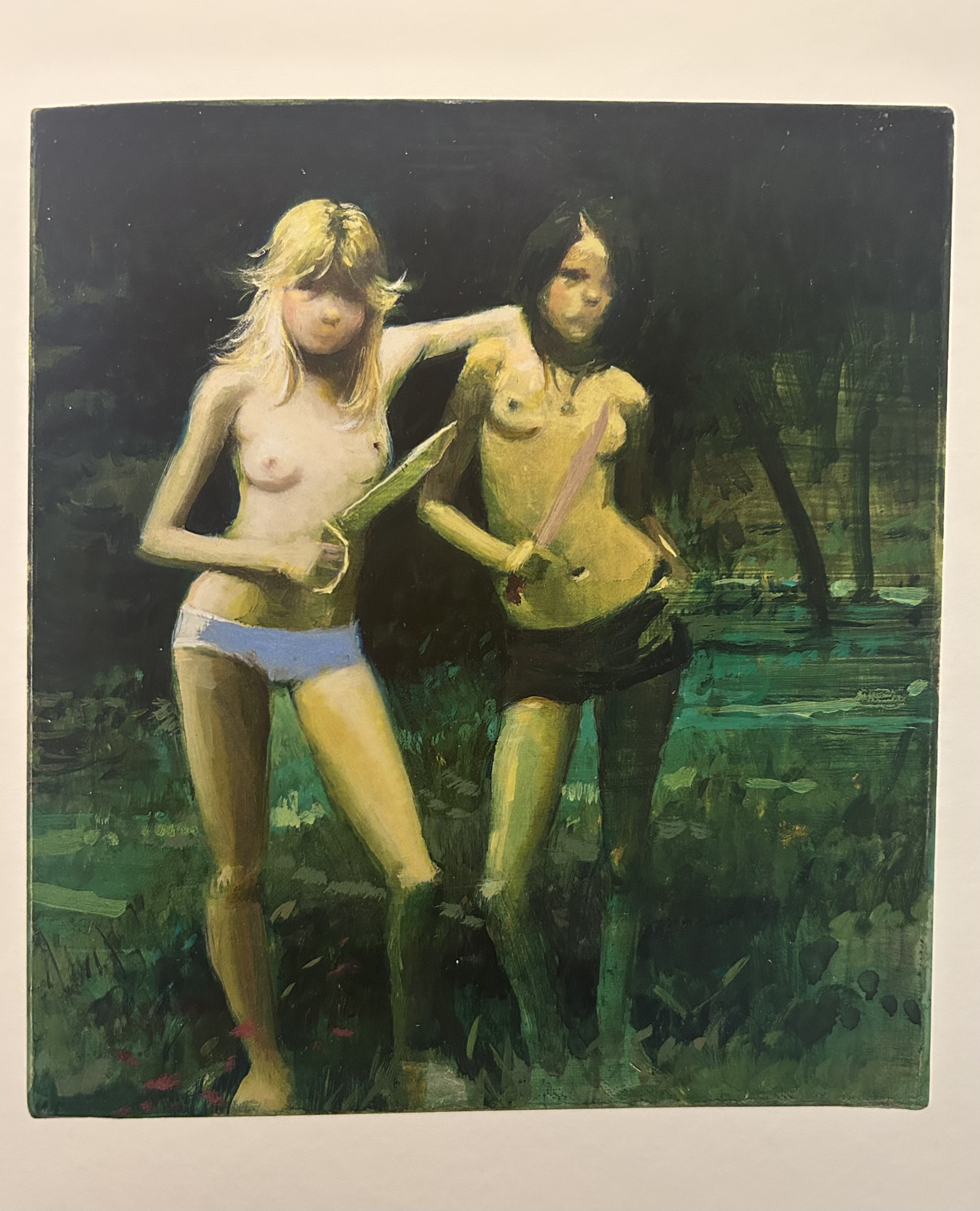
Lisa Yuskavage Scissor Sisters (2019)

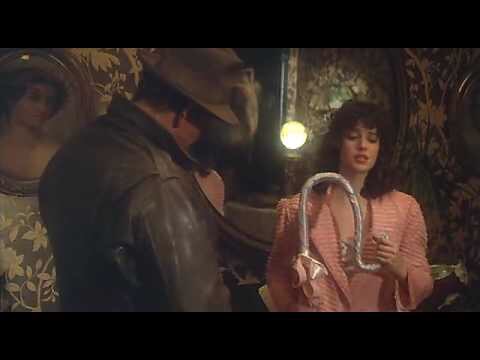
But wait, he almost did. Rabbit’s Moon (1950/1971/1979) could be an interlude in the play. With its icy little children wielding a mirror and a foil-wrapped guitar, the harlequin, the dancing Columbine with her fairy antennae, poor Pierrot in shimmery white, and the magic lantern projecting a film within the film whose phantasmagoria can be walked right into, it’s impossible not to see shades of Reinhardt’s Midsummer. The impossible rabbit-in-the-moon of all longing (played by Anger’s pet rabbit Nunu) appears in the grove and wiggles his nose. The dream shows Pierrot how to cross the lines. The harlequin fiddles with this knowledge, and Pierrot blacks out into a garland-wrapped moon-land, then flops back into the original glade like a dead doll. The End.

(Anais Nin) Anger’s Inauguration of the Pleasure Dome (1954)

Is the dream a cheap foil, a pathetic wish formation, or is it the place of vital work? In Midsummer, the “dream” resolves all conflict, but it is not a dream, not exactly. It is a spell cast by Oberon and administered by Puck. It is a hallucination that allows the characters to do what they are supposed to do: get married. It (the dream potion: a homeopathic of the wild made from the juice of the pensée sauvage!) is primarily retrieved to bewitch Titania into, no matter how Victorian the production veers, “loving” a donkey and losing her adopted child.
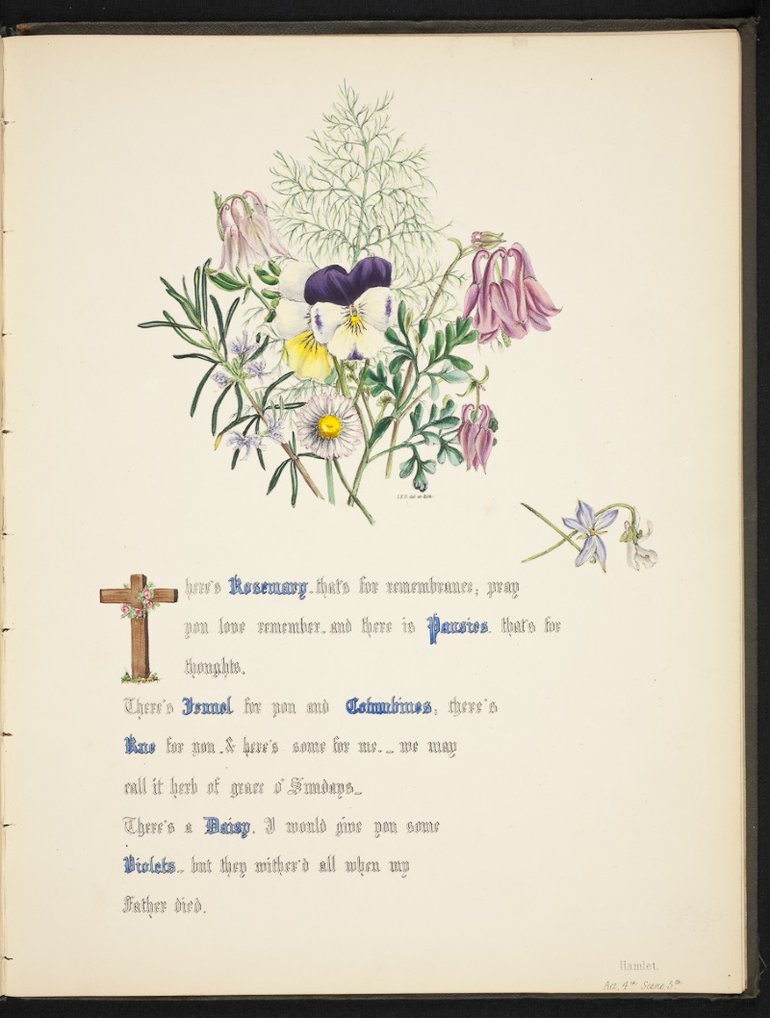
Love-in-Idleness (wild pansy)

In Rabbit’s Moon, Pierrot seems to love the moon itself more than Columbine, and the insatiability of the longing turns him into a floppy sack. But now finally, the object of desire is not the issue — the model for representing desire is, I think, what we need, with Pierrot’s determination, to pursue. Townes Van Zandt, of course, claimed (and his pet parakeets confirmed) that “If I Needed You” came to him, fully formed, in a dream. But I think David Lynch’s confession that the only image he dreamed in direct form was the ear that ignites the conflict in Blue Velvet is closer to what we are looking for. The small clues will unglue the big ideas because the pieces we need (now, yesterday) have already been dreamed. Do you want it, or is Oberon really pulling the strings? What if the sleep the pensée sauvage allegedly brings is actually the thought we are looking for–the clue to the place where we can/have awaken/ed? The absolute dedication to the possibility of the dredge of the (aesthetic-political) process is what we must twin. And when we see our twin, we might find that the myth was wrong all along — rather than a harbinger of death, the doppelganger (our double walker) might be the future we so desperately need.
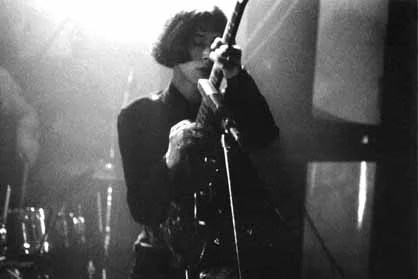
LRD

All the madness between me and you is real private.

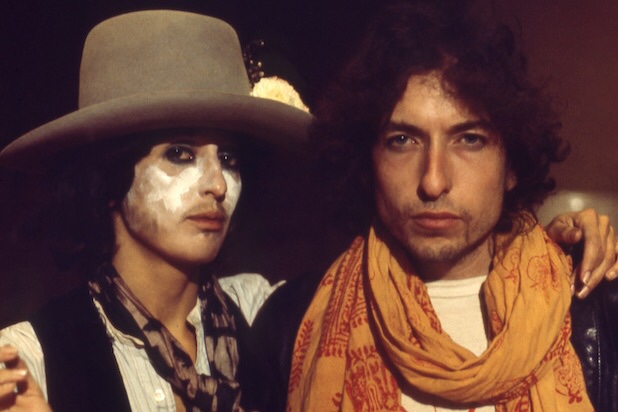
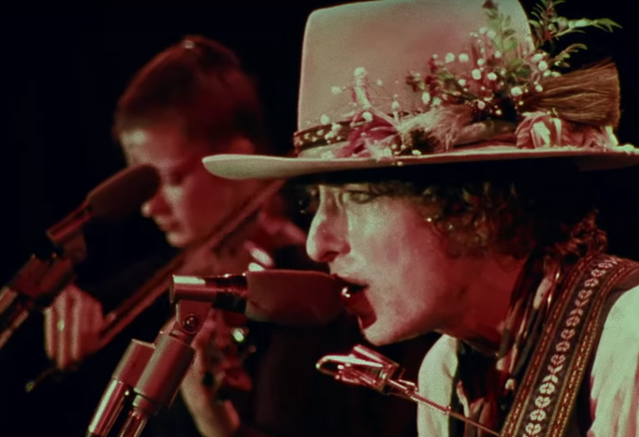
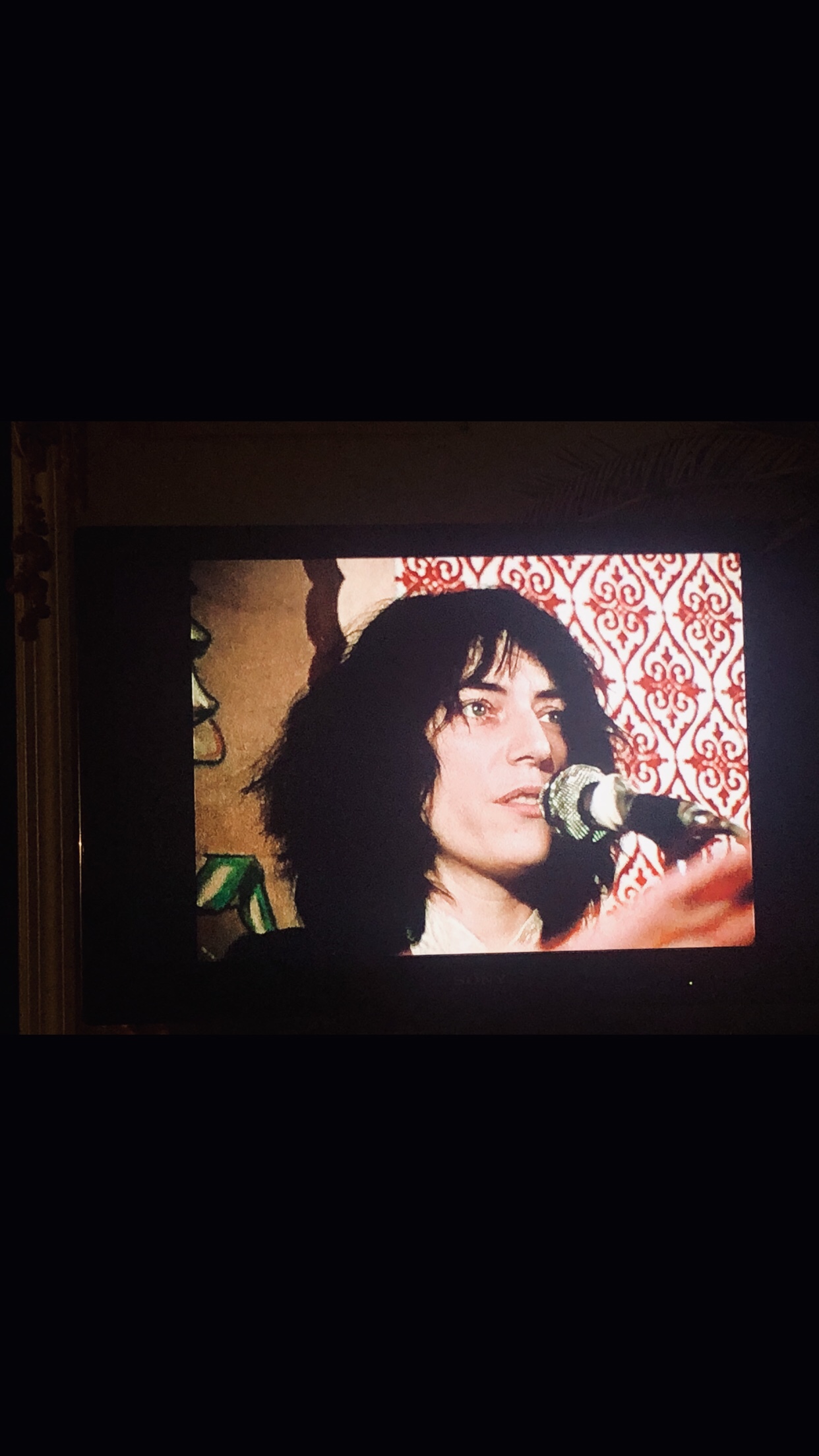
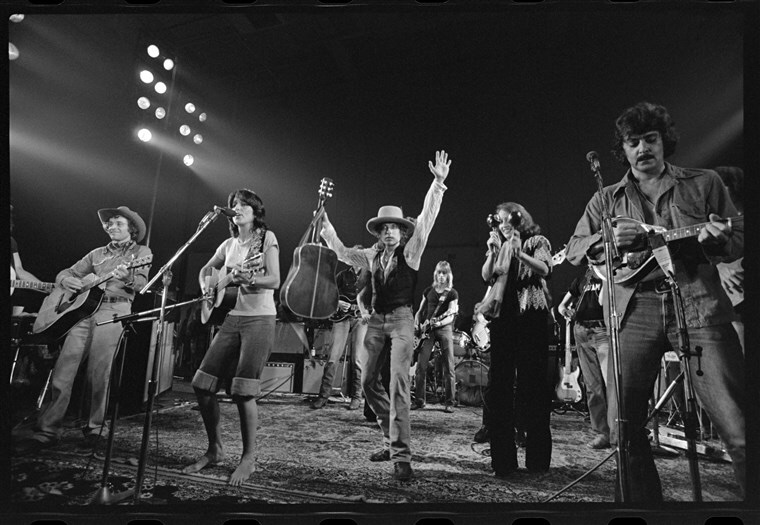
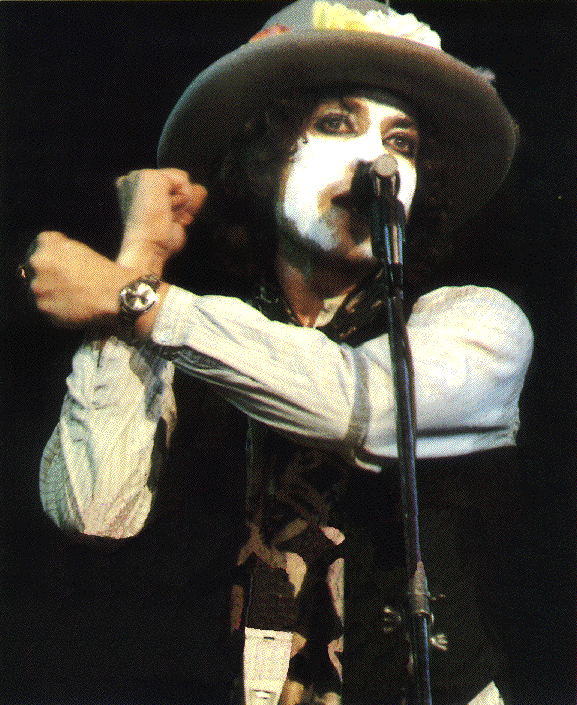
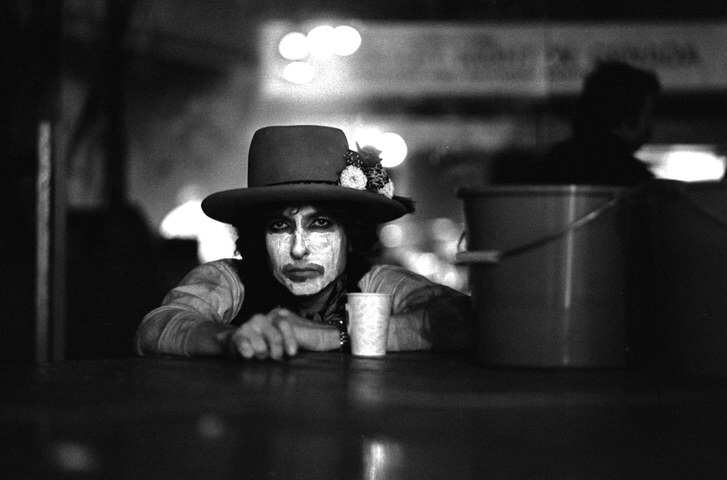
Driving past the IFC at the break of dawn a few weeks ago, the words DYLAN SCORSESE ROLLING THUNDER REVUE caught me, but by the time I’d gone to the market, had 5 cups of coffee, and driven all over Manhattan, my early morning siting had faded into a possible hallucination.  A few nights later, the same words show up on my TV, and I immediately begin watching.  What do I see the first time? The magical flowers hat, of course, in its many iterations: new flowers every night tucked into bouncing baby’s breath and maybe a feather; Scarlet Rivera pronouncing “Mud-dy Wah-ters”– her cadence of speaking as if she’s receiving a direct transmission from another dimension; Bob Dylan driving the tour bus; Allen Ginsberg’s vulnerability; the rest of them all playing fast, hard, and agitated, like the speed or coke or maybe just Mick Ronson is one step ahead of them, and they’re frantically trying to keep up; Bob Dylan’s KISS-mocking hippie Kabuki sincere whiteface, his blue eyes blazing inside of heavy black eye-liner; a rotating community; Patti Smith stealing the show, and she wasn’t even in the band.

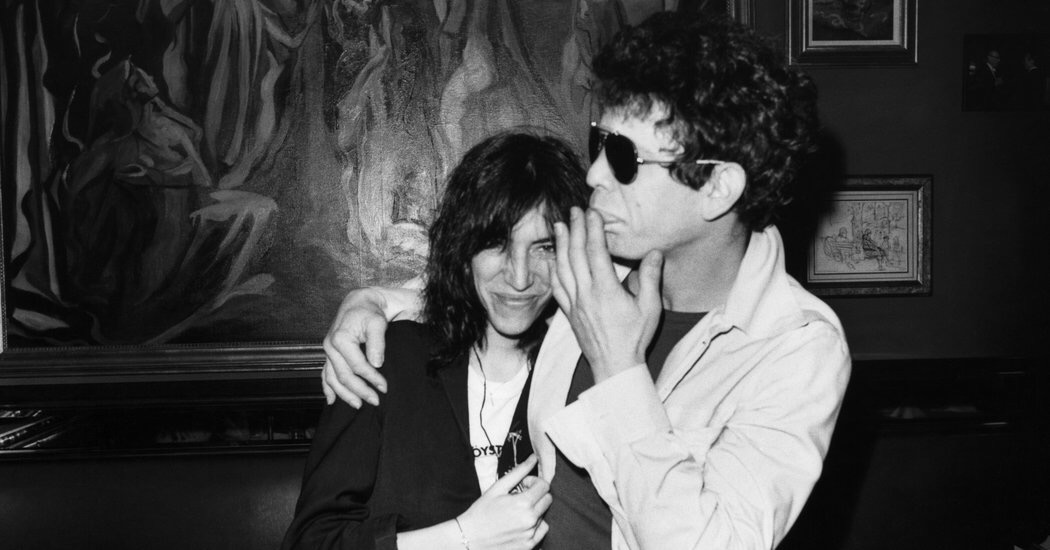
I took a screenshot of her spoken word sequence and sent it to you. Patti: our secret saint.  You reporting to me on her from your quiet place backstage.  A setlist. A witness to her vitality, her lapses, her spitting into the crowd.  She mattered, and from her began a long list of other things that actually mattered, but that is a different story.  I sent you the picture, and you, not having seen it yet, admitted that it took a minute to realize you weren’t looking at Mick Jagger.  Like a Rolling StoneCranky old Dylan in the new footage in regular pancake make-up claiming he can’t remember anything about Rolling Thunder and practically hissing that: “Life isn’t about finding yourself. Or finding anything. Life is about creating yourself. And creating things.”

What I saw the second time: wilting irises, gerbera daisies. Scorsese’s packaging.  The opening sequence is an old-timey magic trick.  The full title is Conjuring the Rolling Thunder Re-vue: A Bob Dylan Story by Martin Scorsese. The clues he gives us: this is a re-view of Dylan.  I can’t imagine anyone falls for the interviews in the new footage, but in the editing of the first ten minutes: Dylan/Patti/Ginsberg, I saw the framing of an argument for Dylan, the shy winner of the 2016 Nobel Prize for Literature, too.  (“Someone’s got it in for me/they’re planting stories in the press.”) Patti in an East Village bar swimming in an oversized flouncy white button-down shirt and black jacket. Impossibly confident in total Rimbaud mode talking to the crowd Jagger-faced, Jagger-armed, hands holding her head together: “You know like how the ground was in 16th Century Japan?” Everybody knows, right?  She tells us: “It was black and green like a  chessboard. So the archer was walking on the black part.”  The poem slides into a rhythm: “Started walking/in another direction/started walking/in another dimension/He moved in another dimension/I MOVE IN ANOTHER DIMENSION/I MOVE IN ANOTHER DIMENSION.” (An early draft of ‘Ain’t it Strange’?)  Still no music, but she starts to move. Starts to clap her hands. Her voice shifts from reading to singing. The guitar comes in, “And he kept on walkin’. And he walked real slow.” Cut to Dylan walking to the stage. Back to Patti: “He was the first archer.” Dylan. Patti: “In rock and roll.” Dylan walking up to the stage, carrying his guitar, magical flower hat in place, pulling on his black leather jacket: “He walked to the Palace.” Dylan on a beach fumbling around with a trumpet like a court jester: “HE TOOK BIG STEPS/HE TOOK BIG STEPS.” Angry-faced whiteface Dylan. Scarlet on stage by his side.  Patti’s little bird arms fly up: “He freed the elements.” Extreme close-up of Dylan sliding up to the microphone. “A hurricane just burst from his hands.”  And we’re back in the tiny room applauding for her, Dylan watching respectfully.  I close my eyes, playing back the way you shake sound waves into storms.  (“And it’s all about diffusion.”) So many hurricanes from your fingers. Passing through me, through the room. Over my skin as I take the little bundles of toilet paper out of my ears. More. Please. I open my eyes, and Buddha Ginsberg is passing out beers to his little gang. (“When I’m there/ she’s alright/ then she’s not/when I’m gone.”)

I finally watch the reading of Dylan’s speech in absentia at the Nobel ceremony. A woman reads that he thanks the academy warmly.  She reads that he assures them he is there in spirit.  (“I wish I was there to help but I’m not there/I’m gone.”)  He says that when he received the shocking news that he had been awarded the prize, he began thinking about Shakespeare.  From a Nobel Prize winner, this feels too easy and somehow too grand. You’re ambivalent about accepting this thing but you’re comparing yourself to SHAKESPEARE? My eyes start to roll back in my head. But he explains himself: “His creative vision and ambitions were no doubt at the forefront of his mind, but there were also more mundane matters to consider and deal with. ‘Is the financing in place?’ ‘Are there enough good seats for my patrons?’ ‘Where am I going to get a human skull?’… I would bet that the farthest thing from Shakespeare’s mind was the question, ‘Is this literature?’ ”

I also listened to his “Lecture in Literature.”  Buddy Holly. Leadbelly. Ancient ballads. Country blues.  Appalachian ballads. Cowboy songs. Stagger Lee. And a lot of your comrades had been wrapped in white linen. Don Quixote. Ivanhoe. Robin Crusoe. Moby Dick. “All Quiet on the Western Front is a horror story. This is a book where you lose your childhood, your faith in a meaningful world, and your concern for individuals.”  None of his sources are hanging out on a shelf somewhere. They aren’t a collection. They animate his waking life.  This is how we listen to records and how we talk about them. You send me something and tell me Sonny Sharrock, and I go back and forth between the two of you for days until I can hear the reference and the difference. I make you books on tape. We listen, not to be able to provide a catalogue, but to create one.

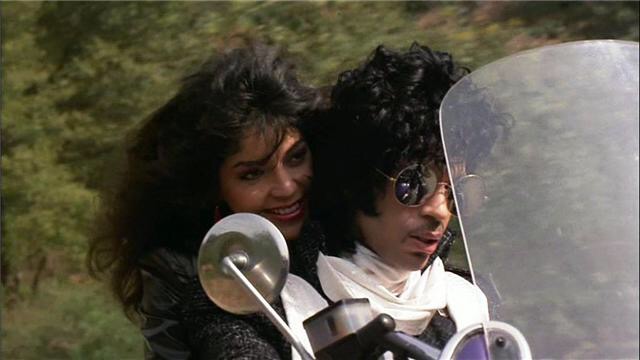
After the scene where Ginsberg passes out the beers, he’s on the beach describing the tour: “Sort of like a con man carnie medicine show of old… His idea is to show how beautiful he is.  To show how beautiful we are.  By showing how beautiful the ensemble is.  To show the actual community.  Which is the way life is.  The life of poets is.” There’s a beautiful scene where Dylan and Ginsberg go to Kerouac’s grave, and they both know poems from Mexico City Blues by heart.  Patti. Dylan. Ginsberg. Scorsese is showing us: this is the way the life of poets is.  Or maybe, this is the way the life of poets was.  And later on, Sam Shepard tells a very similar story about Shakespeare:  “And then he wrote those fuckin’ plays.” i re-watch Patti stumbling on “Hard Rain” at the Nobel Ceremony. She was the brave one. She went in his place. Every time I watch it, my face is hot and wet with tears. More mundane matters to consider and to deal with. It’s not about finding yourself. The archer was walking on the black part. And I lost her hesitating.  Are we finding or creating? Already sad, I make Maggie drive with me to see Big Pink. Strange in its actual presence. Strange for there to be a sort of there there.  We pushed past the “No Trespassing” warnings.  I thought about tiny motorcycles and ancient lucky recording devices and a man who was probably wearing a white scarf.  She said you want to stay? I said if you want me to, yes.

Ain’t no real big secret all the same somehow we get around it.


“The great wonder, in gardening, is that so many plants live.”–Christopher Lloyd

Put out because of the Homecoming parade happening on a Saturday morning down University Avenue between me and Leonardo’s by the Slice, I finally made a run for it. Shriners, high school cheerleaders, and marching bands were unrolling their yearly blockade. On the other side was a coffee bar where  someone would pass me an iced coffee with soy milk and a vegan chocolate chip cookie.  After charging through the Gator fans tailgating on the sidewalk, I would push through the door and leave my bag on my favorite solo desk in the dark row in the back, still lit by Satchel’s lamps then, and head to the front counter. I had a mild hangover that, once I’d applied the coffee and books homeopathic, would shortly dissipate. I had papers to grade and seminars that required further preparation. These responsibilities and their concomitant routines kept me in check. One of the two extremely gregarious owners of the restaurant, someone whose path I crossed basically every day for over a decade, saw my face and laughed, “What’s up, Mindy? Parade in the way of your daily routine? Has it disrupted your perusal of this week’s great scholarly tome? Whatcha got there? Marx? Oh great. That’s rich. Hey, you wanna puff?” Knowing I would refuse, he thought this was hilarious. I did relax for a second, though, checking the hubris of my tiny daily prowl. A hermetic world within a world that was so predictable as to be vital, exciting, repetitive, ridiculous. Coffee, campus, teach, office hours, back to the Slice for a salad, home, work, bar, repeat. Every detail delicate and important. Recently a post on Facebook alerted many Gainesville ex-pats that the Slice has been sold to the University of Florida. As the pretty young girl with a ripped shirt and lavender hair promised me on my last visit, “pretty soon it will all just be a dream. Gone without a trace. Just like it never happened.”


The thing is, it did happen. Everything happened. CC serving coffee with her bright pink hair way before she died, beautiful and mean as hell. Hawk always out front writing. Alison from Discount drinking lemon water. Big John heating slices his whole way through nursing school. DJ Donna with a handful of flyers. Every person you knew or wanted to know, were fucking or wanted to fuck, outside smoking, reading, and chatting, or inside at the coffee counter. Gorgeous in my memory. Soon to be a dreamtime oasis with no real world counterpart. Is there a word for memories that are only signs? Disappeared sites robbed of their signifying capacity and interred into some bottomless mausoleum of the former vernacular?
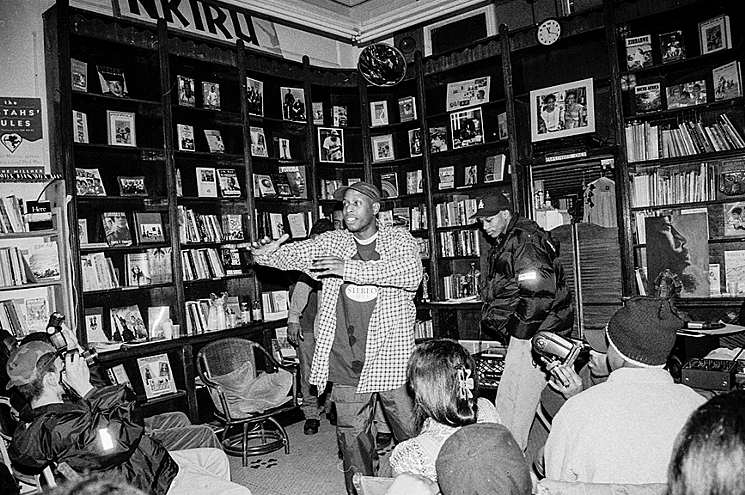

Woman on the Street with Eyes Closed, NYC 1956. Headstone for “Killer” at Bide a Wee Cemetary, Wantagh, NY 1960. The Backwards Man in his hotel room, NYC 1961. Identical Twins, Roselle NJ 1966. Mexican Dwarf in his hotel room in NYC 1970. The Jewish Giant 1970. The Young Man in Curlers…. All titles of photographs. Probably you know the photograper after the second or third description. The first time I saw a Diane Arbus photograph it was on a flyer for a show. “Isn’t this perfect?” the maker asked me. I thought it was just a picture of a couple kids, then I looked closer. The kids were odd, adult, in oversized clothes, poor. Yes, I said. They are perfect. Where did you find this? And later I snuck over to the Art & Architecture library to see more. Because there had been something odd but not freaky about the first one, I wasn’t prepared for what I found. I didn’t have a way to read them yet. I carried them around in my bag, waiting until I could tell if the photographer wanted to exploit her subjects, and to understand what seemed like pride on the faces of such unlikely protagonists. All I figured out was that the usual rules were being broken and I felt uneasy in a way I’ve learned means I’m about to figure out that I have an appetite for something I previously would not have known how to order. All these years later, walking around a new show of her work after doing a site visit for a flower job downstairs, none of the images read as shocking, but I’m not convinced that was ever the intention.
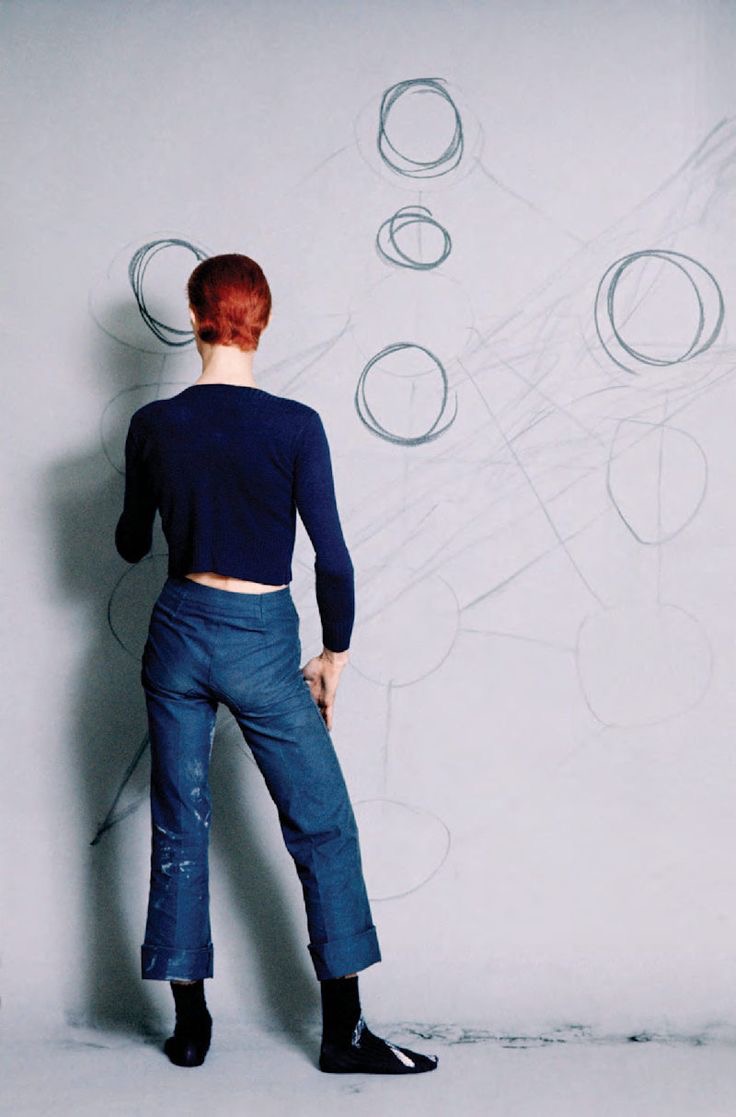
Here in this city, all of us sparkly like Klimt’s girls. Dark lips and so much hair. Necks tilted at just the right angle. Anticipating. Connotation the name of the game. Then I’ll see something and it bounces me from today right into that other day. I’m walking through the East Village and I see Joe Strummer’s mural and I’m sitting back in Durty Nelly’s playing bloody knuckles with James from Against Me. Strummer had just died of heart failure. The news spread through the bar that our friend Tang had died in her sleep, sat next to her best friend, on a plane to Thailand. She was on her way to a vacation she’d worked mornings at the Wine and Cheese and nights at 706 to save up for; she reached her goal but never got there. Wasn’t it Christmas Eve? Was that the year I slept through Christmas Day on my niece’s bed? Or was it the year I showed up with my little blue vintage suitcase, hoping to nest for a few days, only to be driven back to Gainesville that afternoon, too proud to admit my intentions. These moments hold me up in this other place where daily life often feels like a refraction of another time. Memories like Narnia closets hiding everywhere. Each door a different memory from a different life. These disorientations illustrating why nostalgia was once taken seriously as a bodily illness rather than the mind games we dismiss it as now. But the nostalgic, through all her compulsive daily infidelities, is perhaps the truest at heart. Every step a stitch in return. The pursuit of feelings, all of these emotional mosaics crafted into the grand collage. And that goes in there. And that goes in there. And then it’s over? Those of us who worship at the altar of the past–isn’t it sensation that drives us?  The way you felt at a particular place, time, age. You felt it while you were in this body, so there must be a way back to it through the body.  The feeling a photograph or a record or a film or a jacket or an era can evoke of blackout longing. I wear a record like a poultice, take notes in the movie theater, and never forget to leave dead flowers where X marks the spot.

I really tried to make it up.

“It’s hard to imagine you among the vegetables.” — Jonas qui aura 25 ans en l’an 2000


Maybe it was actually Rocky and Bullwinkle, or possibly the Melvins song, but in my fantasy Boris-the-Cat was an homage to Boris-the-Band, sans irony, as opposed to his housecat-mate, the gregarious orange tabby Lee Majors, who was a sweetly funny index for the Other in a house of skinny straight edge punks.  Siblings perhaps, both cats were unusually large, more like stout little dogs in stature, really, than domestic felines. Years later, Lee Majors would live in a house occupied by my boyfriend at the time, and I would discover he was also friendly like a dog, and had a death wish for getting outside despite the little tray of indoor kitty grass his owner maintained, and that all of the boys and their girlfriends dutifully kept watch over his flights of fancy, and even more years later I would move a buddy into the room upstairs from where Boris had lived in the Square House, as it was once called, or I guess he might have lived upstairs for all I really know. Cats and other lives stretching out legacies of the occupants of a place to which, in its moment, I wouldn’t have had any real access, and so the conversation I might have had with Becky, a girl with short, bright red hair that I decided was natural–perhaps an employee at the burrito place where everyone seemed to work, or maybe at the pizza place where anyone else, even the junkies, kept jobs–about how this cat had come to be known as Boris, simply never happened. 

I said, I’m making a casket spray. And you, seemingly never serious, said “great band name.” Band names. Maybe that’s why I never warmed up to Boris’s keepers, and they never warmed to me. Passing by on the sidewalk every day, quietly watchful as they spray painted through the little cardboard screen onto the album jackets out on their massive, dilapidated wraparound front porch, the name of their band, another irony that happened to be the name of the town, 45 minutes east where, unlike any of the bandmembers, I’d actually grown up.  In Florida everyone is from someplace awful, but Palatka is a genuine shithole.  Locals slur the name in two syllables (“Plah-Kuh”), everyone else with three (“Puh-lat-kuh”). Originally it had five: “During the late eighteenth century, remnants of Creek and other tribes made their way to Florida. In a process of ethnogenesis, the Seminole tribe was formed. They called the location Pilo-taikita, meaning “crossing over” or “cows’ crossing”. Crossover. The name of the town I grew up in is a Native American word for crossover. 

Take a sort of Barry Hannah nightmare of race relations, then add strip malls, VBS, Wal-Mart, and all of the other filth of which one born in the 1970s gets to claim first generation status, and you’ll have the Puh-lat-kuh most people experience.  Paper mills and, to even continue this list dredges up such a bittersweet setting that sitting here in my tidy Williamsburg apartment I can’t really go on, which maybe sounds precious and bourgeois, but it’s really just that I guess I was never clever enough to establish protective ironic distance from any of it. A space my neighbors who, never having actually lived there, were able to inhabit.


She can’t afford no cannon.

“Who am I? If this once I were to rely on a proverb, then perhaps everything would amount to knowing whom I ‘haunt’.” — André Breton, Nadja

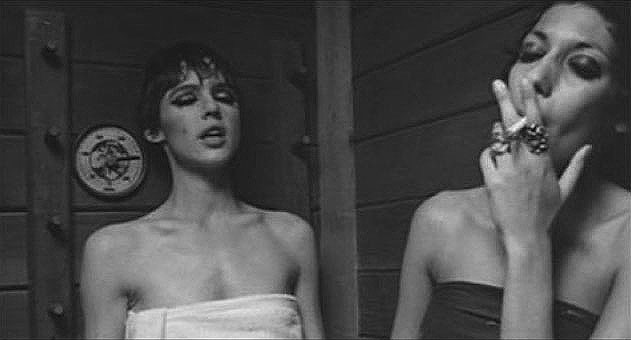
I wish I’d written it down. Maybe later on I’ll go back and see if more accurate details might be had in the text messages I sent you just afterwards. Electric dispatches describing the welcome strangeness of a New York City I never really got to have anachronistically appearing in the Russian Baths that day. Hesitantly letting the water wash off what I’d been preserving with such discreet care, I found myself succumb to same desire we’d all shown up with: to be made clean in an impossible, unnecessary way. That there are regulars fascinated me, especially the terrifying anorexic who hissed the chatty old men out of her way and the man with the plastic bag of sugar we both let him apply to our bare hot shoulders. The place was madcap. I imagined Warhol but had no reference for the association. It just seemed. Like that.


In the baths I heard you effortlessly recount your story and I sat back, draped in a soaked through, house-issued, floor length black cotton robe and a pair of underwear since I’d turned up without a bathing suit, closed my eyes and quietly combed your congenial summary for a variation or some new detail, but what gets me every time is that there is no new information. Your narrative is remarkably airtight and so the same questions that always come to mind push their way back up and remain unanswered.   You give its incredible strangeness up so easily, i think, my head so hot I keep going back to the trough of cold water and dumping it over my body while the man in the toga rubs sugar all over you and the lawyer you’re transmitting the fantastic facts of your childhood to yells at the sugarman every few minutes about the time he put turmeric on the rocks and whether it’s white or brown sugar that stinks the place up. Is this retelling of yours a banishment process? Is this why we cherish the raunchy baths and housesitting for your fancy clients and Greyhound buses and vintage lingerie and certain holes in the wall doomed to immanent closure and Tarkovsky and Fanny and Alexander and all of the music and your fondness for old men and my preference for memory loops?I’m sat on a stool next to the pinball machine and J’s playing like a high school kid. Daytime tipsy from the glass of rose I finished outside in the sun, we’re inside looking for a distraction in the hopes that she might be able to make it through the last band if I can crack her boredom for a little bit. I keep passing her dollars, feeling like one of Belmondo’s girlfriends as I absentmindedly follow the fat ball, wondering when my child learned how to play pinball and how she ascertained that it requires a little swagger. There’s a guy djing between the bands and I notice that I’m no longer watching the articulation of tiny hands, but staring somewhere into space trying to grab at what this song is and how I know it. A repetitive fast snare against a warm guitar riff that turns over and over and over on itself, then that Dylan-y voice drops in and talks its way from the top to the bottom of this thing that’s both totally simple and studied as fuck, bubbling over with what would have been all the right references and obsessions of its time and just as the beards and the hair and the suits come into focus I place who it is and slap into a wall of memories I try to push aside. As a diversionary tactic, I recall instead your stories of hanging out one long summer with these guys, and how you opening up to me with that story, so out of keeping with the prim, uptight European strangeness you’d kept me at a distance with since I’d moved in, changed our interactions. I knew about these guys, you knew them, so now we knew something different about each other. A tiny play that would be repeated in so many other stitches and folds of experiential overlap in the years to come.

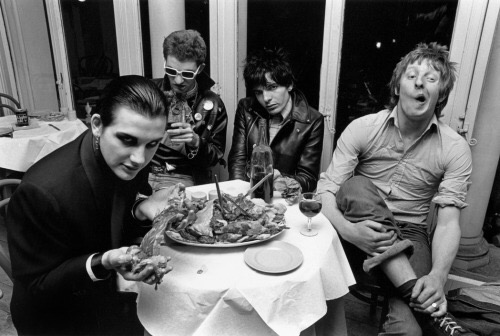
I wonder if you remember how we used to crack up every time we saw that Damned album where they’re all covered in shaving cream or whatever it is? Tucked in the piano all the way to the right? I don’t remember either one of us ever playing it, but wasn’t it the only thing we saved when we went back to rummage through the Pompei of their little garage apartment? After they took off for Russia and just never came back? Why was it so funny? Why doesn’t this fade? I don’t know, but that seems important now, those absurd little tiny elations of recognition. Spontaneous laughter being one of the few measures of genuine connection and memory proof that i haven’t just. Made it all up.

Where everything seems so/dirty.


I’ve been reading Thomas Pynchon again, and something about this election made me want to fast forward past everything else in the film version of InherentVice and skip straight to the spanking scene. Of course I know there is no cutting to the chase in Pynchon. Surely what makes it so hot (and certainly what is at stake in his work is not hotness. Not exactly), is the build up. So I did the next best thing:  I re-read the book. This time I stretched it out, lingering on every joke, watching the layers find each other.  And I got to live in glorious scummy 70s LA on P.I. time for a few days, but then I finished it and found myself back on the business coast with my watch synced to the hyperventilating belly of the beast. I also know that All-Of-The-Things-That-Were-Allowed-To-Matter-When-I-Was-Still-In-Academia, thought processes that work at cross purposes with a fairly heteronormative daily life organized around running a small business and parenting, I want that mattering back. I don’t want that life; I just want the space for the details to matter as much as they could then. The thing is, there’s not time, and that trips me up. On top of that, I can no longer trust my body to sleep in designated areas at appropriate times, so I’ve come up with a career that requires me to be in motion all day. Some days I drive, but mostly I walk and take the train. I show up kind of ontime to different places all over the city for jobs that must be completed on time. I like to be at the flower market around 6, and when the coffee shop finally opens at 7:30 I know I need to get moving.  So I was bummed when my shrink said, you’re narcier than I’ve seen you in a long time. What’s going on? Narcier=narcy=narcolepsy, which I have and which rather than the sexy blackouts you might be imagining, tends to manifest as a kind of junky nod-off, making me look bored or fucked up when I’m really just trying to concentrate. Sometimes I’ll be writing or talking and it’s already set in and I can only tell when I see someone’s eyebrows shoot up and respond, “Um, what did you just say?” And I have to admit, sorry, I guess I was sleeping already. Already. The always already of the permanent possibility of sleep. One day on a flower job a coworker told me, “You’ve been given a gift.” I’m not really arguing with that, but I would love to know who’s giving it to me. I have a few ideas. The most interesting one was presented to me once by a psychic: you need to cut a connection. It’s exhausting and you won’t heal until it’s been severed. Okay, this is a productive metaphor, I think. How do I get rid of what actually sucks? What’s pulling on me so hard that I’m in a kind of permanent overdrive? The short list alone is convincing enough, but I’m the one with the Joseph Cornell heart. I’ve maintained these attachments because they don’t run on money time. They are gigantically inefficient on purpose, but now I’m on the couch, a place I very much want to be talking to someone who is very important to me, and I’m rubbernecking.

I dislike both forgetfulness and forgetting. When I started my flower business, my dream was to only make flowers for funerals. I wanted to be able to have conversations with people who knew they were dying, so we could have that last party be the most beautiful–as important as any shower or wedding because it is important to pause and remember someone as they were. The arrangements like the careful process of crafting bespoke perfume. I thought maybe if that moment could be special, mourning might come easier. I thought, if I can teach other people to mourn, then maybe I can learn how to do it, too. I still want this, but it’s kind of an unusual business plan.

Far across the moonbeam.

“It took dominion everywhere.”  — Wallace Stevens

One recent morning, the car was fragrant with the green tomatoes I’d cut the night before. The weather was about to turn too cold for them, and the long vines released a smell I would bottle and wear if I could. A smell from childhood, one that taught me the difference between the garden and the supermarket.  And a few Sundays ago, I woke up alone in an antique bed under a patchwork quilt on the second floor of a farmhouse upstate . The room was blue black and the square inside the window was only a slightly lighter shade of blue. Disoriented from the cheap red wine from the night before, I stared at it until I could make out where the frame ended and the window began. Black tree outlines started to come into focus. I flipped the lamp on and the trees disappeared but the wet fog inside the windows showed itself. I thought to take a picture of how beautiful the light and the glass had become, to show it to someone later, but then I realized it just wouldn’t translate. So often I have that feeling when I’m on flower jobs, especially when we’re out of town. I want to document all the stages of what goes into a wedding, or even a single arrangement, because those steps are where my experience takes place–the thousand tiny decisions, endless positioning and repositioning, and flowers that make you stop and share them with whoever else is around. Fat, buttery garden roses, perfect leaves, strange double or oversized blooms pausing between the bucket and the arrangement. Oftentimes the in-between looks prettier to me. How do I show you that?


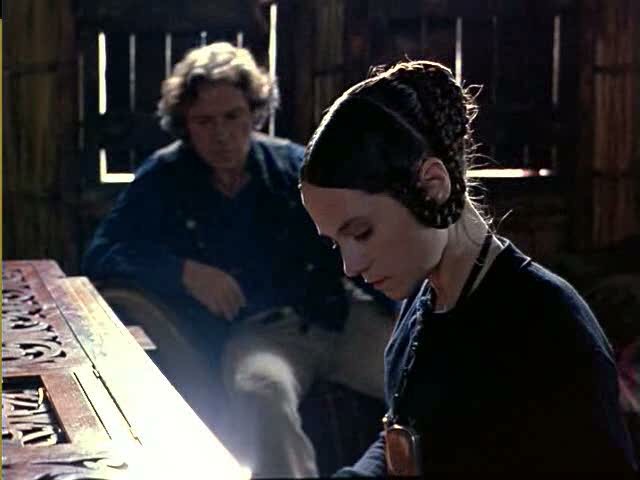
In the final scene of Olivier Assayas’s new film, Private Shopper, the main character, played by Kristen Stewart, seems to make contact with the spirit of her dead brother. She’s been hoping for this the whole film. They were twins and, when he was alive, both mediums. I’m not interested in explaining this further or discussing whether or not the premise is absurd. She thinks it is her brother, then wonders if it is another spirit. “Are you playing with me?” she asks. “Lewis, is it you?” she asks. “Or is it just me?” end of film. I don’t mean to reduce the specific content of the film to metaphor, but my wet eyes were not provoked by my own attempts to tamper in the afterlife of others. Not exactly. They were a reaction to the silent ways we communicate amidst spatial and temporal divides. The leap of understanding that any linguistic volley provokes. The way we have to go with what we know over and against what someone may or may not say to us and the possibility that, when we do this, we might be prioritizing ghosts over humans. I was feeling puny about a dream I’d had the night before. Actually, I’d had a dream that unfolded into flashbacks of other dreams I’d had with similar content, and they all made me sad in the same way. An avalanche of subconscious fictions I’d been trying all day to shake. Stories taking liberties with those precious geographies to which I simply can’t return. In Japanese the verb  is “see” a dream.” In English we say I “had” a dream, like a child or an orgasm. “Had” implies ownership, but “see” suggests the nonlinear, difficult to narrate during consciousness, ephemeral repacking of experience and memory that happens while we sleep.I was almost finished reading Roadside Picnic when I watched the first episode of Westworld, otherwise I probably would have missed how a conversation between the show’s Dr. Frankenstein and his chef de cuisine about evolution is uncomfortably close to a passage in which two characters with comparable power relations in Roadside Picnic use almost the same terms to discuss alien visitation and human ‘progress’: “And then, if anything in the universe changes, we will happily become extinct–again, precisely because we’ve lost the art of making mistakes, that is, trying various things not prescribed by a rigid code” (130 RP). I suppose the way the hosts must seamlessly play their parts in an endless narrative loop is meant as a contrast to the sloppy inconsistency of humans.  They are told what to like, unlike actual humans who run on the messy fuel of instinct. Subjectivity seems to be cast against agency, and Butlerian  “performativity” seems at first to be purely the domain of androids. If a performative speech act calls into being what it names, then how are we to read the disruptions made by the hosts’ gliches? Is the show a meditation on the contradictions of erotic desire as the most human of the most animal instincts, or is that just what I’m thinking as I’m watching, trying to force a reading that doesn’t play out?In the Q&A after Personal Shopper, someone in the audience asked a question about genre and Hitchcock. When Assayas answered, each time he said “genre” I imagined he was saying “jar.” I played with the idea that genre was a jar of the Wallace Stevens variety, taking dominion everywhere like performativity, calling into being what it names.  His disinterest in genre both defused and exacerbated my fantasy.I keep coming back to something I heard on the radio a little while ago. One of the djs on WFMU mentioned that he’d interviewed one of the Impressions (as in Curtis Mayfield and), and he said that Curtis Mayfield learned to play his guitar by tuning it to the black keys on a piano. I don’t have the critical faculties to understand how interesting or innovative or disruptive this adjustment may have been for his songwriting.  I don’t know if it just sounds cool or if everyone used to do it or if it’s a white boy fantasy about “colored time.” And I understand that the way one tunes one’s guitar doesn’t effect time or timing. Not exactly. But the brilliant accident of it pushes through regardless of what the technical answers are.  A structure remains intact, but this mistake, this trace of translation, opens the door of subjectivity a teeny tiny bit wider. Do you remember the deal Ada makes with Baines in order to get her piano back? He tells her that each time she comes to supposedly give him a lesson, if she will actually just play and let him watch and do what he likes, she’ll earn one key back each session. “Only the black ones,” is her counter offer. I read about how the koto is tuned to a pentatonic scale and how these actually vary within Japan according to region. I wandered into a Q&A with Trinh T Minh-Ha last night and, speaking about how, in Senegal, 3 or 4 dialects might be used in the same village she said, when you speak the dominant language there is only one. 

We don’t do the same drugs no more.

“Is there some persistence of time that opens up at the end, or beyond the end, or even a strange poetic function of the end?”– Judith Butler


I didn’t want to start here but I am preoccupied by it. There is a moment toward the end of Werner Herzog’s film Lessons of Darkness where we are finally given the relief of an extinguished oil spout shooting into the air, all minky and  black garnet. The film is “set” in the burning oil fields of Kuwait at the culmination of the first Gulf War. Feeling gut sick but mesmerized by the wicked sublime repetition of so many towering fiery spouts, the sight of a simple black geyser as the film comes to a close is a confusing relief.  Texas tea and feckless hillbillies come to mind. And then, right on cue, in come the white male workers with their Seventies beards and strange mirrored goggles. I am uncomfortable with my predictable attraction to them, but this is, after all, a film about bad romance. 


Are they astronauts? Are they working out a modern rain dance on Mars? Are they just loving the alien or now that the heroes have come is something shitty happening? Then one of the white men gracefully, flippantly, runs up and heaves a flame into the black geyser and it re-ignites. This is pure horror. Gluttonous and macabre. I begin wondering about the order of the film’s images, about this desert storm’s narrative sequence outside the film. Time.com tells me, “As the 1991 Persian Gulf War drew to a close, Hussein sent men to blow up Kuwaiti oil wells. Approximately 600 were set ablaze, and the fires–literally towering infernos–burned for seven months.” Okay. So then why does Herzog have this footage of this white guy doing what had supposedly been done by Saddam Hussein? Oh. Right. Right. That is the low-hanging fruit, as a friend of mine likes to say. 

 I often get this line from Bowie’s Station to Station, an album as much about lessons of darkness and desire as any other text, stuck in my head: “It’s not the side effects of the cocaine/I’m thinking that it must be love.” Bowie asserts, I am having a real epiphany.  This certainty is born out of something other than drug mania. But, precisely in what way is drug or any other mania not real? Who anymore is above some sort of pharmaceutical, surgical, or virtual extension of your own particular spark? Hashtag no filter is a sweet impossibility, but wasn’t it always already the case? Isn’t this what we talk about when we talk about mediation? The song goes on: “It’s too late/to be grateful. It’s too late/to be later than. It’s too late/to be hateful. The European canon is here.” This is the return of the thin white duke, no? Making sure white stays.

Sitting in a tiny desk off in that cramped ground floor isolated corner classroom of Turlington Hall–always too many desks, too many students crammed together, I meticulously copied “Black men loving black men is the revolutionary act” into my notebook while the lights were still down. This was the first of many times I would watch an old VHS copy of Tongues Untied in a dark room with students–is there any other way to come across it? I was taken by Marlon Riggs’s citations of poems by Essex Hemphill. His name, the lines of poetry open wounds like pop music, his skeletal body, eyes about to pop out. I wanted to know more. This was maybe 1996 so my only recourse was to go to the stacks of Library West. It worked like this: I looked up “Essex Hemphill” in one of the big library computers. Then on a little scrap of paper left next to the computers by library staff, with a stubby pencil I wrote the call numbers for the sources in which I might find him. Then I made my way up the stairs to the bookshelves that matched the numbers. Everything  I was to know about him was, for that day, limited to these shelves and these numbers. I pulled out old issues of Callaloo until I found him. Then I would heave my pile up to the 5th floor, in the middle of “Russian” Literature, sure that no one else would go up there on purpose. And then, I would just read. Aimlessly. Finally the lights would start flickering around midnight and then I would go find all the other kids who liked to dance drinking beer somewhere. 


Likewise, if I had watched Lessons of Darkness back then, I would have had to dig until I found a conversation in a film journal, maybe even on microfiche, about the guy who ignited the oil. But none of my teachers ever screened it. I never saw it at our downtown art theater, the Hippodrome. No one I knew happened to bring it home from the Office of Instructional Resources. We watched it a few weeks ago on the couch courtesy of some Netflix-type service, and then I googled the scene and discovered on a film blog that he did it because Herzog asked him to: “…as Herzog explained at a festival screening, he simply asked the firefighter to reignite a well for the camera and he agreed because the hard work was done. It was the heat from months of burning that made the fires so hard to put out and it took weeks of dousing the surrounding area to cool the ground down enough. Snuffing a fresh fire would be easy in real life.” No bike ride to the library. No photocopies of my evidence. No late night drink and conversation afterwards. Just me and my smartphone. Took about two minutes.


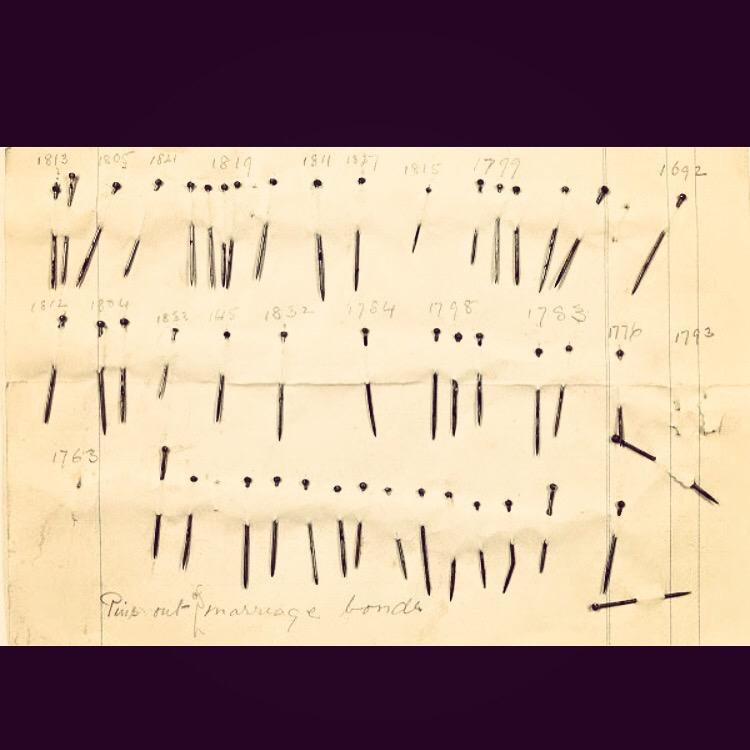
Those pins above are what Jane Austen used to edit manuscripts. I believe the note at the bottom reads, “pins out marriage bonds.” Editing. Sometimes when we are building an arrangement, I hear Emily say, “just put the whole branch in. We can edit it later.” The idea is to edit the branch to make it look more natural. In order to tell a story about what actually happened, Hertzog stages all sorts of things. Frank Lloyd Wright brought the outside in with Cherokee Red, Le Corbusier had Vert Noir, Yves Klein International Klein Blue. Translations of sound and vision, all of them. 

I keep trying to use these pieces to either resuscitate memories through this singsong voudou (pins for making) or to lay them to rest (pins for editing). I start out thinking, this is how I put it away, but once it’s out of the chest I want nothing more than to put it on. They both are and are not mine to wear. The surrounding area has been doused. The ground is cool enough. I was camping upstate last weekend on a magical farm with lightning bugs and Icelandic poppies and camera crews and retakes and fire and no fire. I watched how it works. So what is the harm in reignition for camera work, if the story is there? Snuffing a fresh fire would be easy in real life, right? If the hard work was done?

Sometimes you get nowhere.

“I passed an ancient cherry tree bound in frayed burlap. The cold light deepened the texture of the binding and I framed my last shot: a comic mask whose ghostly tears seemed to streak the burlap’s worn threads.” –Patti Smith, M Train

Tiny talismans. A collection of silk sacks filled with what boils down to amulets against the loss of what remains most precious. Totems to the actually gone. The lesson that someday many things will be actually gone. The experience that this binary will prove very, very difficult to undo. Love is like a boomerang, but sometimes all that comes back is what that buzz of return sounds like. And it sounds like, god, who needs tattoos when memories are burnt so inseverably into music? And well, let’s just say I’m back on the radio. I’m on the subway I’m walking through Tribeca I’m on E Houston but now I’m inside the clock without hands. There is no A.M. or P.M.on that face. Everything is all right here. Right now. “Don’t let me down” starts to play and my mind is turning, swirling vinyl. And a needle is the only hand that can touch me.


Perhaps the only option left is the alchemical relief of turning spooks into words. To be a conductor. Shazam. Copper replaces gold. I’ve been reading Patti Smith’s M Train. In it, she goes to places I’ve been in Japan to pay homage to authors I’ve also turned over and over and she does exactly what I would do. She washes their graves and leaves them flowers. Every time I see Akutagawa’s name, I hear it in Dr. Hulvey’s second generation Californian Japanese accent: “Ah-coo-TAH-ga-wa.” I tried to mimic her as a college freshman learning how to put these clean words into my dirty, redneck mouth. A hilarious exercise in transforming a sloppy southern English drawl into the carefully clipped bonsai of Japanese. I hear that voice every time I scan his name in M Train. I wonder how Patti’s Japanese is, and what it sounds like when she says “Akutagawa.” Something like Joey Ramone’s mom, but reverent instead of confused. Like at the beginning of “Horses/Land.”  Just like that.

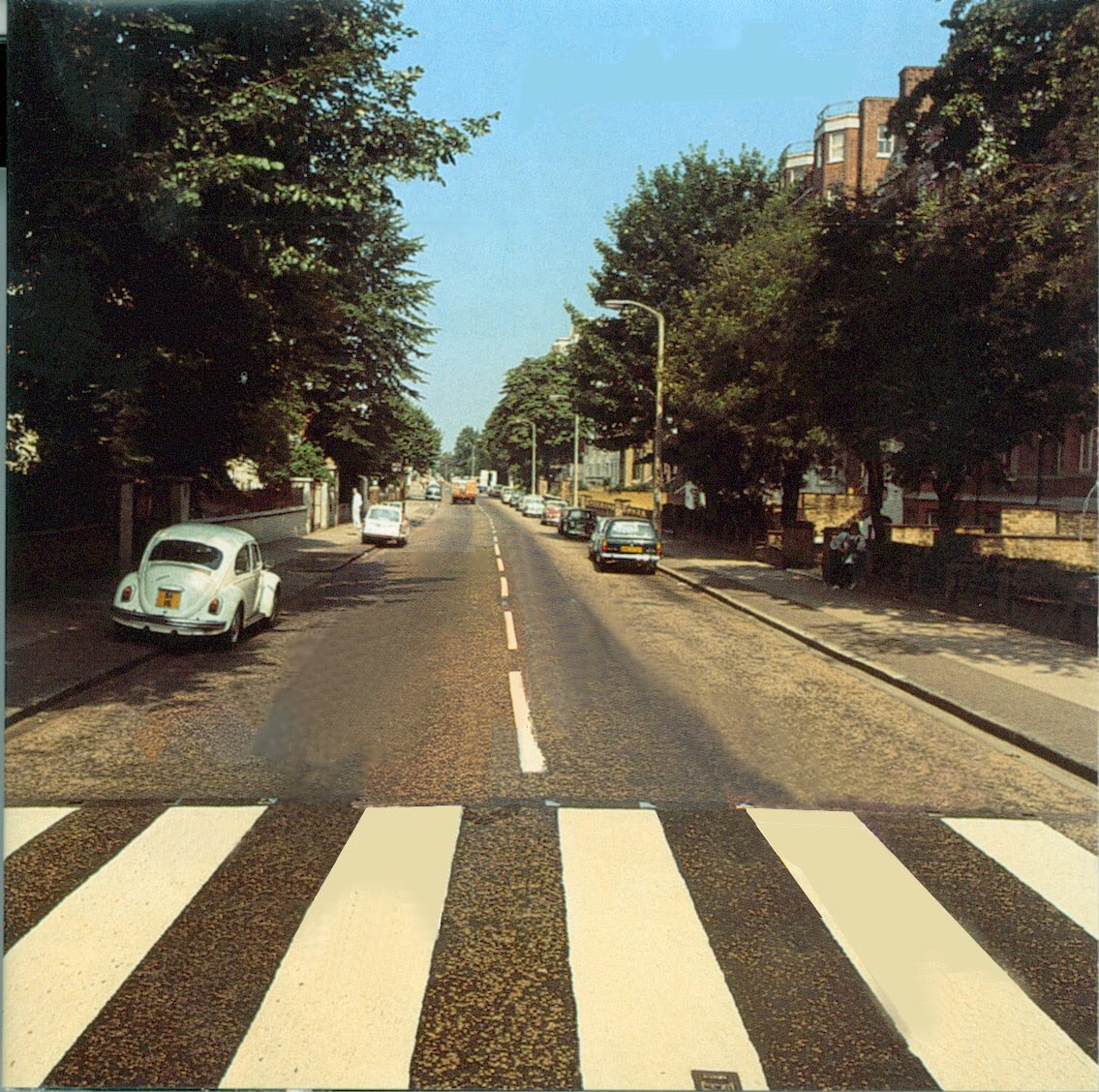
  In my parents’ record collection I always went first to the Beatles, then to the John and Yoko solo albums, then the rest. I would sit in the living room by myself and flip and flip and flip, trying to understand the cover art. Again and again I’d scrutinize the differences between the four suits on the cover of Abbey Road. Disapproving of Paul’s bare feet, feeling John’s shamanic strangeness all in ivory and tennis shoes, but liking George the best. George all in denim like Dad. I imagined that he also smelled a little industrial and a little like pine trees and polished his own boots with mink oil every night before bed. No one listened to the Blues in our house. There weren’t even any Stones records. “She’s so Heavy” was the first taste I had of those feelings. I always skipped quickly over the Patti Smith albums. I couldn’t understand her thinness or the underarm hair like my Mom’s, a sign in our house of drastic changes soon to come.


In Japan, when kimono are worn, the left side is crossed over the right. If a corpse is dressed in one in preparation for cremation, it is crossed right over left.  Sometimes I wish that such resounding gestures could be made by the living. Wouldn’t it be easy if we could announce the death of something and the mourning of a loss with a sartorial gesture?  White tennis shoes for a breakup. A single pair of leather ankle boots every day for divorce. If you’re not mourning you can’t wear them–irony ruins the ritual. I guess I’m kidding, but in a moment of extreme desperation I once asked a dear friend to create a spell powerful enough to banish heartbreak. This is what she told me to do:

1. Take 2 chopsticks.

2. Stick each of them in a flower pot or clay to make each stand up firmly.

3. Tie string around them to make tight rope between them.

4. Name one pole “you.”

5. Name the other pole after the person/sadness/or unresolved conflict.

Maybe you can imagine the next steps.

i come down/from the crooked mansion

“At once part, cause, effect, example, what is happening there translates what takes place here, always here, wherever one is and wherever one looks, closest to home. Infinite responsibility, therefore, no rest allowed for any form of good conscience.”–Derrida, Specters of Marx

On one of your visits back to Gainesville, after i had finally moved out of our old place with all the spare rooms and the square-screened windows you’d nailed shut so no one could get me and into the spooky quad up the street, i had a party. You came in wearing that wool cabbie hat of your grandfather’s, and i wound up wearing it around until we lost it forever. After setting your little vinyl-shelled suitcase down, you sat on the blue and white striped loveseat and at some point got back up, tapping and strolling around the apartment. Kneeling down and flipping through my small stack of new records and, picking up Trout Mask Replica, you asked, “How did you know about this?” i smirked. i was learning how to anticipate you. The tricky thing was that i was no longer much aware of trying to keep up. Your likes had become mine. Or rather, i’d become such a good study that i could no longer tell the difference. We’d been broken up for a while, and there had come a serious boyfriend and a few very serious years of grad school in between, and then on one visit something was back and when i broke up with my ex his voice taunted me through my rickety land line: “At the end of it all you look more like him than me. With your jean jacket and your grown out hair, you don’t look like me at all.” At the time i just mumbled to my friends about what a crazy motherfucker he was; but when i think about it now, he was right. It was a spectacular alliance.

 I had indeed been trying on the style of a different subculture. I did miss this one and i had gone back to it and i did look, (and still do, actually), remarkably similar to this other dude. i was deeply attracted to him but i also identified with him, which is not the same thing. In fact, conventional sex/gender wisdom holds that the two aren’t really supposed to happen at the same time. This is interesting to me personally but it’s also interesting to consider how these kinds of identificatory practices are often most extreme when we are least aware of them. Now i can say, hey, i had a largely itinerant, lonely, childhood from which I saved very little and retained no friends. My lasting friendship with this person, the fact that in many ways we grew up together, represents both the reality and the fantasy of a better life and by identifying with him i hold onto that hope for something better. I let my son keep his security blanket for the same reason: it sutures something emotionally vital. Later on another boyfriend joked that we probably wouldn’t make it because of my preference for rocknroll over art rock and we both laughed but we knew it was true. Changing teams to art rock just wasn’t part of the plan.
mexrissey
i was a little sister of two big brothers before i had boyfriends and i learned young to understand love as a scholarly thing: mastery of the other’s interests created intimacy and trust and a space for common ground. Always hungry to be the closest intimate, i knew to do it first. For this reason, i have an encyclopedic understanding of late 1980s surf culture and early dirty rap from so many days spent stretched out in the back seat of my brother’s Honda Prelude, sun in my eyes as we sped to St. Augustine for another day of reading on the beach while the boys surfed, laughing nervously at 2 Live Crew lyrics and puzzling over the label on the bar of surf wax melting in the back window, trying to figure out if the promise that Mr. Zogs was “the best for your stick” was something sexual or not.
nina
That i am either completely misremembering grad school or that my experience was drastically out of keeping with everyone else’s is entirely possible, but let’s pretend for a second that this assessment is valid. When i look now at the work i was doing, i see that it was immanently personal–meaning that all of my theoretical attachments were very obvious reflections of my background, desires, and biases. My anti-disciplinary discipline was Cultural Studies, and the work we were doing was overtly political. That the political was so thoroughly personal was both a given and a taboo. As teachers, we had to present as authorities on our subject matter and because, like oral history, personal accounts are not weighted the same as properly academic information (whatever that is), we promoted the experts. Some of us chose, say, the Marxist track–one in which personal accounts were allowed but hardly necessary. Others of us chose Feminism or Queer Theory or whatever but this was grad school, after all, not therapy, and the rub of Cultural Studies was that we were supposed to be figuring out a discipline. 

 i had one professor who insisted on addressing the place of desire in the classroom. He also insisted on addressing race and class and gender, but none of these modalities were ever presumed to exist apart from desire. i’m not saying that my other professors weren’t just as radically committed, if not moreso, to theorizing desire, but his pedagogy was aligned with this necessity in a very different way. Whereas my classmates complained about the Oprah-fication of womens studies classes, where students used class time to process their desires, we spent class time learning how to understand desire as something that shaped economies and lives far beyond the comfort of our bedrooms or our new shoes. Midway through my first semester of grad school this professor got a job at a fancy school in the Northeast. He said the students in our department weren’t smart enough. i understood this as a statement of desire rather than fact. He loved us, but he wanted to have a career that mattered differently so he had to go. Some of us never really recovered. I’d gotten into grad school on the merit of some unconventional papers I’d written for him. I had no idea how to construct an appropriate scholarly essay. I still don’t.

 I went to see Black Panthers: Vanguard of the Revolution last weekend at Film Forum. As with pretty much any film I’ve ever seen about revolutionary politics in the United States in the 1960s-1970s, I was led on a ride that looked like this:


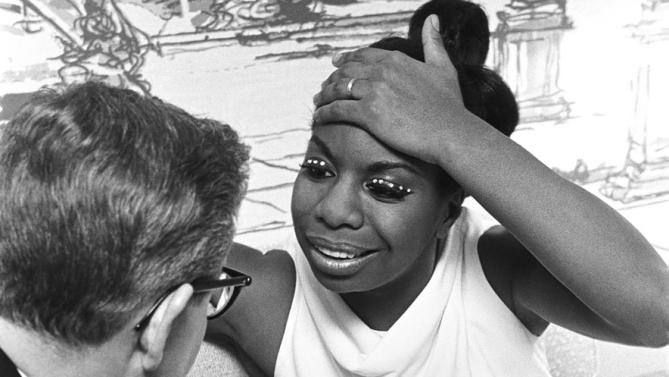
I can’t remember if you are supposed to talk about plot in documentaries, but these films are generally driven by the imminent failure of whatever movement has been chosen as its subject matter. These were the movement/revolutionary/radical ideas. This is why they were doomed to fail. Someone later asked me how the film was and I said it was fine. The footage was good, but the form was very conventional. As in the recent Netflix documentary, “What Happened, Miss Simone,” we are presented with the madness and egomania of the characters as the unfortunate foil in what began as a situation full of brilliant and exciting intensity. That the madness and disorder (necessarily? It feels necessary) might be overdetermined by so many structural problems is occasionally hinted at but not fully explored in either case. I find myself still wondering what that other narrative form could look like.