When i was in the Seventh Grade, my mom and i moved to Jacksonville for a year. i had just finished settling into my first year in Gainesville–loving my comparatively progressive public middle school and our house on SE 6th street behind the old post office. We had a gigantic herb garden and Gloriosa “flame” lilies wild in the back yard. We discovered 706, and occasionally would order hot, whole wheat, buttery rolls to-go, their aluminum tin scorching my lap in the car on the way home, but most days Mom sent me over to Emiliano’s for a loaf of Cuban bread. i rode my bike to school. My art teacher was my best friend. i was not missing Palatka. Gainesville was odd enough for my new life, and we seemed to fit in. In early summer, a brown Rolls Royce began spending the night in our driveway. A woman all of her friends implored her to stay away from would soon whisk us away to what was then the largest hell-hole in the country: Jacksonville. By the end of the summer, we were packed off to her girlfriend’s riverfront condo and nascent antique business–she had just left the stock broker’s life, from which the Rolls was one of a small horde of gaudy spoils. The bullet hole scars on her belly and her ex-smoker’s cough that could still produce puffs of smoke–one of her many parlor tricks that also included psychic channeling and other types of witchcraft i am hesitant to describe–were a bit more difficult to rationalize.
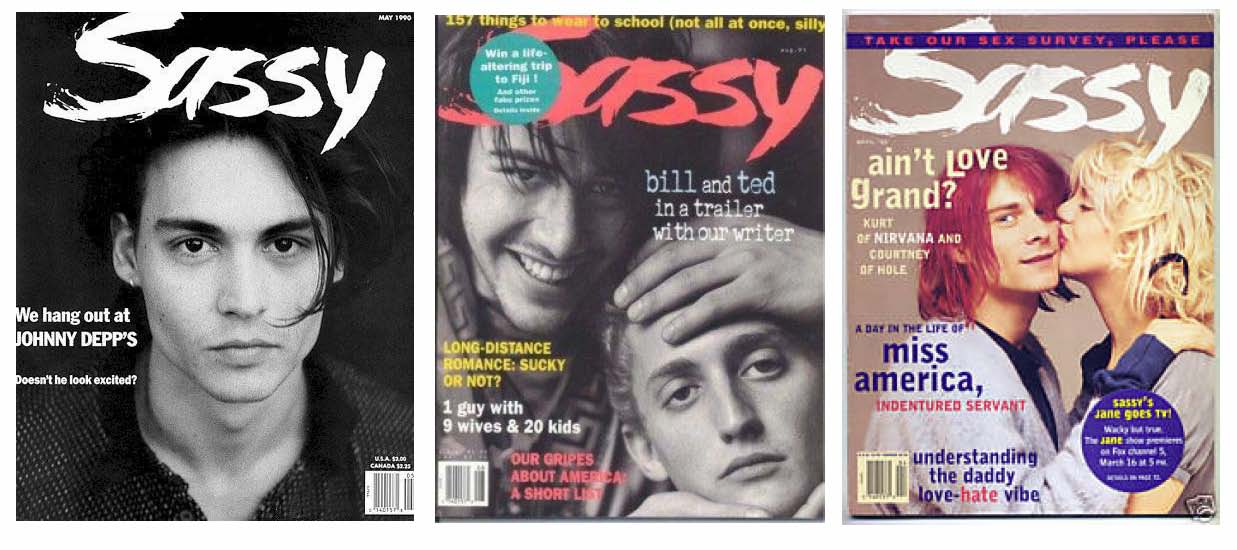
i rode a school bus an hour each way from the Westside redneck sprawl of our neighborhood to the no-one-was-even-trying-to-gentrify yet thriving downtown ghetto to attend the Eugene J. Butler Seventh Grade Center. This was the public school option, so that’s where i went. For the first time in my school career, there was no Gifted Class. i attended a regular Language Arts period and learned rote rules of grammar–an experience for which i am still truly grateful. Sitting on the bleachers in P.E., the girl next to me admired my Liz Claiborne purse and we bonded immediately. i spent many nights at her house eating fries from Rally’s, listening to the Gucci Crew and R.E.M. on her shitty cassette player, and reading her copies of Sassy over and over. It was she who was scouted when a representative from a modeling and acting school–think Barbizon, but cheaper, came to recruit girls. She received a free class, and i somehow talked my mom into paying full price for a semester for me. i was enthusiastic, but hardly a natural. We were taught how to coordinate eyeshadows and liners, the correct amount of foundation (for a Seventh Grader) to wear, and how to set a table. In one class, we were taught proper diction, and Edgar Allen Poe’s “Tell-Tale Heart” was one of the texts used for recitation. Of course, i was a reader. i mean, i’d read everything by Stephen King and C.S. Lewis, Judy Blume, V.C. Andrews, and even a few contraband Danielle Steele novels nicked from one of my Dad’s girlfriends–but this was something else. Very short and still kind of trashy, but open-ended and invested in metaphor. i’m not sure why, but i saved the copy i’d been given at the modeling school for years. Maybe i just liked the title, but i also liked how, even though we were supposed to have just been using the story to practice speaking out loud, our class had been sidetracked by a long conversation about what the story “meant.” Too bad we weren’t somehow compelled to do the same about lip liner. The antique business ended up being a stall at a flea market i had to tend on Saturday mornings–my glorious entry into the world of service. i might not have been able to flip it into a profession, but this was the year i learned about acting.

Two weeks ago, some doctors discovered that my boy has a poet’s ailment: his heart is improperly conducting. It both beats too slowly and pauses for too long between beats. This is because he has a heart “block”–its electrical impulses are often either delayed or stopped. He now has a pacemaker, which will stimulate the muscle and keep it beating at a regular rate. It is a “pulse generator,” and runs off of a little battery that lasts for about 8 years. When we told him about it, he excitedly asked: “Like a robot?” Yes, actually, we said. But then he got nervous and cried, “But will it make me walk like a robot!?” No, no, no–we assured him. You will still walk the same way you do now, you just might have more energy. Walking was of course one of the main things we practiced at the modeling school, where i learned a saunter i still find myself bound by. i don’t have any droid parts on the inside, and i am fascinated by this early, lucky intrusion into Jonas’s “natural” self. i am also struck by his concern that this process would alter how he performs, rather than how he feels. He is not even four, and is already keen to the ways in which his own little body is an empire of signs. But his heart, it is impossible for me not to let my mind run wild with metaphors. He will never be able to play contact sports, and i’ve never been able to love any other way. i hope that all of my own sitting around mooning over discourse and desire will help me teach both of us how to be more careful with that little red treasure chest. Tiny fatemaker. Precious motor.

 noVacancy