
Can’t Remember What i Miss.

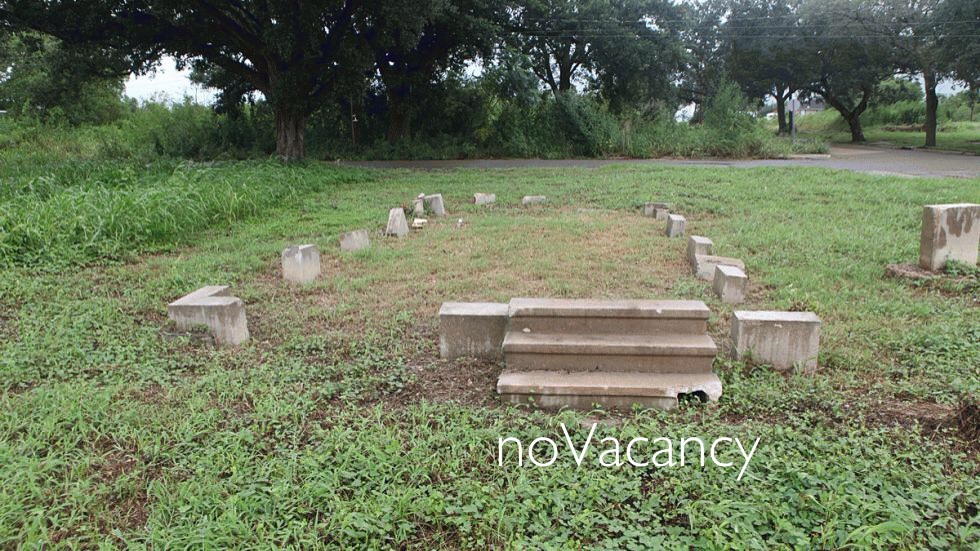
Every morning, as i wake up, and often at night, as i am falling asleep, i have to remind myself of where i am. Narcolepsy keeps me from having a gentle entry or exit to and from dreaming– leaving me where i was right where i am. i pop out of sleep, and start planning a day in Gainesville–i’m going to get my coffee at the Slice and then ride my bike to campus. i don’t teach until 1:55, so i’ll hide out in my office and catch up on grading. After class i’ll…go to the pool? Wait, for some reason i can’t…go to the pool…today. And, this bed. It’s too close to the windows and there’s only one cat on it…where is the back i sleep with my face pressed right into, knees tucked into the back of knees, arms tight around waist. Not, no, no. Stop it. Back, it starts coming back–i’m in Brooklyn. i run the details for myself–everything that’s different, the arrangement of these rooms i live in now, the people i will or will not find in them, the weather. Gradually, i am convinced.
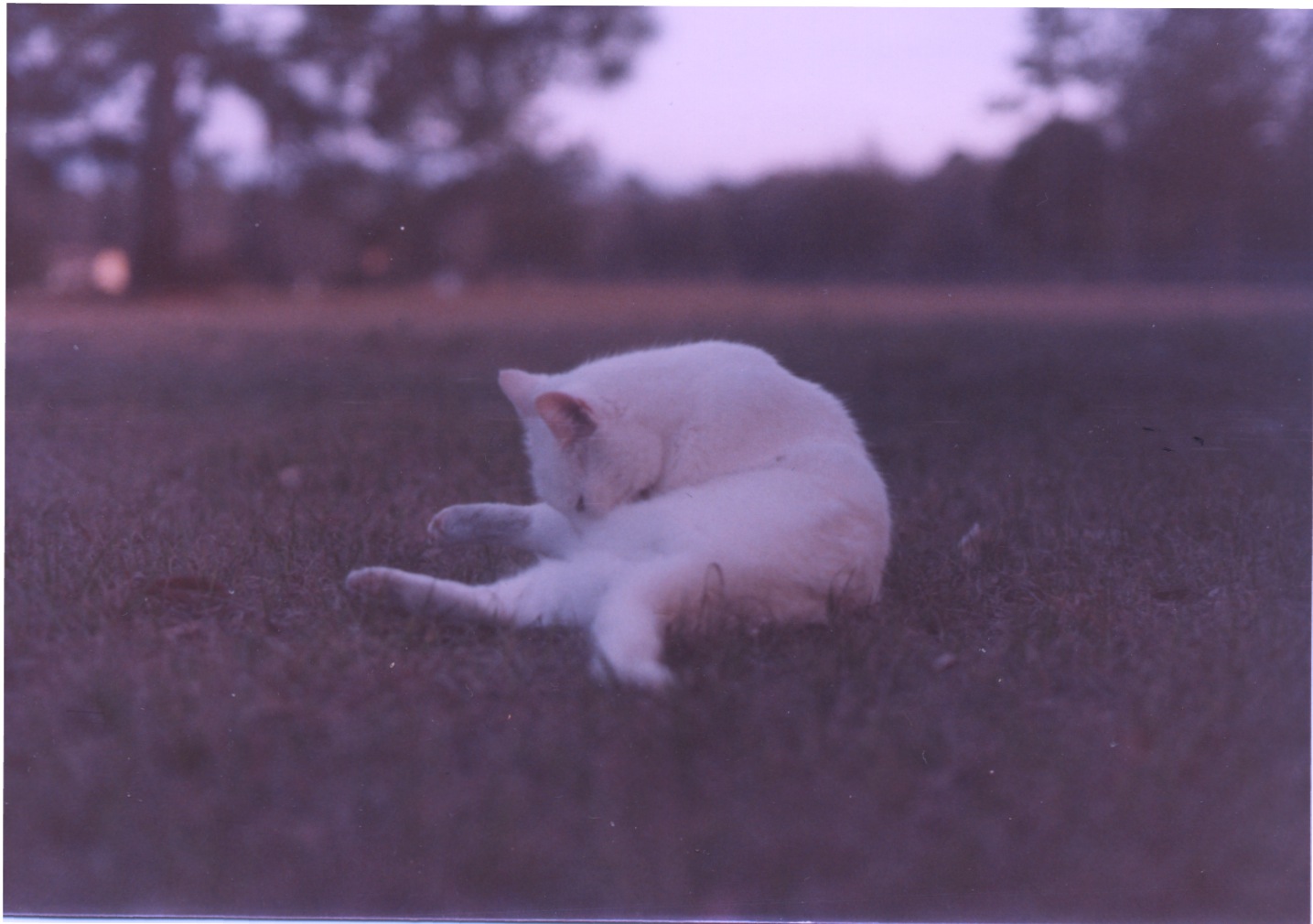
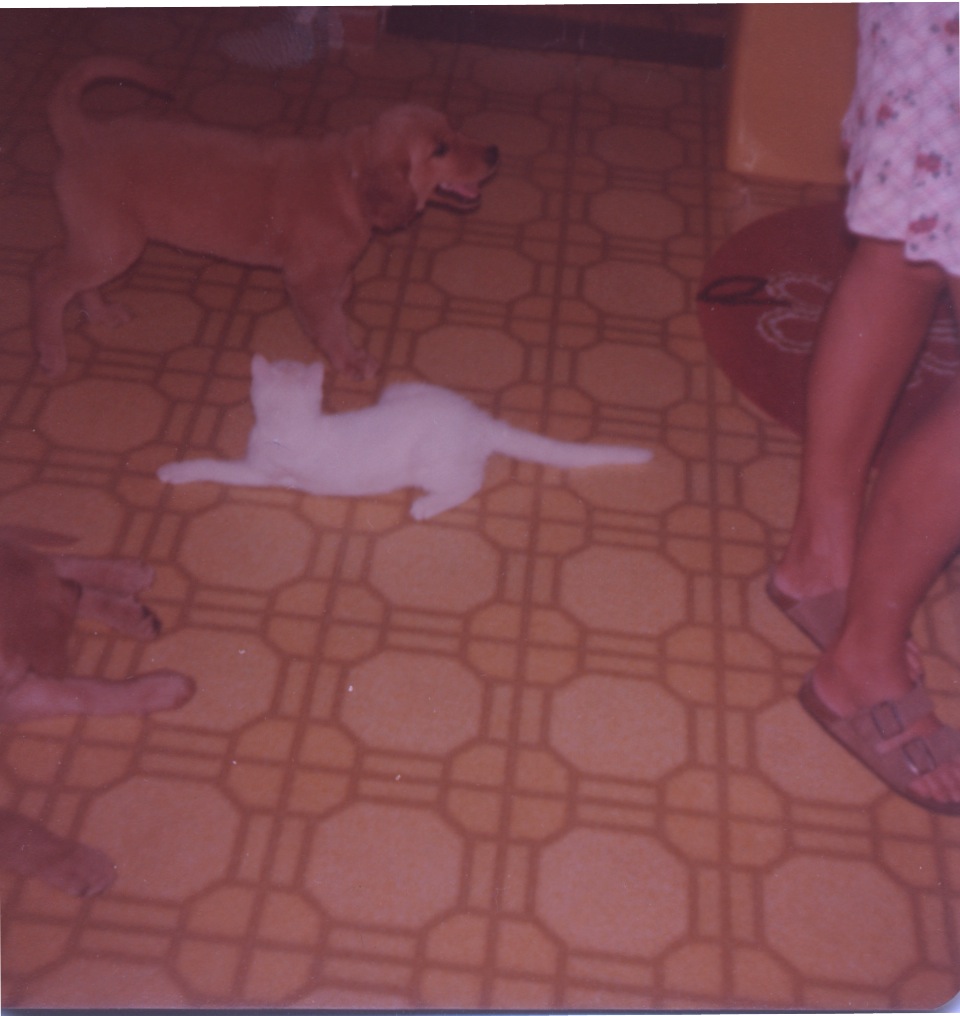
For as long as i’ve lived in New York, my dreams are mostly set in the only house i’ve ever lived in for more than 3 years: a brick house with yellow linoleum in the kitchen and the hallways and differently colored carpet in each room. The house with a fireplace and a long kitchen and a back porch lined with railroad ties and flower beds. It has a yard with a concrete basketball court and a chicken coop wrapped in honeysuckle and palmettos around the pines and antique roses and blackberries in the palmettos, and rattle snakes and a white cat and two golden retrievers. For a long time, when i was little, this was the place where i grew up. When my parents left Miami, where they had both grown up, they moved to Palatka, Florida–famous for the assy stench of its paper mill. My Dad worked for Florida Power and Light, and some of his friends from work had transferred north already–setting up idyllic, vaguely hippie, enclaves. My parents were still married for most of my time at the house in Palatka, and i remember an antique sewing machine that was the perch for a tall, skinny, wooden birdhouse with little finches flying around inside. i remember a fuchsia crepe myrtle tree in the front yard, waxy, prolific gardenia bushes, zinnias and petunias and roses and pine trees and oaks and Spanish moss and a creek in the back yard. An above ground pool. Macrame and wallpaper and wood panelling on the walls. i’ve never been someone who writes down my dreams or looks to them for clues to my waking life, but the sheer persistence of this place in my subconscious makes it hard for me not to ask what i might be trying to tell myself. i’m not so good at listening to the advice my rational self tries to give–i don’t really trust it, but maybe i could find something in this other non-linear register more persuasive?
Sometimes i think there is already too much in there, and the narcolepsy is like a systems crash. Many people who have narcolepsy are also obese, because the brain protein that tells you when to stop eating is like? the same as? the one that lets a body sleep deeply enough to earn regular sleep cycles. Physical obesity is luckily a problem i don’t have, but physically, emotionally, and intellectually–i can’t really get enough. i want to know everything, feel everything. Nothing feels like too much until i wake up on my kitchen floor at 4 in the morning, curled up under the ironing board, usually with a snack clenched in my fist. Sometimes this means i came home from work, walked in the door, opened the fridge and grabbed the first thing i saw and then sat right down. Whether or not i’ve had anything to drink seems to be irrelevant–exhaustion is the trigger, and it seems to be a kitchen v. bedroom sort of thing–like sleeping on the couch in your underwear while your wife is out of town.
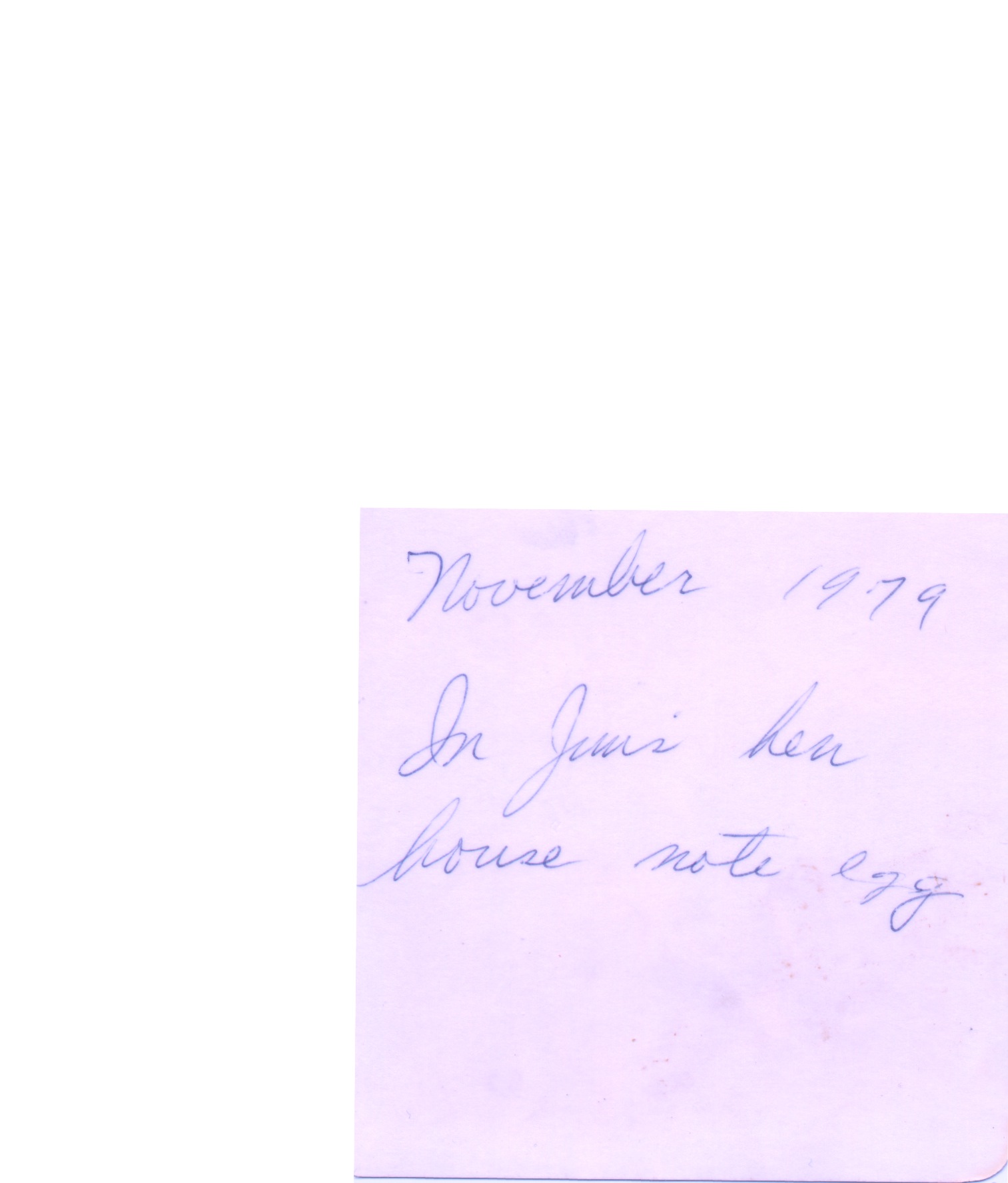
The only thing i have from that house is a photo album. Shortly after my Mom left, when the house was kind of a wreck all the time and we were trying to figure out what it would be like without her, i made a photo album. There were little 4×4 photos with dates and notes in my grandmother’s handwriting shoved into kitchen drawers and newer envelopes of 4×6’s falling out of other albums and in closets that no one thought they cared about. For a minute maybe it seemed like a time we might be better off forgetting. i started saving them when i found them, and eventually put them into a kind of crappy brown photo album. The pages are mostly yellowed now and some of the photos were taken out and never returned, but they are the pictures of the time we all spent together in that house. Like all of the other photos i’ve saved, and the walls of books that watch me sleep, and the crates of records, and my portable turntable that i pull up close–they are evidence. Tangible proof of another place and of a different way of doing this.
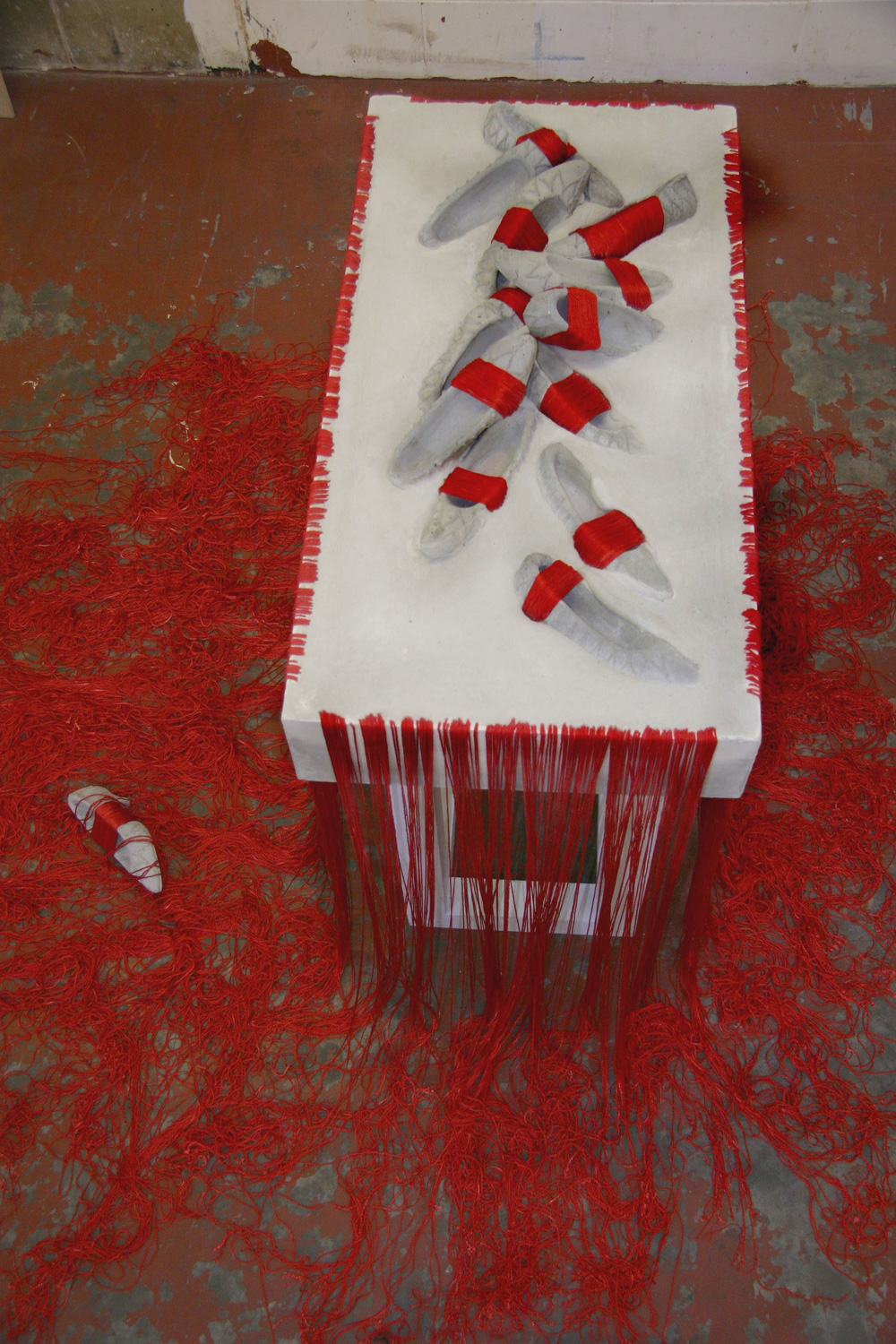

Things you do, Don’t seem real.

Kashif Nadim Chaudry's "A Queers Diary"

Kashif Nadim Chaudry’s “A Queers Dowry”

“I learned an important thing in the orchard that night, which was that if you do not resist the cold, but simply relax and accept it, you no longer feel the cold as discomfort. I felt giddily free and eager, as you do in dreams, when you suddenly find that you can fly, very easily, and wonder why you have never tried it before. I might have discovered other things. For example, I was hungry enough to begin to learn that hunger has its pleasures, and I was happily at ease in the dark, and in general, I could feel that I was breaking the tethers of need, one by one. But then the sheriff came.” Housekeeping 204

Does the sheriff always come? Sometimes i read this passage, from Marilynne Robinson’s first novel, Housekeeping, and i can see my entire dissertation–everything i want to say and everything i want to ask and everything i hope to understand a little better–falling right into place. When i read this i hear J.L. Austin’s understanding of performative language, Althusser’s interpellative whistleblower, Freud, and queer theory. i am not a supertaster with food and wine, but i can’t not see the shapes of critical theory in literature and film anymore, and what guides me is the promise of subtext, of metaphor, of secrets, of change. i “misread” things, especially literature, all the time. Sometimes my slips are calculated and intentional, other times i just can’t help it because i don’t read for plot or pleasure. The fact that misreadings are even possible challenges the possibility of univocal, universal truth and authorial control, and reinforces the promise of underbellies and flip sides and constellations of meaning.

i am heartened by the resurgence of interest in Donna Haraway’s explorations of scientific discourse, western dualism, and domesticity. When i was vegan, i was amazed by how reactive people could get about what they called “fake” food, which necessarily brought to mind for me Butler’s arguments destabilizing heterosexuality as the “original,” “natural,” model for sexuality and queerness as a copy. Disturbed as i am by the parallels between sexual politics and food politics–and, because i was so deeply convinced by arguments dovetailing the two–learning to rebuild my understanding of food seemed fundamentally representative of other forms of the possible–an individual step i hoped would teach me about collective ones. In some ways, i think the playing field for the consumption of animal products is drastically different now than it was back then, especially where i live, in Brooklyn. Nonetheless, there is an uncomplicated “nature”-worship component to some strands of locavore politics that makes me uncomfortable, and i still think the vegetarian gesture can be creative and hopeful. i like the “vegetable forward” food of chefs like Ignacio Mattos (formerly of Isa), Jose Ramirez-Ruiz (Chez Jose), and Matthew Lightner (Atera)–chefs who like the challenge of not falling back on the easiness of meat as they work to redefine what a meal looks like. i think this is an act of careful reading, and if i were teaching right now i would use their work as object lessons when we read something like the Raw and the Cooked by Claude Levi Strauss or Mythologies by Roland Barthes, or even Subculture: the Meaning of Style, by Dick Hebdige.

i lived in Japan a long time ago, and i feel as nervous as ever saying things about how “in Japan, etc.”; however, in Japan, if i understood things correctly, talking about the weather is a topic for genuine conversation. i enjoyed this so much, because i think even non-poets almost always reveal something about themselves when they react to the heat or the rain or the cold or simply change, and i like listening. Counterintuitively, being really hot makes me feel clean–probably because i grew up in the tropics; perhaps for the same reason, i like being out in the rain. When i lived in Florida, getting cold sent me into a mean rage. These days, i eagerly anticipate the giganticness of deep winter, and the respite from the extreme sociality necessitated by New York summers. Talking about the weather, or the seasons, is a very easy way to allow for the fact that metaphor (and desire) is always right there at the edge of language–of what we seem to be saying. The first line of the Bell Jar, “It was a queer, sultry summer, the summer they electrocuted the Rosenbergs, and I didn’t know what I was doing in New York,” makes the weather an actor, and the last sentence of Toni Morrison’s Beloved: “By and by all trace is gone, and what is forgotten is not only the footprints but the water too and what it is down there. The rest is weather. Not the breath of the disremembered and unaccounted for, but wind in the eaves, or spring ice thawing too quickly. Just weather. Certainly no clamor for a kiss,” gives us “just weather”–what we generally like to pretend almost everything around us is–just predictable, explicable, rational phenomena. Or, as Butler paraphrases Nietzsche, “Only through a kind of forgetfulness of the tropological status of language does something like customary language take hold.” Tropological refers to tropes or figures of speech–metaphor, metonymy, synechdoche. In other words, plain prose cheats. Plain–not purple or poetic or difficult–prose cheats. It cheats because it pretends that language isn’t necessarily indebted to subtext, because it’s boring, and because it seems to exalt “face-value.” There are so many kinds of cheating, and i will never understand why something like sexual infidelity trumps willful lack of engagement with the world, with humor, with desire. Try, because not trying is also a kind of cheating–it’s just too ubiquitous–and too necessary to normative life narratives–to prosecute.

i pretended to myself that you were mine already.


i suppose misinterpretations of song lines are like little Freudian slips. You hear what you want to hear. You’re singing loudly enough for someone else in the car to hear. Suddenly your best friend’s eyes go huge. She pauses, digesting it–then busts out laughing and disabuses you of the mangled lyric. For a long time–they were a rare band that i never owned, only danced to–i thought the Stone Roses song “I Wanna Be Adored” was saying, “I Wanna Be Your Dog.” Yes, i know about the Stooges and that other song. i just thought, well, like i said–sometimes we can’t help hearing what we want to hear, but the first line is, “I don’t have to sell my soul, He’s already in me.” Naturally, who “he” might be is up for grabs, but i’m pretty sure it’s sympathy for the devil, so, go figure.


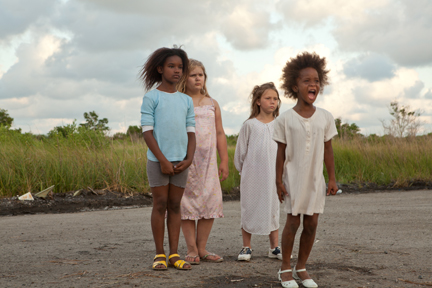
i don’t really want to be your dog. Not really. At least, not all the time. In fact, i wanna, i wanna, i wanna, i gotta, i rather like being adored; but, i don’t have to sell my soul, either. Somehow, even with the middle name and all the rest, the darkness is just there. i’m not even really sure what that means, but i know that some people like the dialectic created by people, places, and things that can’t help going into the light. A very short list of what i mean might include Marianne Faithfull, Zora Neale Hurston, Han Solo, Kenneth Anger, Keith Moon, the idea of “drugs,” Francis Bacon, Gregg Araki, the Black Panthers, Sylvia Plath, Leonard Michaels, baths, Prince, roses, cats, the Rolling Stones, Proust, Andy, New York, San Francisco, Miami, Truman Capote, shades, sailing, Tanizaki, the Argentos, nails, fat variegated blackberries, walking, snakeskin, Scarlet O’Hara, Johnny Rotten, coffee, trains, Morrissey, Quadrophenia, New Orleans, Joan Didion, Scott Walker, thrift, the Nuns, orchids, oh, and don’t forget…”yes.” Not the band, but the affirmative: it gets me into so much trouble. The trouble isn’t where i live, but i really, really like to go there. And then come back. If you don’t come back, it isn’t material anymore–it’s you. Of course, the fantasy of trouble being over there and good behavior on this side, of light vs dark, of the verdict of black or white, is impossible. What seems like destitution to one person might be pure treasure for someone else. There is a point where believing your trash is gold ceases to be a performance, but getting there can be a very lonely hike. i saw Beasts of the Southern Wild on Friday night, and it makes this point ungently. Hushpuppy says, “I want to be cohesive,” and i can’t pretend like my face isn’t soaking wet for another second. Eventually, if you want it badly enough, you have to stay.

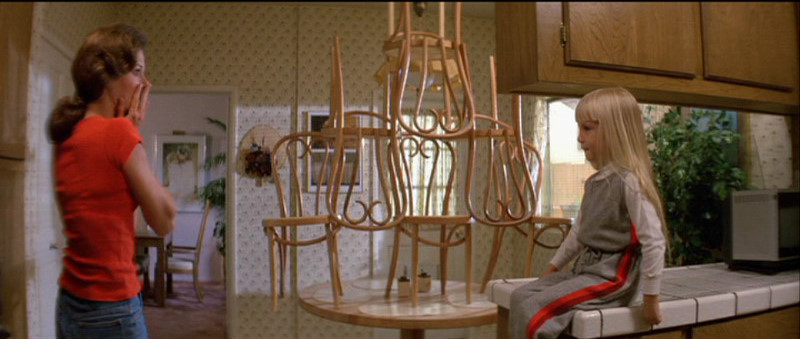
Diane: You were saying about poltergeist.
Dr. Lesh: Poltergeists are usually associated with an individual. Hauntings seem to be connected with an area. A house usually.
Marty: Poltergeist disturbances are fairly short duration. Perhaps a couple of months. Hauntings can go on for years.
Diane: Are you telling me that all of this could just suddenly end at any time?
Dr. Lesh: Yes, it could. Unless it’s a haunting. But hauntings don’t usually revolve around living people.
Diane: Then we don’t have much time, Dr. Lesh, because my daughter is alive somewhere inside this house.

Not going into the light is, of course, a reference to the 1982 horror film, Poltergeist. The movie always stood out to me because–after having “slept” on my Mom’s lap through countless trashy movies at the drive-in (surely they knew i was watching)–it was one of the very, very few movies my brothers and i were not allowed to see. My parents had seen it, and my Mom said the little girl, Carol Anne, reminded her too much of me. In the film, poor little Carol Anne is stuck in the spirit world. Some bastard real estate developers built her neighborhood on top of a Native American burial ground. They assured buyers that they moved the graves before beginning construction, but in fact they only moved the tombstones. The spirits are angry, and they snag Carol Anne because her life force is so powerful. She’s hanging out with all of them in purgatory, and the light—their chance to move to a different spiritual plane—appears. Tangina, the medium helping the family get their little girl back, has the mother, who can still communicate with Carol Anne, tell her not to go into the light. If she does, she won’t be able to return. For the lost souls, it is indeed a “positive” portal to another plane, but Carol Anne is still alive, so she needs to stay back. Ah, horror. I love it because it loves metaphor so, so much.

If i were soundtracking Poltergeist, Laurie Anderson’s “O Superman,” would be it for dialogue during the trailer: “O Superman. O judge. O Mom and Dad. Mom and Dad.” Maybe i’d commission a mash-up and her “ha-ha-ha-ha-” heartbeat rhythm would bounce underneath “you adore me.” Back and forth, the Stone Roses, “I don’t need…to sell my soul,”/Anderson, “This is the hand, the hand that takes…here come the planes.” Where are your arms, Mom? (adore me.) Your long arms? (Weren’t you supposed to tell me not to go into the light?) Your automatic arms? Your electronic arms? So, hold me? Mom?

O Superman

Hi. I’m not home right now. But if you want to leave a
message, just start talking at the sound of the tone.
Hello? This is your Mother. Are you there? Are you
coming home?
Hello? Is anybody home? Well, you don’t know me,
but I know you.
And I’ve got a message to give to you…

So you better get ready. Ready to go. You can come
as you are, but pay as you go. Pay as you go.

His clothes are dirty, but his hands are clean: spoiler alert.


Each of the headlines for these blog entries is a song name or lyric. There are a few exceptions; but, generally there is a clue tucked into how i ice each post. For this one, i thought i wanted to use a line from “Girl From the North Country,” from Nashville Skyline (1969). i thought the song contained the line, “See for me that her hair’s still red.” It doesn’t. The stanza i misremembered is sung by Johnny Cash, and it goes,

See for me that her hair’s hanging down,
If it curls and falls all down her breast.
See for me that her hair’s hanging down,
That’s the way I remember her best.

i thought i might go, instead, with a line from “You’re Gonna Make Me Lonesome When You Go,” from Blood on the Tracks (1975): “Purple clover, Queen Anne’s Lace,” which is followed by, “Crimson hair across your face.” i got stuck in a Wiki-K-hole, and i found this:

“Sometimes… I go to the artist and say, ‘What do you hear on the drums?’ Because sometimes when people write songs they can hear it completed, they hear everything they think’s gonna be on it”, says drummer Ken Buttrey. “I went over to Dylan and said, ‘I’m having a little trouble thinking of something to play. Do you have any ideas on [‘Lay Lady Lay’]?’… He said, ‘Bongos’… I immediately disregarded that, I couldn’t hear bongos in this thing at all… So I walked into the control room and said, ‘Bob [Johnston], what do you hear as regards [to] drums on this thing?’… [He] said, ‘Cowbells.’… Kris Kristofferson was working at Columbia Studios at the time as a janitor and he had just emptied my ashtray at the drums and I said, ‘Kris, do me a favor, here, hold these two things… hold these bongos in one hand and the cowbells in the other,’ and I swung this mike over to the cowbells and the bongos… I had no pattern or anything worked out. I just told Kris, ‘This is one of those spite deals. I’m gonna show ’em how bad their ideas’re gonna sound.’… We started playing the tune and I was just doodling around on these bongos and the cowbells and it was kinda working out pretty cool… Come chorus time I’d go to the set of drums. Next time you hear that [cut], listen how far off-mike the drums sound. There were no mikes on the drums, it was just leakage… But it worked out pretty good… To this day it’s one of the best drum patterns I ever came up with.”

So “Lay Lady Lay” (Nashville Skyline) won out. Because, even though i feel conflicted admitting it, i think it’s one of the sexiest songs ever recorded, and because this post was supposed to be about complicated sex, and because it marks a second in time where Kris Kristofferson was a janitor (goddamn!), and because of the horse trot ‘spite deal’ cowbells, and because ‘i long to see you in the morning light, i long to reach for you in the night’. Yes, because of all of that, because really great songs are accidental and collaborative, it wins.

As for the sex, i’d meant to begin here: i went to see the new Pixar movie, Brave, yesterday. i guess i’ve been in a media hole for a while, too, because i actually hadn’t even heard of it and had no idea what it was supposed to be “about.” Let’s just say it was right up my alley: Merida, a little fire-haired Scottish future queen, would rather ride her fluffy horse (Angus) through the woods and practice archery than listen to her extremely persistent mother’s lifelong instructions on how to become a proper princess. She breaks protocol, bigtime, at her betrothal ceremony. She scores a sketchy spell from a witch that does something horrible to her mother–the result of which is that they both learn very difficult lessons like how to love and understand each other and when it is appropriate to swallow one’s pride. It is a fast-paced tear-jerker. Tabling, for a moment, the completely fucked up absence of people of color in Pixar worlds of self-reflexive, inspirational rebellion and the many complications of this statement: i think that for people who imagine that representation shapes reality, it is nonetheless a welcome insertion into the lexicon of dolls and rides and party decorations available for the babies.

There is a very complicated moment when, having shown up her assy suitors in an archery contest–she decides to shoot for her own hand, and wins by a landslide–her mother says, you embarrassed them. For me, this is one of the film’s most poignant moments: swallowing your pride isn’t always about being subservient and eating shit. Sometimes it’s just a nice gesture not to rip someone apart–especially when it’s dead easy.

i came home and googled general responses to the movie. On the first page, i see an article in EW asking, “Could the heroine of Pixar’s Brave be gay?” More specifically: “But it’s quite possible that while watching Brave’s tomboyish heroine shoot arrows, fight like one of the boys, and squirm when her mother puts her in girly clothes, a thought might pop into the head of some viewers: Is Merida gay?” Now, if the three potential bridegroom options presented to her hadn’t been so revolting (a boy who looks like a gigantic toddler who can break big pieces of wood with his bare hands, a Braveheart-esque tantrumy dorkwad, and a squat, mumbling little spaz), this possibility would be even more interesting, but i do like the way that the lameness of the princes further deconstructs the “reality” behind conventional fairy tale narratives. What i like, even more, is that without ever once bringing it up, the extreme gender variance of the character suggests that this actually is a movie about sex–the way in which the sex that you have (your own complex interaction with gender norms and expectations) determines the sex that you have, and i think it’s fascinating that this EW writer imagines a world in which such an unconventional gender performance reads as gay.