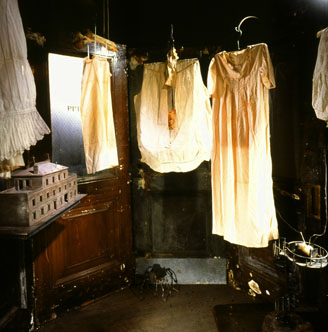
Oh, how my dark star will rise.

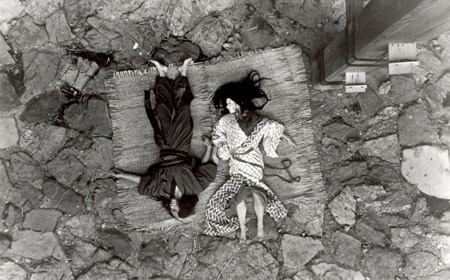
Louise Bourgeois, Cell VII, 1998

Shortly after returning from Japan, i took a job answering the phones at a hair salon booking appointments, making confirmation calls, and pushing product–basically working for the discount and the free services. My boyfriend pulled a similar shift at a thrift store around the corner. i would go over and sit with him sometimes when i got off, or wade through the aisles, modeling ridiculous clothes i never intended to buy. i have kept a handmade mauve, twill, A-line skirt i bought one day on his employee discount. It became a staple of my wardrobe, and some recognition of him honestly flashes up every time i’ve ever touched it. When i was pregnant and imagined my body to be permanently transformed, i sold most of my vintage clothes. The twill skirt was in a drop-off bag for Beacon’s Closet. At the last second, i snagged it out. Yes, i was starting a new life, but i wasn’t willing to let go of every symbol of my densely layered history.  The skirt and its ability to conjure the early days of long, skinny Todd sitting quietly behind the counter (probably wearing a pair of brown polyester trousers and a short-sleeved button-down shirt; let’s imagine Dog Man Star is soft in the background) was not ready for consignment. It was material: the physical part that stands in for and triggers a whole pack of memories, but also a symbol of the possibility of a story. 

The line is: “I’m just doing this for the material.”  It’s an excuse for having to do, or even preferring to do, the thing that hurts. Poets, scriptwriters, actors, rock and rollers–do they need the material for the work, or do they do this work because the process of translation makes the material more liveable? i have a pile of journals that stretch to the ceiling full of what my therapist calls data that i always planned on Rapunzelling into stories, but if i don’t ever get around to it, what do all of those, err…lessons, become? What’s the difference between a memory and material? One reaches for representation, the other becomes a decent story over staff meal, at best? Likewise, what does it matter if i’ve got 500 books stacked in my office and i’ve read everything by Judith Butler, and most of Foucault and Jameson and Barthes if i never write my dissertation? Once again, it’s the burden of representation–i haven’t done the work until i can connect my turn on the argument to a larger conversation, even if writing a dissertation that maybe five people will read is, in many ways, a huge leap of faith.
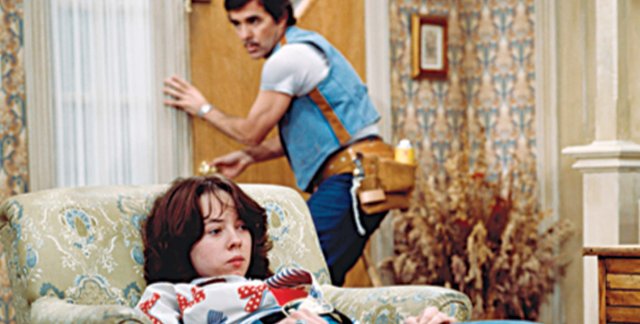
i’ve been reading High On Arrival, Mackenzie Phillips’s memoir. It is a fretful thing. i pause and i’ve read a hundred pages, but i have to put it away for days before i can pick it back up. Nonetheless, these memories of her father — (John Phillips of the Mamas and the Papas) never showing up, insistently not hiding anything from her (“Not now, honey. Daddy’s shooting up”), forgetting her again and again at the airport or in an apartment while he’s off scoring drugs with Keith Richards — also connect to a life of collateral damage and prestige. Trying to be like Daddy, she falls into a near lifetime of drug addiction and ultimately into years of a drug-fueled sexual relationship with her Dad. Her attempt to give form to a childhood that was at once insanely glamorous and an object lesson in abuse and abandonment is, perhaps, a semi-successful example of someone using her material. i’m not at all interested in whether it achieves catharsis or redemption, but in her narrative stretch to represent complex desires that chip away at the canon of normativity. Somehow, impossibly, even after having experienced a terror of a life, she is also able to convey the strange beauty of growing up, in many ways, off the grid. There are many anecdotes of fantastic decadence and uninhibited pleasure, but this is also the narrative–not of a successful iconoclast–but of a child made to work with this model who didn’t choose it, coming out on the other side of Stockholm syndrome. It is a story about passionate attachment–attachments chosen over death and complete isolation, and the reality that the way these options present themselves can create complex, almost unreadable lives: “It was like being reared by a beast. A gorilla. A narcissist, a Svengali, a megalomaniac. A charming, endearing rogue” (190). Her oscillations between attachment and identification to her father and the tangled history she supplies are bundled into this account of shitty, hard witnessing. Somehow, she used her material, and made something out this repetitive relationship to abandonment.
Even if your cards were thrown in tarot rather than the royal court, a path to the straight and narrow might still present itself–this is the hard part. Sometimes the road is clearly marked and stacked deep in rewards, but for some of us it’s like trying to ride your bike on the highway–terrifying, impossible, awkward, wrong. All of the traffic signs are unreadable, and you keep getting lost. Whether you can’t or don’t want to is an impossible distinction, but it can be comforting to realize that you won’t. Your roots might push you up and through the path, instead of down it, but there is a kind of flowering in that stasis that the drivers will always miss.
You fixed yourself, you said, “well, nevermind.”

“Real things in the darkness seem no realer than dreams.”–Genji Monogatari

On my 20th birthday, i got engaged.  My boyfriend was 6 years older than me, and we had been dating for a little more than 2 years–living together for one.  There was a picnic, and a diamond, and then later, a wedding. No one was surprised–except my mother, who hadn’t yet caught on to the fact that the organizing principle of my young adulthood was simply (cheerleader in high school, 4.0 in college, borderline anorexic, part of a couple) to not become her.

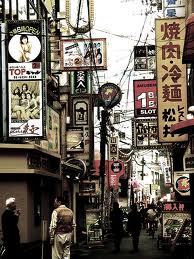
Very soon after we were married, my husband and i moved to Japan.  i was studying Japanese for my undergrad, and my school had a (seemingly) very affordable study abroad program.  It was designed, of course, for young, single students. Most students lived with a Japanese host family, but there was also a small dorm on campus, and everyone who didn’t have a host family stayed there. Everyone, of course, except me. We had gone early and rented an apartment. He got a job teaching English and i had a sizeable stipend from the Japanese government.  My hour and a half commute to school–each way–was standard salariman. From our apartment, i walked for about 20 minutes through a part of Osaka called Kyobashi, past crappy bars and tons of love hotels to get to the Keihan line, which ran between Osaka and Kyoto. My school was basically right in the middle between the two cities, but another 20 minute walk or 10 minute bus ride from the train stop. We would find out much later that Kyobashi was basically Osaka’s skid row, but we never had any trouble.

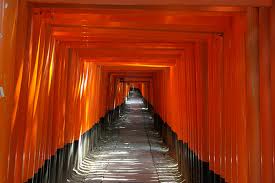
i studied my notecards while i walked. Memorized vocabulary on the train. We  barely had enough money to eat, so we chose whatever would give us the most calories for our yen at the grocery store: sticky white rice with peas, puffy white bread for toast in the morning, daigaku potatoes (deep-fried, candied sweet potatoes), and anman (white, warm sticky buns with sweet adzuki bean paste inside) from the  7-11.  Impossibly, we got skinnier. Osaka was shockingly hot, and humid. His job was miserable and we never saw each other.  Gradually i stopped studying on the train and began looking outside instead, committing to memory the way the city turned into houses turned into green turned back into houses back into city. i went to Fushimi Inari on a school fieldtrip: a temple dedicated to Inari–god of rice and business, guarded by hundreds of fox sculptures and lined with thousands of torii.

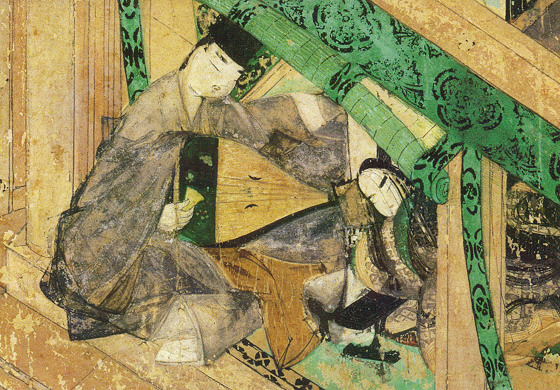
Order melted into disorder became another order. i studied as much, if not more, than ever, but there were no bogus electives like ‘Geography of World Economies’ or ‘A History of Non-Western Art’ to distract me. Just Japanese, but vocab became paragraphs became newspapers. i took a class on Murasaki Shikibu’s very long, very romantic, absurdly beautiful 11th Century novel Genji Monogatari (the Tale of Genji). We read the entire thing. i bought a tiny portable cd player in denden-town and walked and walked.

My grammar teacher and i often found ourselves waiting for the same bus in the morning. We got in the habit of falling to the back of the line to smoke cigarettes and finish our coffee. He’d recently completed his PhD and returned to Japan from a long hiatus in an exotic country studying a dead language, and this was his first year at the University. He was originally from Tokyo. i gave up trying to understand this with my halting Japanese and we began again in English–cracking jokes about our class, talking about where we’d come from, admitting to our new marriages, and arguing about whether Genji was cheezy or not. In class, i would force myself to track the light in the bamboo groves just outside the window, because there was something about the way he held the chalk, and how quickly he moved, and how i jumped when he called on me–“Mindy-san?”–that was unravelling me in a way i had no intention of really, actually letting happen.

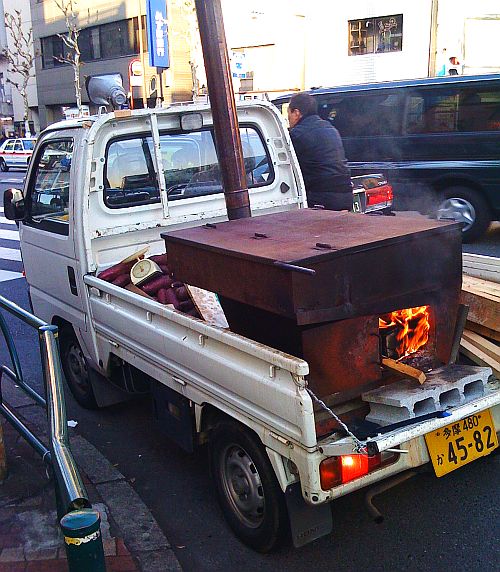
In 1950, my grandfather, who had survived WW2, found himself testing a wooden plane off the coast of San Diego.  The plane went down. He was survived by my grandmother, my mother, and her little sister.  A few months later, my grandmother boarded a freighter with her young children and sailed to Japan to serve as a missionary, so, there’s that. She told me the stories she remembered over and over. My Mom did the same. i felt like i kind of had to get there, but i had always imagined myself as a studied observer, not so much as a participant.  Now, i wanted complete immersion. October came to Japan and mornings and afternoons–suddenly lit by ruby and garnet and tangerine maple leaves, seemed like the middle of the night to me.  i read, in the Genji: “Autumn is no time to lay alone.” Anorexia was chased off by eel and ramen and sake and sweet potato venders driving their tiny trucks down backstreets yelling, “YAKI-IMO!!!”

The bus gave way to momiji (maple leaf) viewings–just sitting outside at temples, drinking beer and staring at autumn all lit by stone lanterns. Temples gave way to sushi bars and eel restaurants and sitting on the edge of the Kamo River knowing what came next and enjoying those last minutes of pretending that it didn’t.

‘With my gipsy ancestress and my weird luck’

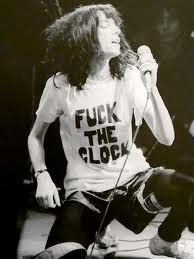
Sylvia Plath: famous (lady) poet; famous suicide (“Dying is an art. Like everything else, i do it exceptionally well. I do it so it feels like hell“); famous Daddy complex (“Every woman adores a fascist“); famous mother (“Love set you going like a fat gold watch“); famous committed to a psychiatric ward (“I didn’t want any flowers. I only wanted to lie with my hands turned up and be utterly empty“).  But also “Lady Lazarus,” famous zombie–famous patient of electric shock therapy (“There ought, i thought, to be a ritual for being born twice–patched, retreaded, and approved for  the road“).  “Daddy,” the poem, has been in my head for days–“You do not do, you do not do“–it begins, and its turns are strange, angry, dedicated, alchemy.

You do not do, you do not do
Any more, black shoe
In which I have lived like a foot
For thirty years, poor and white,
Barely daring to breathe or Achoo.

Daddy, I have had to kill you.
You died before I had time--
Marble-heavy, a bag full of God,
Ghastly statue with one gray toe
Big as a Frisco seal...

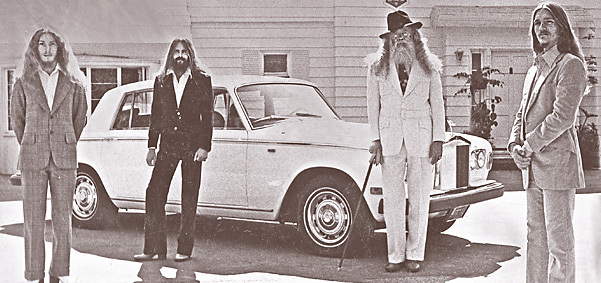
i tried to read her novel, the Bell Jar, a thinly-veiled memoir of stepping off the line one summer while she was in college, my freshman year of high school.  i had to give up. Patterns in rugs and tiles began giving me the spins. i thought i was losing my mind. i read Jane Eyre instead, which, if i hadn’t already had one (unlikely), helped put my own daddy complex into play.  i picked it back up in college, impossible to find what had so disturbed me on my first try. Shortly after i started working at my current job, my dear friend and former boss from the Feminist Bookstore emailed me: “You are working at a restaurant named “Father”? Yes, indeed. In the owner of the restaurant’s mother tongue, the name of the restaurant means father.  The owner and the executive chef were both new fathers that year, and the name was meant to have marked that connection. That “Daddy”–(TWO Daddies, even)–might become a formidable organizing principal was not lost on me.  That it actually became a seriously disorganizing principle was also no surprise. There were early promises of a utopian, almost communal work environment. Father Yod’s The Source was hoped to be a model, but it didn’t quite turn out that way.

In my early bookselling days, one of my favorite jobs was to clean the shelves. i would pick a shelf. Remove all of its books, wipe the shelf down, and carefully replace each title. i would read the back of each one before doing so, and slowly, in this way, i familiarized myself with every title in the store. We had a small, ‘womyn’s only’ erotica section, and the titles here were often the best: The Ethical Slut, Off Our Backs, On Our Backs, and Doing it for Daddy.  Doing it for Daddy, by Pat, later Patrick, Califia was less about actual fathers and more about leather daddies and master/slave fantasies.  As i’d been reading Butler and little bits of Hegel for some time, lordship and bondage was already on the table.  i often played back a quote from Hegel i’d found in Butler: “…a freedom still enmeshed in servitude,” as a way of thinking through my life in the food service industry. i started waiting tables when i was 16, and while i immediately took to the short-term high-stakes and the quick cash, there was always a Daddy in the kitchen. My first chef liked to throw things. At us. Plastic tumblers, fry pans, insulting chunks of soft, sticky food. Bent on making the girls cry, he would untie our aprons and tug on our bra straps. Nothing was ever good enough. He remains legendary amongst those of us who worked with him, but over the years i came to understand him as a type rather than a compelling, confusing exception. i know there is a degree of this in all lines of work, but it is expected, rewarded, and rarely disciplined in food service. i can only conclude that many of us who serve are hooked on the archaic dynamic, and many, but certainly not all, chefs are keen to assume their expected role. We become convinced that this is what caring looks like, but who is playing which role is not as obvious as it may seem. In Hegel’s story the master is the owner, and the slave creates the things from which the owner makes a living.  In this dichotomy, servers are non-dialectical. We don’t actually make anything, right? Perhaps nothing tangible, but our job is to render the exchange between master and slave invisible to guests–to seamlessly represent the finished product, which requires delicate layers of mediation. We are good at learning how to take it from all directions; we are expected to make everyone happy. ‘No’ gradually disappears from our vocabularies.  It is replaced by “Yes.” “Please.” “Harder.” ‘Your welcome’ is gone. There is only “thank you.”

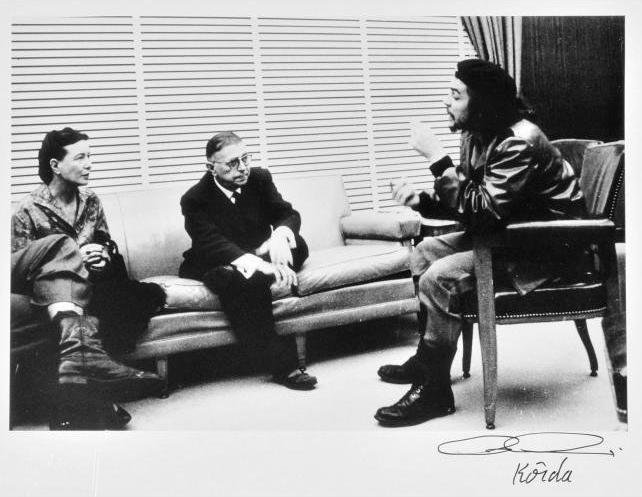
The master-slave dialectic is a lesson about work and oppression; it is also about the necessary experiences of recognition and alterity built into self-consciousness.  The dialectic is between the person who makes a commodity and the person who sells/owns it. No matter how hard you work, if what you have made ultimately belongs to someone else, you are the slave. Concomitantly, the master cannot exist without slaves/workers, and neither has resources or identity without the other.  The recognition of this lesson is a tough one to swallow: we are only ourselves when we are recognized by the other. This, parodoxically, is self-consciousness. Simone de Beauvoir argued that it is unacceptable to see male/female relations as inherently determined by this dichotomy, because gender is permeated by class and the master-slave dialectic is an argument about alienated labor. i am interested in, but don’t know much about, her arguments about gender being a non-dialectical relation; however, i am unwilling to make a resolute distinction between sex and gender, gender and sexuality, or between biological sex and cultural expressions of sex and gender, and understand all to be thoroughly permeated by class, but i think it is fascinating that these roles emerge as erotic possibilities. i doubt that every woman adores a fascist, but for those of us who have, we are happy to serve. We are so good at seeing what is missing, of rising to the challenge. The challenge never ends, because Daddy is never happy. This also means that Daddy never leaves. You do, because you get too tired. Butler: “If wretchedness, agony, and pain are sites or modes of stubbornness, ways of attaching to oneself, negatively articulated modes of reflexivity, then that is because they are given by regulatory regimes as the sites available for attachment, and a subject will attach to pain rather than not attach at all.”

This is a quote from Emerson: “I admire still more than the saw-mill the skill which, on the sea-shore, makes the tides drive the wheels and grind corn, and which thus embraces the assistance of the moon, like a hired band, to grind, and wind, and pump, and saw, and split stone, and roll iron. Now that is the wisdom of a man, in every instance of his labor, to hitch his wagon to a star, and see his chore done by the gods themselves. That is the way we are strong, by borrowing the might of the elements. The forces of steam, gravity, galvanism, light, magnets, wind, fire, serve us day by day, and cost us nothing.” This reads, to me, as a slightly different model.  My last chef would often describe items on the menu as electric, and when diners–shocked by the effect of dishes that appeared to be incredibly simple–even insubstantial–struggled for adjectives to respond to their experience, i would tell them that chef calls it “electric,” and they always seemed delighted by this accuracy. i was always reminded of Whitman, his singing the body electric: “And if the body does not do as much as the Soul? And if the body were not the Soul, what is the Soul?” And Spivak again: “Lorded, and yet, as if not lorded.”

i once had an acupuncture treatment that was about 5 hours long. There were 6, maybe 7 people working on me. i hadn’t been diagnosed with narcolepsy yet, but i knew something had given out, and i was trying to fix it. One of the girls said that my pulses were so low when she first picked up my wrist, that i didn’t seem to be alive. Acupuncture stimulates your energy using needles and an understanding of the body’s blood meridians. Galvanism involves a very different therapeutic application of electricity to the body. It was discovered in the late 1700s when electric surges given to dissected frogs made their legs jump, seeming to bring them back to life. The experiments filled the popular imagination with ideas about the possibility of stirring the dead.  Think Frankenstein. Think shock and its transformational qualities–traumatic and otherwise. Galvanize is now used to describe any stimulation that is the result of (positive) shock–as though it were electric. i think of the surge delivered to my own wrist through the simple surprise of a few sturdy fingers encircling it, or by long warm fingertips pressed against an open palm–although they might have had to press harder than usual to jump my response. i think of a gaze held for 2 or 3 seconds too long, the wakefulness this connection somehow produced in me, my own wagon hitched, for a second, to a star.

Down for you is up

i am beginning to wonder how the narcolepsy works on my already busted sense of time. i mean, if i simply can’t set sleep aside for the proper time, and if this is not an indication of actual exhaustion or engagement, then it must contribute to my inability/refusal to run on schedule. When i warn someone i’ve newly met about it (the episodes are rarely dramatic, but i will zone out and i will probably seem to be awake–i might even be stuffing my face or walking–but i am indeed unconscious; my nervous system is shot, so i shake when i’m angry, etc.), his or her first question is almost always, “When did it start?” i honestly just don’t know. i’ve always liked to nap and fallen asleep at inappropriate times, but i’ve also kept irregular hours for my entire adult life. i stay up late. i wake up early. i nap a lot. i worked too much while i was pregnant. Food turns me into a zombie. Are these symptoms of the narcolepsy, or are they the things that provoked it? i am embarrassingly inept at math. After a full cup of coffee, i often wake up face-down in my book at coffee shops. i’ve woken up many times on the subway with my book on the floor in front of me–notecards sprawled everywhere and my pen rolling down the car. i am always at least 5 minutes late. Lately, in the afternoons, Jonas has been yelling “OPEN!” at me when i start trailing off and my eyelids drop. At night, reading stories to him, i randomly start ad-libbing, and he corrects me every time i make a mistake, snapping me back for a second.  Many nights, i come in late and head straight for the fridge. i wake up a few hours later, a bag of shredded cheese or chips in my hand and my body stretched out like a crime scene on the kitchen floor.

This is all compounded by the fact that i don’t kill time: i practice a serious dedication to nostalgia. When i began my dissertation, i wanted to organize it around a preoccupation with what i called “productive melancholy”–a sort of permanent refusal to mourn or to ‘get on with it’. If heteronormativity is a mournful response to queer possibilities, then what would it mean to not let go of those supposedly unfortunate desires in favor of a succinct timeline? Instead of the one on which everyone graduates on time, never takes incompletes, gets their shit together early enough to have several kids, and always negotiates for the most lucrative job, what other life narratives will do? What would it mean to let go of professional advancement? Is it really for everyone? What gets lost in the turns, when only the family gets reinforced as the ties that matter, and semester after semester of students become so many piles of term papers, co-workers become some kind of Fordist cog, and work is always practically designed to produce the most surplus value? Is there a different economy to the time my body has decided to occupy?

Cathy Caruth suggests that one indication of how time is not simply a repetition of beginning, middle, and end, of signs that signify and mean once and for all, is trauma.  Trauma figures the way an event might not signify in its initial moment of enunciation, but its effects might be legible only much later, and even as legibility becomes possible, progress doesn’t. It happened, it didn’t/couldn’t mean anything/mean yet. Time passes, and meaning becomes not only available, but more aggressive and repetitive. For Caruth, this is also an argument about history–if time flows in multiple directions, then the question of “what happened” is hugely complicated.

As for what happens, is it possible to not be goal-oriented in our feelings–romantic, erotic, intellectual, and otherwise, or is this just another narcoleptic question, straight to REM, no stage one or four of sleep?  Narcoleptics hit the ground running with their dreaming. As soon as they nod off, dreaming begins–often giving them the hallucinatory sensation of reality.  i am protective and impractical of letting go. i “waste” a lot of time on feelings and attachments that will not ever, “Go anywhere.”  Feelings seem just as real as, well, what else is there? Once, before my narcolepsy was diagnosed, my Mom sent me to a medical empath.  i walked into the room and sat down, and she asked me how i was feeling. She asked me to talk about my family, and after a minute or so she said, so who is this guy? Her theory was that there was someone from my past who  i was so attached to, and/or who was so attached to me, that i was allowing it to destroy me physically–they call it being “corded” in the biz. What’s weird is that i hadn’t mentioned any guy.  She gave me her card and told me to call her when i got back to New York if i wanted to commit to shaking him loose. i never called.